Get Full Government Meeting Transcripts, Videos, & Alerts Forever!
Get email alerts on the Transit Access topic
No spam. Unsubscribe anytime.
Transit riders, advocates urge Detroit council to probe metal detectors and bans on waiting indoors
Summary
Riders and transit advocates told the council that private security at Rosa Parks and Jason Hargrove transit centers are searching everyone entering and barring people from waiting inside; advocates said the measures criminalize riders, risk heat/cold exposure for seniors and people with disabilities, and asked the council to investigate.
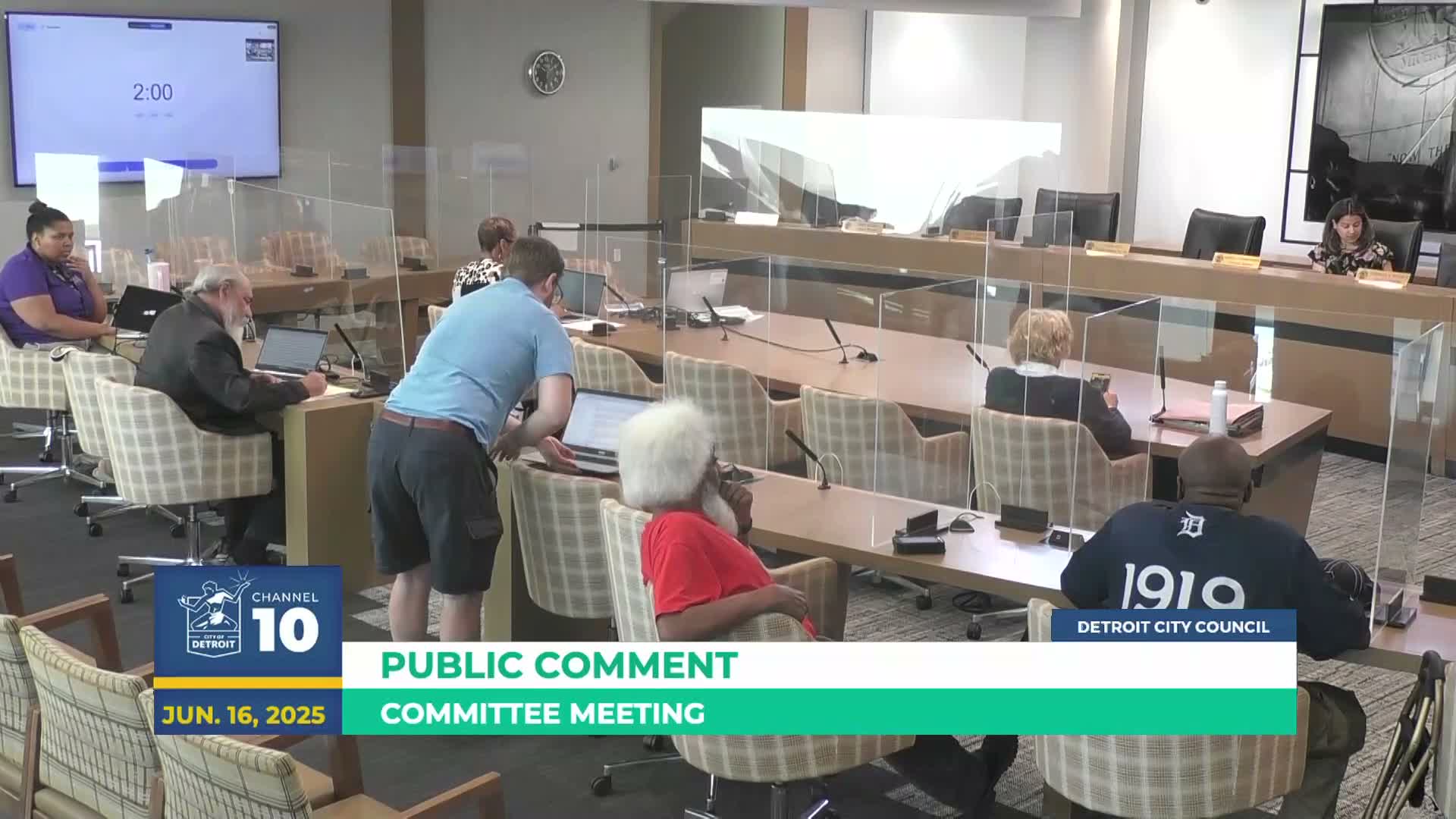
Riders and transit advocates told the Detroit City Council Public Health & Safety committee on June 16 that recent security changes at DDOT's Rosa Parks and Jason Hargrove transit centers are keeping people from using indoor waiting areas and could deter transit use.
Joel Batterman, campaigns manager for Transportation Riders United, said private security staff are searching every person entering the indoor portions of the facilities and telling riders they cannot wait for buses inside. “Denying transit riders access to a warm or air conditioned space to wait for their buses, many of which arrive only once per hour, is outrageous,” Batterman said, adding that many riders are seniors or people with disabilities who are especially vulnerable to extreme heat or cold.
Advocates described the changes as both an ineffective safety measure and a potential civil-liberties problem. "These measures may actually deter people from using transit," Batterman said, and Lucas Lisakian, also with Transportation Riders United, said guard conduct has been unprofessional: he reported a guard told him, “you'll get more than my name if you keep asking questions,” a remark Lisakian described to the committee as a threat that he plans to report to city officials.
The public commenters asked the committee to investigate whether private security is following appropriate training protocols and whether alternative screening procedures are in place for people with medical implants, cochlear devices or histories of sexual trauma. Bernard Majenski, a transit activist, flagged the risk of lawsuits and assaults if alternative screenings are handled poorly.
The committee chair acknowledged the concerns and said the body will try to raise the matter with DDOT. The chair noted that several DDOT contracts were on the day's agenda and said the committee could ask the department or its director to appear at a future session to explain the security changes and training for contracted guards.
The comments came during the committee's public-comment period, which the chair said would be cut off at 10:10 a.m. and then continued via virtual callers. Advocates urged that council ask DDOT to provide usage data, training documentation for contracted security personnel, and a public explanation of the policy change that led to closing indoor waiting areas.
Next steps: the committee indicated it would attempt to raise the issue with DDOT staff and use upcoming agenda items and quarterly updates to press for clarity on whether the transit centers should remain open for waiting and how contracted guards are supervised.