Clark County staff detail what to include in land‑use application narratives
Summary
County planning and development engineering staff told applicants that narratives must state how proposals meet applicable code criteria, reference supporting documents, and address pre‑application issues; inconsistent narratives and plans can add about 14 days per resubmission to review timelines.
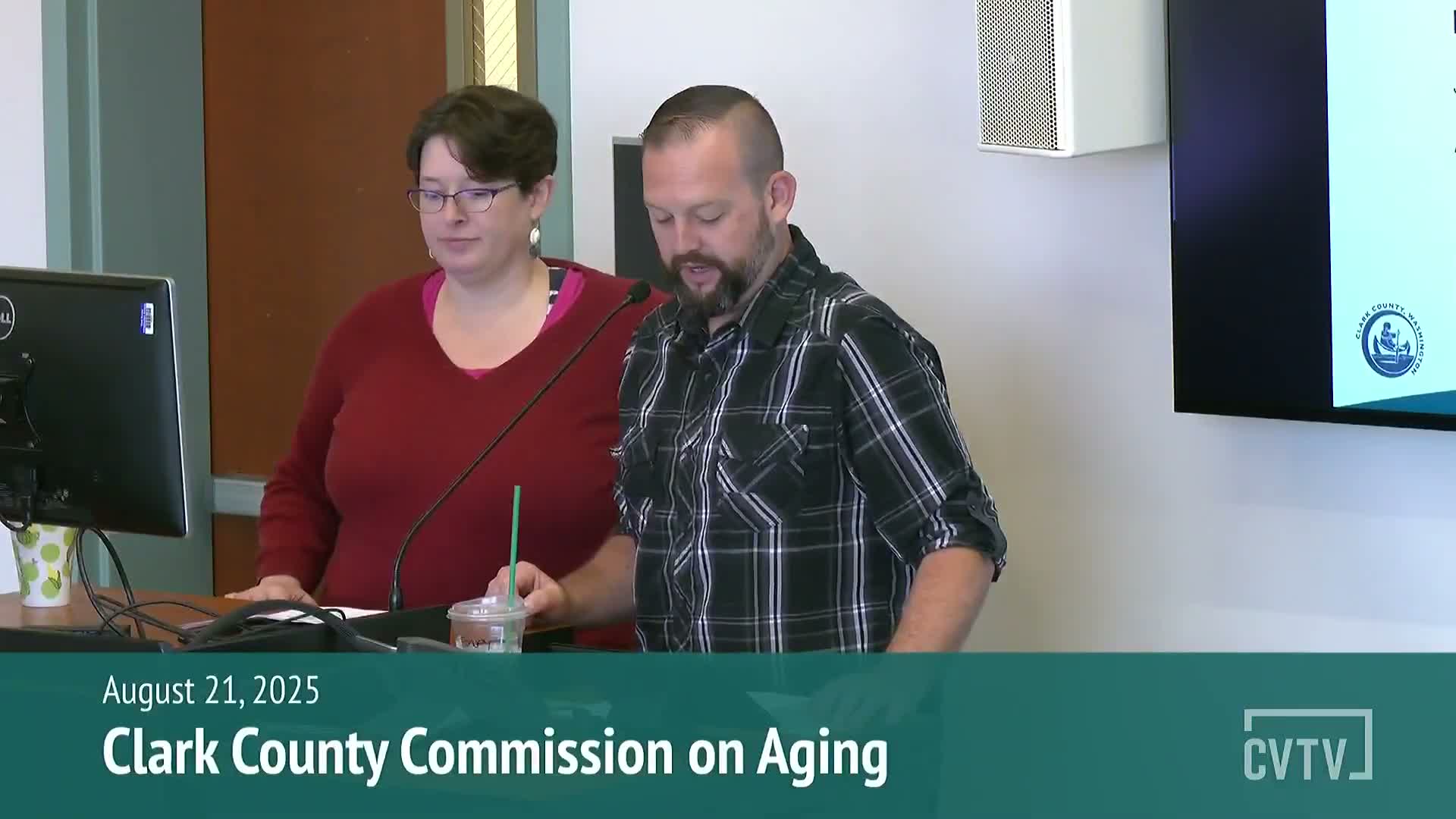
Joe Kinsman, a planner with Clark County’s land use program, and Michelle Dawson, an engineer with the county’s development engineering program, led a public session explaining the county’s expectations for written narratives in land‑use applications.
“A written narrative shall be submitted that addresses the following…how the application meets or exceeds each of the applicable approval criteria and standards,” Kinsman said, reading the county’s narrative requirement and emphasizing that narratives must explain how approval criteria are met.
The presenters told applicants the narrative should include basic project information (project name, site location, zoning and parcel size), a clear project description (existing and proposed uses), density and lot or building sizes, parking and access, solid waste and stormwater plans, environmental constraints, landscaping and screening, and, if applicable, phasing and operational details such as hours or capacity.
Dawson said the county classifies reviews as Type 1, 2 or 3 based on complexity. Examples given: certain home businesses or lot determinations may trigger Type 1 review; short plats and some site plans may be Type 2; larger subdivisions or conditional use permits can be Type 3. Handouts provided by the county spell out submittal items by review type.
“The narrative we are asking for is not a story, but factual statements addressing each applicable code section to the proposed development,” Dawson said, advising applicants to be concise, to cite the exact document titles and page numbers when referencing supporting materials, and to “show your work” so reviewers can easily verify compliance.
Presenters warned that inconsistencies between the narrative and plan documents slow review and can require additional submissions; Dawson noted each requested resubmission can add up to about 14 days to the review timeline. Kinsman added that items stated in a narrative can become findings or conditions of approval, so applicants should be precise about proposed methods of meeting code.
Staff also reviewed how pre‑application reports identify 'major issues' that must be explicitly addressed in narratives, and they described county review groups and relevant code sections (for example, provisions in Title 40 and other titles covering transportation, fire, building and public health).
Clark County has moved to all digital submittals; Dawson referenced a July 2025 learning lab video on the submittal process and provided a contact email (landuse@clark.wa.gov) and said the county uses a rotating planner who aims to respond within about 24 hours.
The session concluded with a summary urging applicants to be detailed and timely in responding to staff feedback to avoid review delays.