Get Full Government Meeting Transcripts, Videos, & Alerts Forever!
Get email alerts on the Public Transportation topic
No spam. Unsubscribe anytime.
Riders and advocates press Detroit officials over metal detectors, seating restrictions at transit centers
Summary
Transit riders and advocacy groups told the Public Health & Safety Committee that private security and metal detectors at Rosa Parks and Jason Hargrove transit centers are denying riders indoor waiting access, deterring transit use and risking seniors and people with disabilities; council agreed to raise questions with DDOT and flagged related DDOT contracts for follow-up.
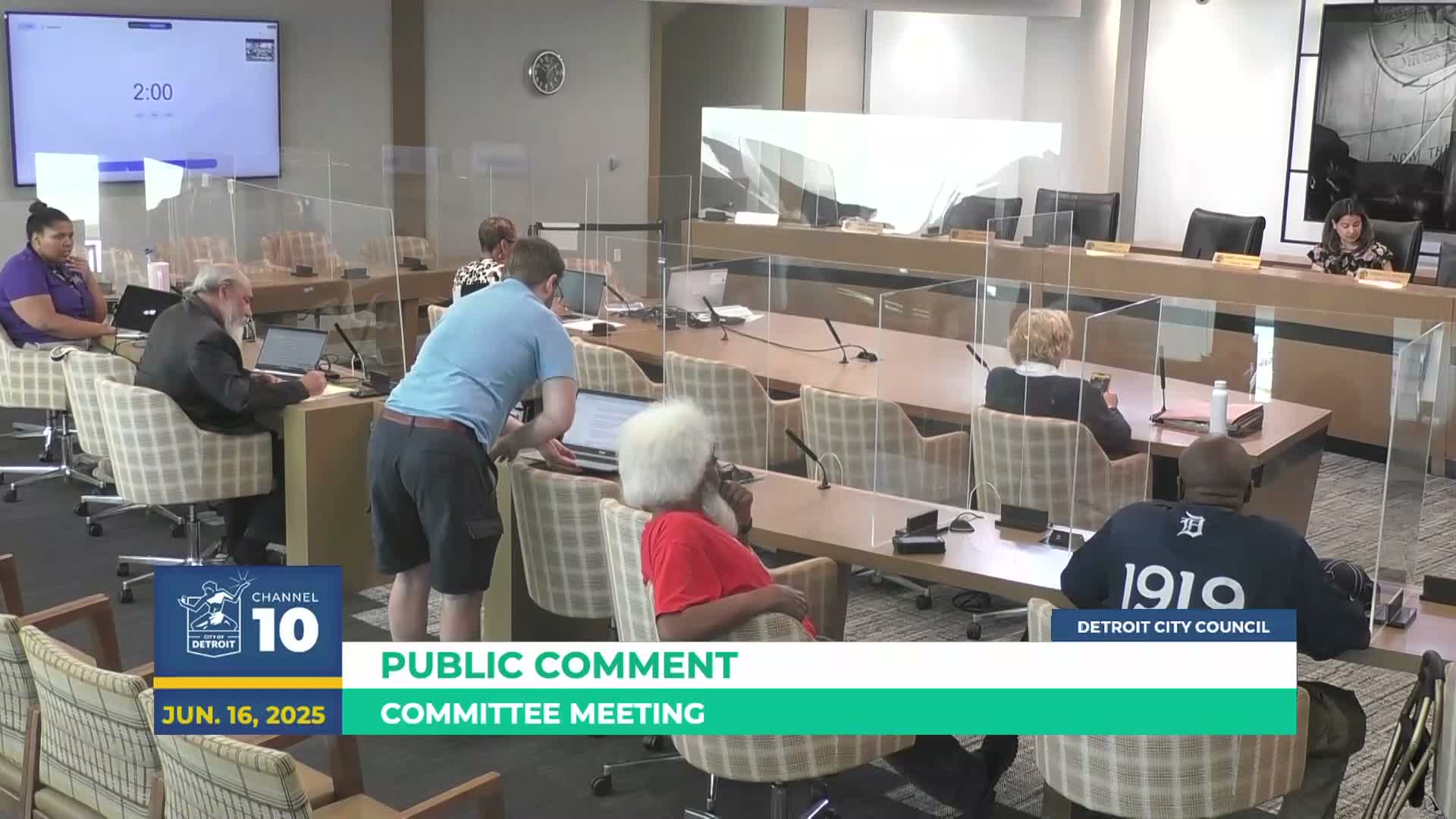
Riders and transit advocates urged the Detroit Public Health & Safety Standing Committee on Monday to investigate recent security measures at the Rosa Parks and Jason Hargrove transit centers, saying metal detectors and private security staff have prevented people from waiting indoors and have discouraged use of transit.
Several in-person and virtual commenters described daily scenes in which riders — including seniors and people with disabilities — are told they cannot sit inside the facilities after metal detectors and screening were installed. Joel Batterman, campaigns manager for Transportation Riders United, said private security now searches everyone entering the indoor areas and that staff have told riders they “cannot wait for their bus in the doors,” even though waiting areas were designed for that purpose. “Denying transit riders access to a warm or air-conditioned space to wait for their buses, many of which arrive only once per hour, is outrageous,” Batterman said.
Why it matters: Advocates argued the screening regime may do little to improve safety while creating barriers to use. Multiple speakers, including Lucas Lisakian of Transportation Riders United and Bernard Majenski, a transit activist, said private guards lack adequate training, risk mishandling alternative screening for people with implants or trauma histories, and reinforce the perception that transit riders are a criminal element.
What advocates asked for: Speakers urged the council to inquire of the Detroit Department of Transportation (DDOT) how the security measures were authorized, whether a public hearing preceded the installations, what alternative safety options were considered, and what training security personnel receive for accommodating people with medical implants, survivors of sexual assault or individuals who do not fit binary gender expectations.
Representative quotes: “These measures may actually deter people from using transit,” Batterman said, adding that many riders “are seniors or people with disabilities who are especially vulnerable to extreme heat or cold.” Lucas Lisakian described an encounter in which a guard told him, “you'll get more than my name if you keep asking questions,” a statement he said felt like a threat of violence and evidence of unprofessional conduct.
Council response and next steps: Committee members acknowledged the public comments and the chair said the committee would raise the riders’ concerns with DDOT staff and, where feasible, request the department’s director or other representatives to appear at a future meeting. The chair also noted the committee had several DDOT contracts on the agenda and said members would ask contract presenters these questions during the formal discussion.
What the record does not show: The speakers presented anecdotal accounts and allegations of misconduct; DDOT staff did not appear in the public-comment portion of the record to rebut or confirm the claims. No formal disciplinary or contract action was taken at the meeting; the committee committed to follow-up inquiries with DDOT.