Get Full Government Meeting Transcripts, Videos, & Alerts Forever!
Get email alerts on the Transit Security topic
No spam. Unsubscribe anytime.
Riders, advocates urge inquiry after DDOT installs metal detectors, limits seating at Rosa Parks and Hargrove centers
Summary
Transit riders and advocacy groups told the Detroit council’s Public Health and Safety committee that private security and metal detectors at Rosa Parks and Jason Hargrove transit centers are barring people from using indoor waiting areas, potentially harming seniors, people with disabilities and people experiencing homelessness and deterring transit use.
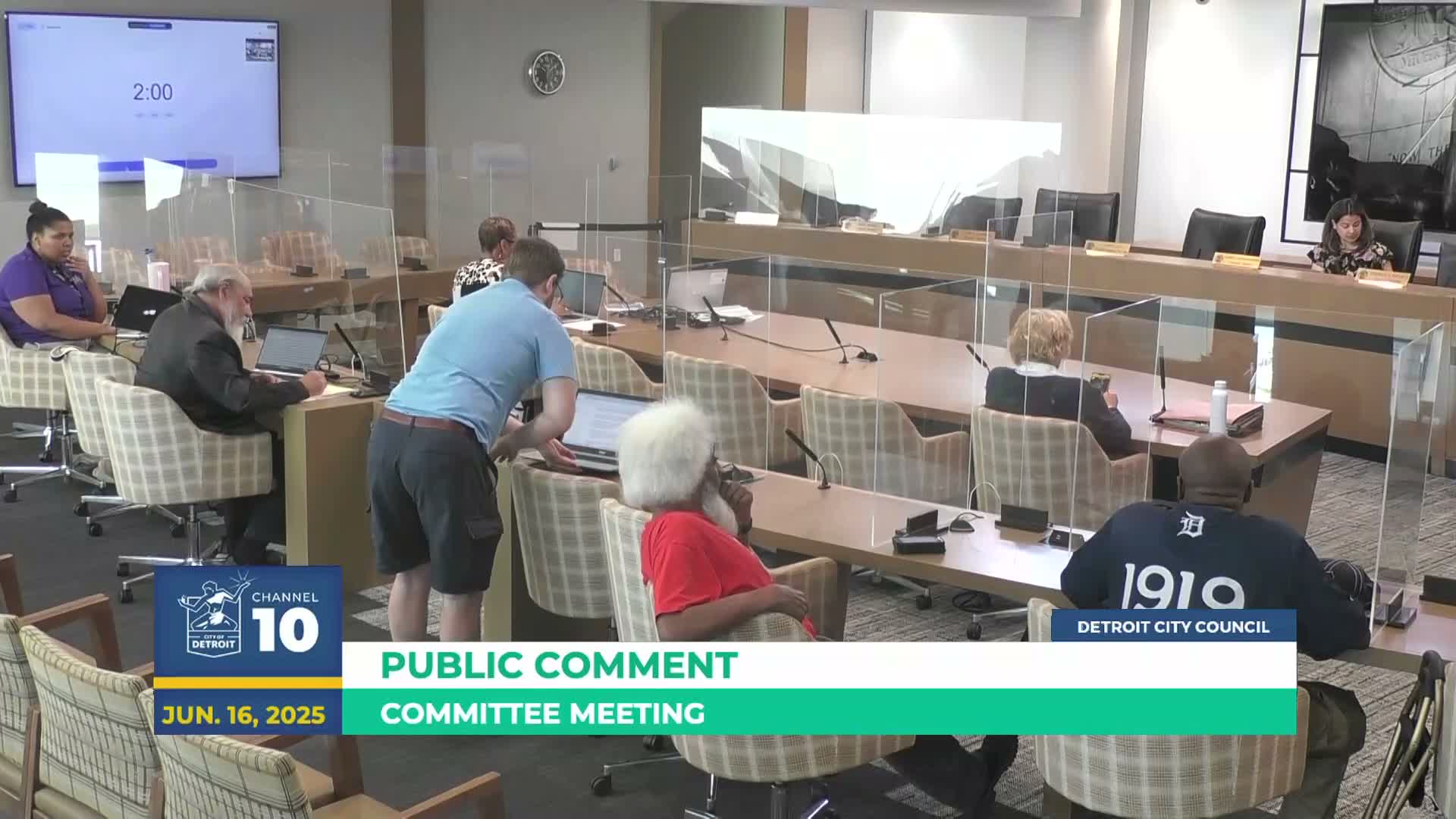
Public commenters pressed the Detroit City Council’s Public Health and Safety committee on June 16 to investigate new security measures at two major Detroit Department of Transportation facilities, saying private security and metal detectors have been accompanied by instructions that riders may not sit inside the centers.
Joel Batterman, campaigns manager for Transportation Riders United, told the committee that metal detectors now screen every person entering the indoor portion of the Rosa Parks and Jason Hargrove transit centers and that security personnel have told riders they cannot wait inside. “Denying transit riders access to a warm or air conditioned space to wait for their buses … is outrageous,” Batterman said, urging council members to inquire into the policy and request alternatives that protect riders without barring access.
Other callers echoed Batterman. Michael Cunningham urged the council to have staffers test the centers without identification to observe how security treats ordinary riders. Lucas Lisakian, also with Transportation Riders United, said private security have conducted searches that he likened to “stop-and-frisk” without individualized suspicion and reported a guard told him, “you'll get more than my name if you keep asking questions,” a remark Lisakian said he perceived as a threat of violence.
Bernard Majenski, a transit activist, warned that the measures were implemented without a public hearing and emphasized risks for people who require alternative screening procedures — including people with pacemakers, cochlear implants or survivors of sexual assault. He said the installations signal riders are “a criminal element” rather than customers.
Committee members acknowledged the seriousness of the concerns and told commenters the body would try to raise the issues with DDOT staff later in the agenda and ask the department to appear at a future quarterly update. The chair also noted several DDOT contracts were on the day’s agenda and offered to surface these questions to staff and the director.
Next steps: committee staff said they would attempt to secure DDOT’s director or other department representatives for a future session and to raise the specific complaints about seating access and screening procedures during the contracts discussion and quarterly update.