Get Full Government Meeting Transcripts, Videos, & Alerts Forever!
Get email alerts on the Transit Security topic
No spam. Unsubscribe anytime.
Riders, advocates urge Detroit council to probe metal detectors and seating bans at transit centers
Summary
A string of public commenters told the Public Health & Safety Committee that private security at Rosa Parks and Jason Hargrove transit centers is searching riders, preventing them from sitting indoors and discouraging use; advocates asked council to hold a hearing and review DDOT practices.
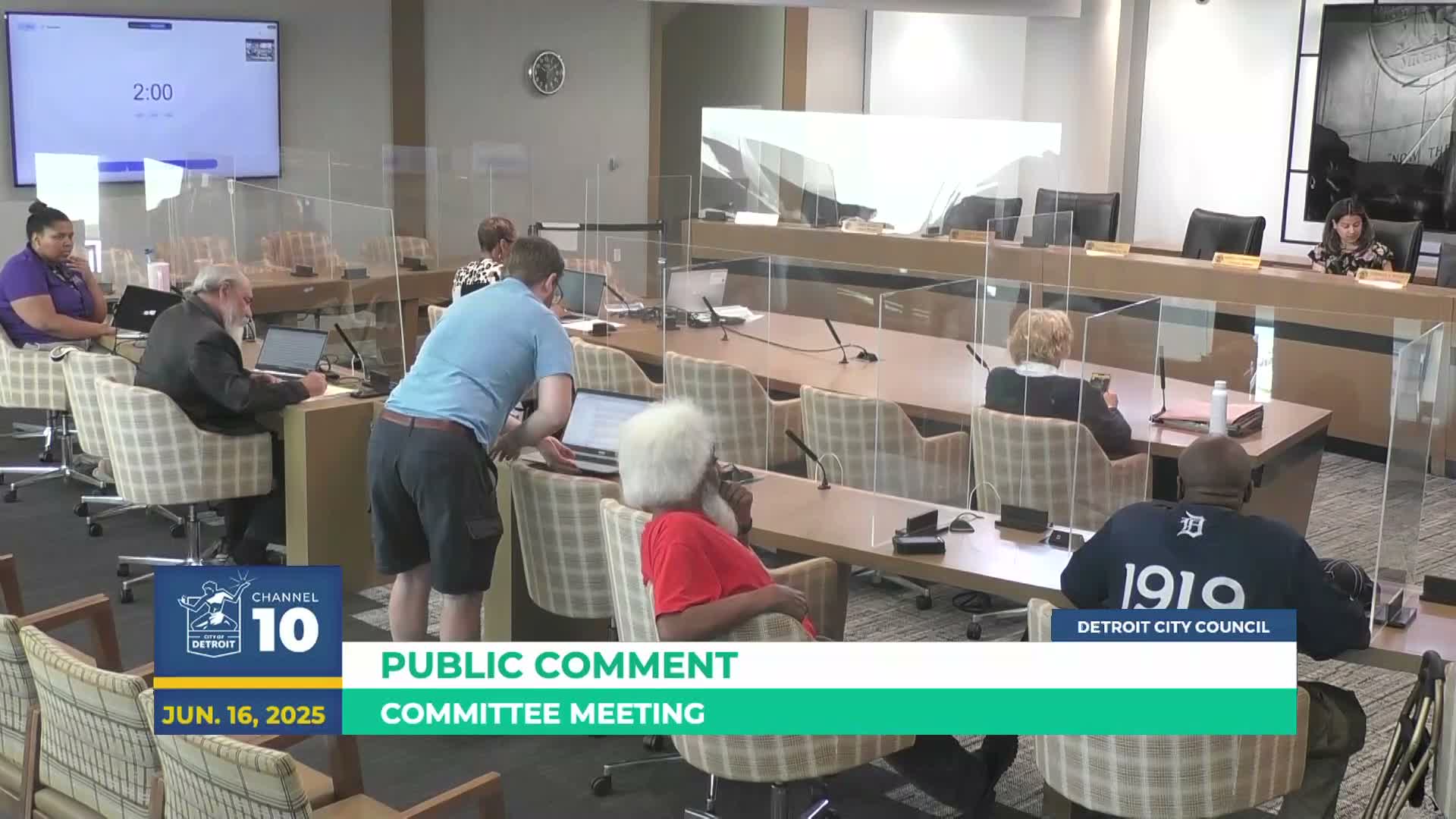
Community advocates and transit riders implored the Detroit Public Health & Safety Standing Committee on June 16 to investigate recently installed metal detectors and new restrictions on indoor seating at the Rosa Parks and Jason Hargrove transit centers.
"Metal detectors have been installed at each location," Joel Batterman, campaigns manager for Transportation Riders United, told the committee. "Security personnel have been telling riders that they cannot wait for their bus indoors despite areas designed for that purpose." Batterman said the measures "criminalize transit riders and reinforce the perception that transit is unsafe."
Multiple other callers and in-person speakers echoed those concerns. Michael Cunningham, who described himself as an advocate and formerly unhoused, urged council staff to conduct an undercover audit of the transit centers to test how security enforces the seating ban. Bernard Majenski, a transit organizer, warned the committee that guards may not be trained to provide alternative screening for people with pacemakers, implants or trauma histories.
Why it matters: Commenters said the changes could deter people who rely on transit — especially seniors and people with disabilities — from using the service, particularly when buses come infrequently. Speakers argued that denying access to climate-controlled indoor waiting spaces can worsen health risks on very hot or cold days.
Council reaction and next steps: The committee chair said staff would try to raise these questions with DDOT during upcoming contract discussions and in a quarterly DDOT update; she also suggested inviting the department director to a future meeting. No formal council action or vote on DDOT policy occurred during the session.
What was said (direct quotes): "It is cruel to force them to wait outside on concrete benches exposed to the elements," Batterman said. "These measures may actually deter people from using transit." "Send somebody down there without a badge on and try to take a seat inside and see what happens," Michael Cunningham said.
What the record does not show: The committee did not receive testimony from DDOT staff at this meeting explaining the security change, nor did it take a vote on any policy change. Specific vendor contracts for the private security company and details about any written DDOT policy were not provided in the hearing record.
Next procedural step: Committee members said they would seek answers from DDOT during contract questions later in the agenda and in future briefings with the department. The transcript records requests to raise the issue with DDOT and for the council to consider additional oversight.