Get Full Government Meeting Transcripts, Videos, & Alerts Forever!
Get email alerts on the Transit Security topic
No spam. Unsubscribe anytime.
Riders, advocates tell Detroit committee metal detectors and bans on indoor waiting are keeping vulnerable people out of transit centers
Summary
Riders and transit advocates told the Detroit City Council’s Public Health & Safety Committee that metal detectors and private-security rules at the Rosa Parks and Jason Hargrove transit centers have barred people from sitting inside, deter transit use and pose risks for seniors and people with disabilities.
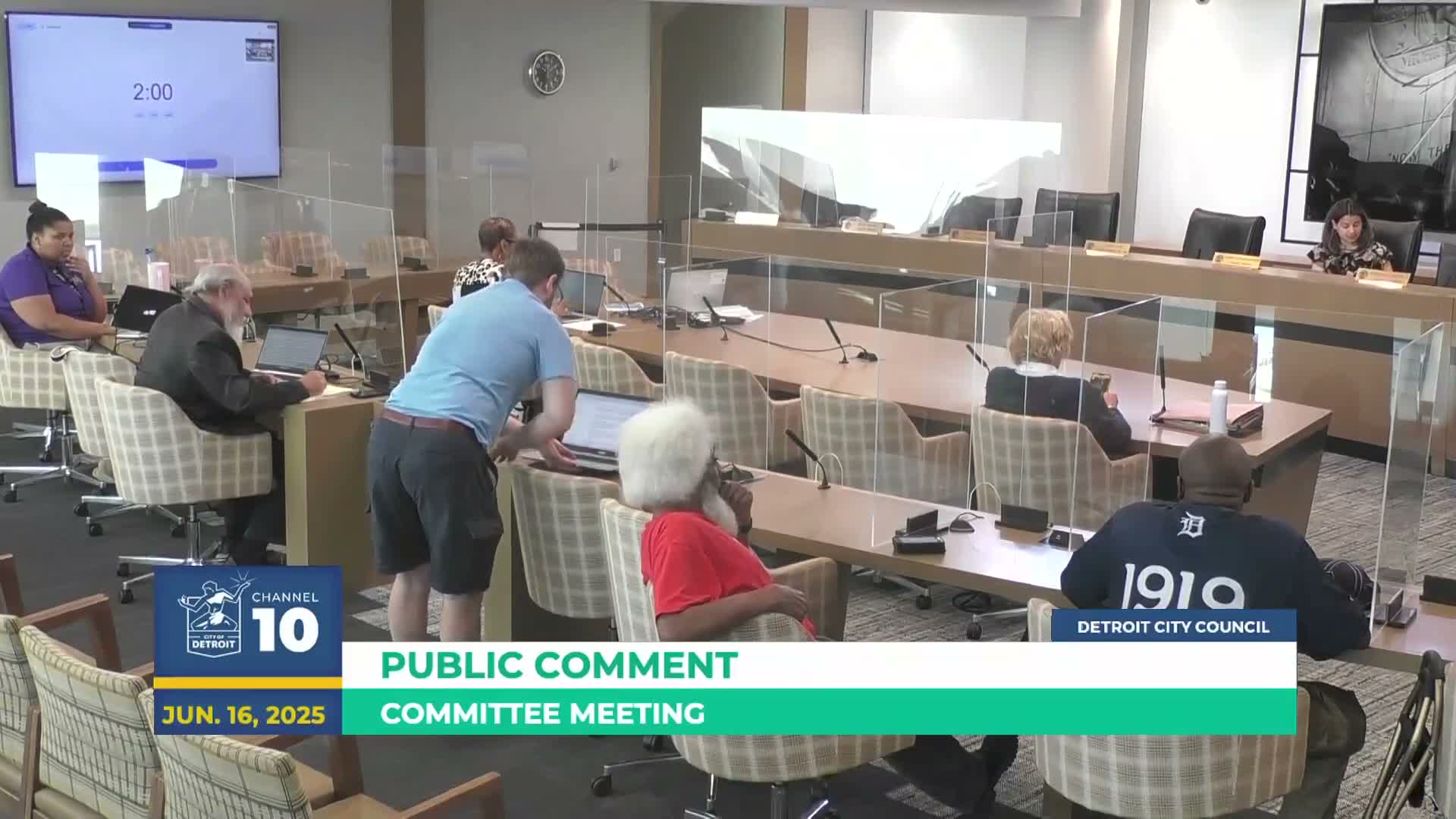
Hundreds of residents and transit advocates pressed the Detroit City Council’s Public Health & Safety Committee on June 16 to investigate private-security screening and rules barring riders from indoor waiting areas at the Rosa Parks and Jason Hargrove transit centers.
"They're not allowing people to sit down," said Michael Cunningham during in-person public comment. Cunningham asked council staff to send in unbadged observers to test whether riders who try to sit are turned away. He said many riders — including seniors and people who have experienced homelessness — rely on indoor seating to get respite from extreme heat or cold.
Joel Batterman, campaigns manager for Transportation Riders United, said metal detectors and private searches do not make riders safer and may instead deter people from using transit. "Denying transit riders access to a warm or air-conditioned space to wait for their buses … is outrageous," Batterman said, adding that many buses run only once an hour.
Other callers recounted encounters they described as unprofessional or threatening. Lucas Lisakian of Transportation Riders United said a security guard told him, "you'll get more than my name if you keep asking questions," which Lisakian described as a threat and said he intends to report to city leadership.
Speakers urged the committee to hold a public hearing or direct DDOT to explain the security changes, request training and oversight for contracted guards and clarify procedures for alternative screening for people with implants or disability needs. Transit activist Bernard Majenski also raised concerns about whether alternative screening protocols are in place for survivors of sexual assault and for people who do not fit the gender binary.
The committee chair acknowledged the public comments and said DDOT items are on the agenda later in the session; staff were asked to bring agency representatives to a future meeting if possible. No committee action was taken during public comment.
The committee did not adopt any new rules or orders at the June 16 meeting; members said they will raise riders’ concerns when DDOT staff or directors appear for quarterly updates or when the DDOT contracts on the agenda are discussed.