Get Full Government Meeting Transcripts, Videos, & Alerts Forever!
Get email alerts on the Public Transit Access topic
No spam. Unsubscribe anytime.
Riders and advocates urge Detroit council to investigate metal detectors, denied seating at transit centers
Summary
Transit riders and advocates told the Public Health & Safety committee that private security and metal detectors at Rosa Parks and Jason Hargrove transit centers are barring people from sitting indoors and may deter vulnerable riders; the committee said it will raise the issue with DDOT and request staff follow-up.
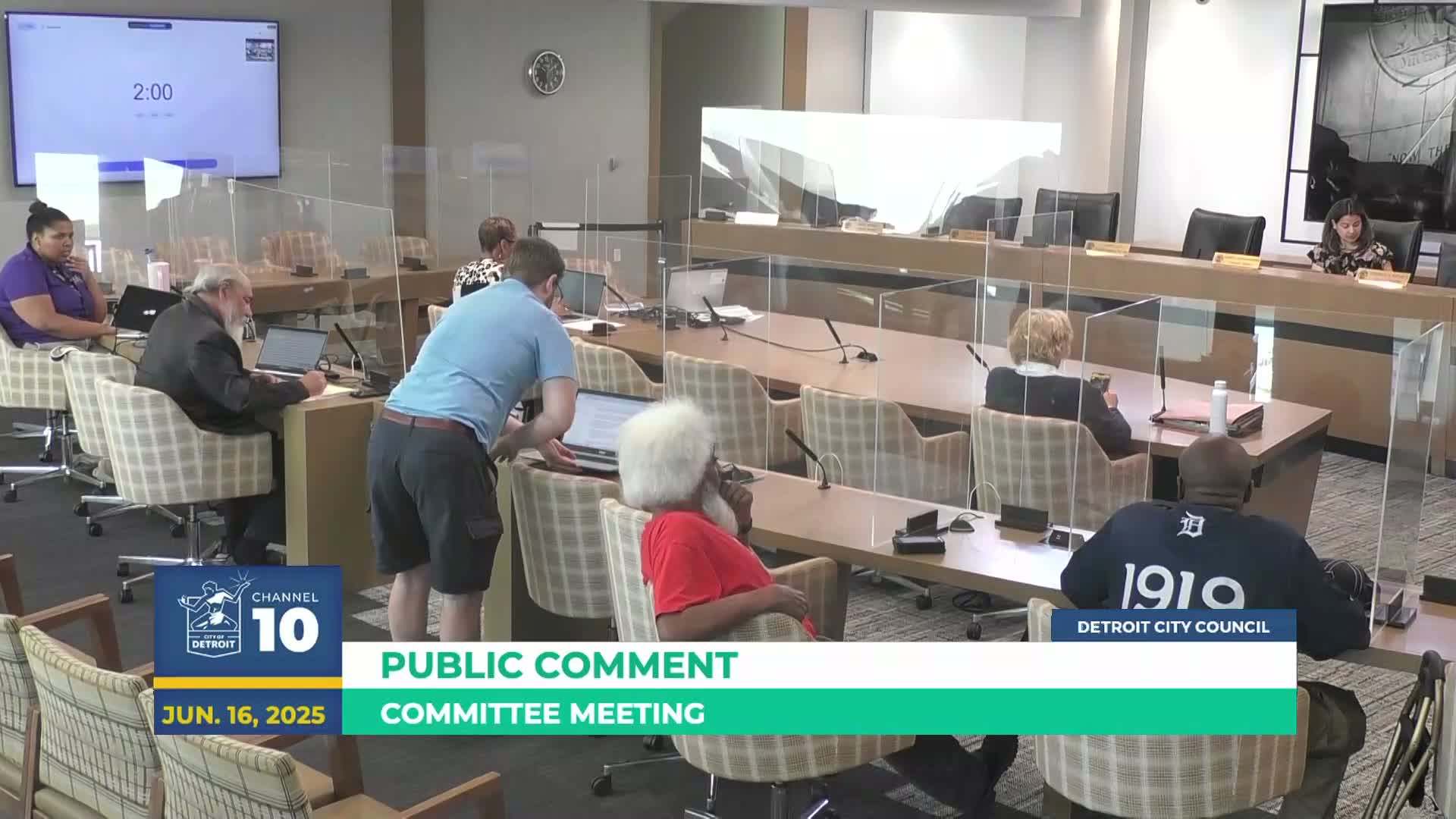
Transit riders and local advocates told the Detroit City Council’s Public Health & Safety standing committee on Monday that recent security measures at two downtown transit centers are excluding riders who need shelter while waiting for infrequent buses. The comments were delivered during a prolonged public‑comment period before the committee reached quorum.
"They're not allowing people to sit down on the inside" said Michael Cunningham during an in‑person comment, and urged the council to send an unmarked person into the facilities to test the policy. Joel Batterman, campaigns manager for Transportation Riders United, said metal detectors and private security are being used to screen everyone entering the indoor portions of the Rosa Parks and Jason Hargrove centers and that that practice may "criminalize transit riders and reinforce the perception that transit is unsafe." Batterman added that denying access to seating is particularly harmful to seniors and people with disabilities who may wait up to an hour between buses.
Other callers described encounters they said showed poor training or aggressive behavior by contracted guards. Lucas Lisakian, also with Transportation Riders United, said a guard told him, "you'll get more than my name if you keep asking questions," which Lisakian interpreted as a threat of violence. Bernard Majenski, a bus‑rider activist, said he was concerned that alternative‑screening procedures were not in place for people with pacemakers, implants or trauma histories and warned that inadequate training could lead to legal liability or harm.
Chair Gabriela Santiago Romero acknowledged the concerns and told attendees the committee has DDOT contracts on its agenda and "we can also raise the questions and concerns that you raised to us this morning." The chair said staff and DDOT representatives would be asked to attend future sessions and that the committee holds quarterly DDOT updates.
The committee did not take formal action on the transit security practices during Monday’s session. Several public commenters asked for a public hearing and for DDOT to justify the timing and necessity of the security measures; the chair said the committee would attempt to get answers when DDOT staff are available.
The issue remains open; committee members asked staff to follow up with DDOT and to provide vendor and training information for any contracted security personnel.