Get Full Government Meeting Transcripts, Videos, & Alerts Forever!
Get email alerts on the Transit Security topic
No spam. Unsubscribe anytime.
Riders and advocates urge Detroit to review private security, metal detectors at transit centers
Summary
Multiple riders and transit advocates told the Public Health & Safety committee that private security screening and new metal detectors at Rosa Parks and Jason Hargrove transit centers have barred people from sitting indoors, deter riders and risk civil-rights harms; councilmembers said they will raise the issue with DDOT and pursue follow-up.
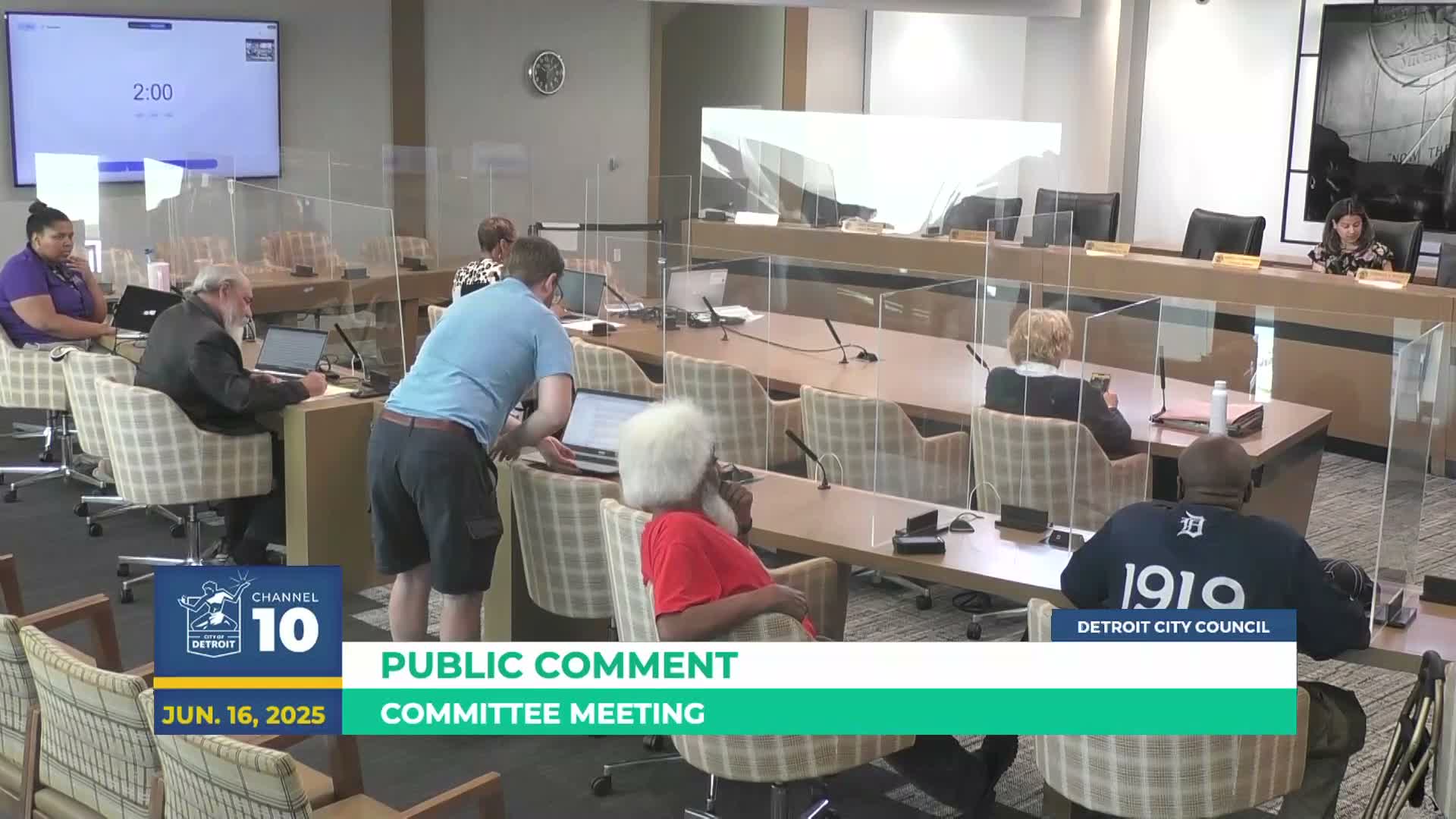
Multiple riders and transit advocates told the Detroit City Council Public Health & Safety standing committee on June 16 that recent security changes at the city’s Rosa Parks and Jason Hargrove transit centers are creating barriers for riders and may be harming vulnerable passengers.
Michael Cunningham, who spoke in person, urged the council to “send somebody down there without a badge on and try to take a seat inside and see what happens,” saying that since metal detectors were installed people have been told they cannot sit inside the indoor waiting areas. Joel Batterman, campaigns manager for Transportation Riders United, said private security searches are being performed on everyone entering the indoor spaces and argued those measures “do not make riders safer” and risk criminalizing transit users. Batterman warned that denying access to warm or air-conditioned indoor space is especially harmful to seniors and people with disabilities whose buses may run infrequently.
Several other speakers—including Lucas Lisakian of Transportation Riders United and Bernard Majenski, a transit activist—reported instances of rude or threatening conduct by guards and described screening procedures that may not accommodate people with medical implants or survivors of assault. Lisakian said a guard told him, “you'll get more than my name if you keep asking questions,” which he interpreted as a threat, and said he planned to contact city officials about it.
Speakers urged the council to seek a public hearing or inquiry before adopting persistent security practices at transit centers. Advocates argued that private security performing unstated searches resembles stop-and-frisk without individualized suspicion and that closure of indoor seating can deter riders and worsen heat- or cold-related risks.
Madam Chair acknowledged the volume of public concern and told callers the committee would raise their questions with the Detroit Department of Transportation (DDOT) during scheduled contract discussions and in quarterly updates. Committee members said they would invite DDOT staff to the next session for a discussion at the top of the agenda and pursue whether posted notices or maintenance explanations have been provided to riders.
No formal action was taken during public comment; multiple public witnesses asked the council to seek further information from DDOT about the security arrangement and the training and contractor qualifications for the private guards.
The committee later considered several DDOT-related contracts on the agenda and said it would press for answers during those discussions or in a future DDOT briefing.