Get Full Government Meeting Transcripts, Videos, & Alerts Forever!
Get email alerts on the Transit Security topic
No spam. Unsubscribe anytime.
Riders, advocates urge Detroit to rethink metal detectors and bans on indoor waiting at transit centers
Summary
Riders and transit advocates told the City Council Public Health & Safety committee that private security screenings and newly installed metal detectors at Rosa Parks and Jason Hargrove transit centers are deterring riders, denying access to indoor waiting areas and risking the safety of seniors and people with disabilities.
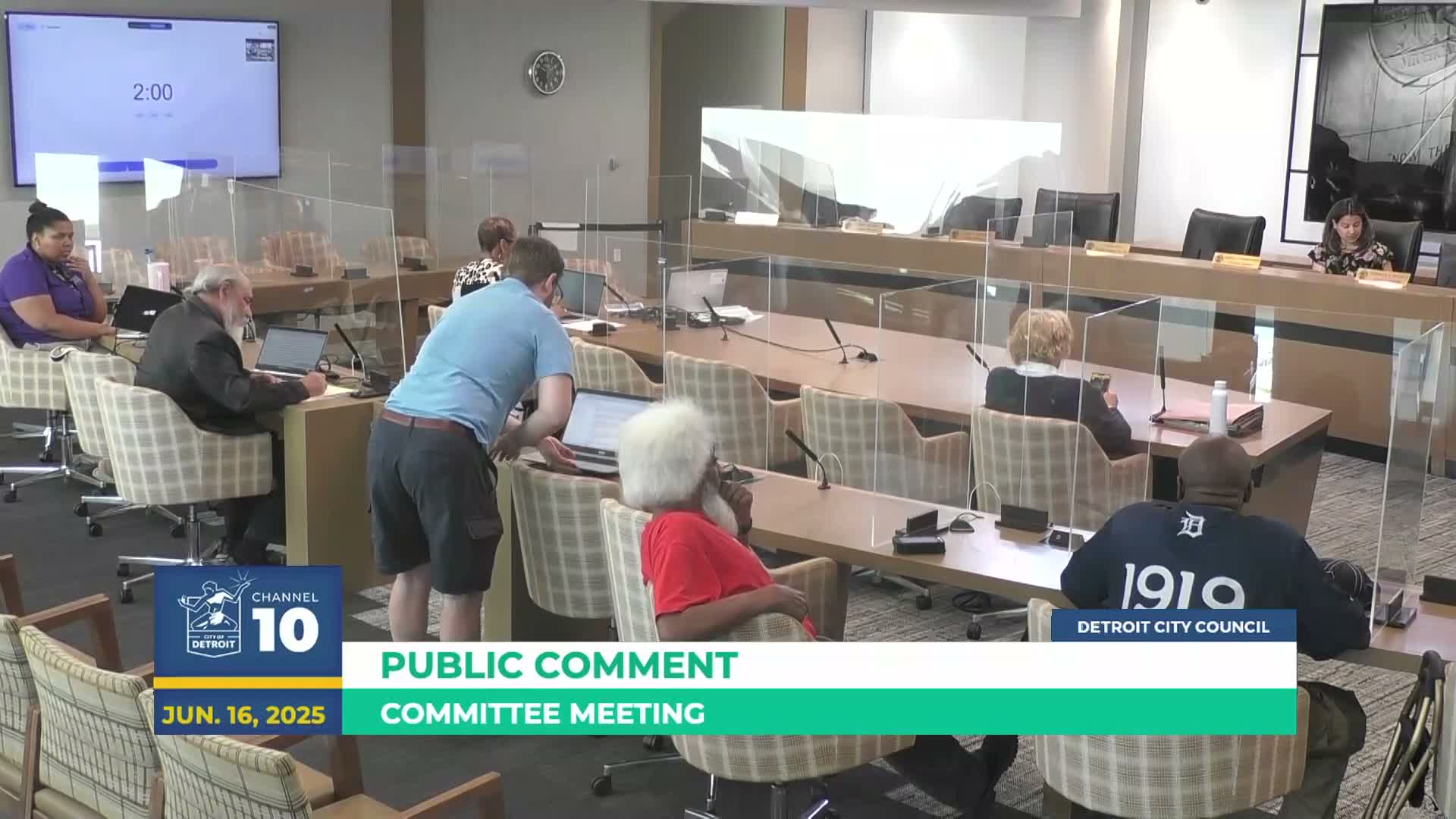
Several riders and transit advocates told the Detroit City Council Public Health & Safety committee on June 16 that recent security measures at the Rosa Parks and Jason Hargrove transit centers are making it harder for people to use public transit.
‘‘They’re not allowing people to sit down,’’ said Michael Cunningham during public comment, describing private security and new metal detectors at the centers. Joel Batterman, campaigns manager for Transportation Riders United, told the committee that private security searches and bans on indoor waiting ‘‘do not make riders safer’’ and risk deterring people who rely on buses that may come only once an hour.
Batterman said many riders are seniors or people with disabilities who need climate-controlled space while waiting. ‘‘Denying transit riders access to a warm or air-conditioned space to wait for their buses … is outrageous,’’ he said. Bernard Majenski, a bus rider and organizer with Transit Justice Team, added that the centers were closed without a public hearing and raised concerns about whether security staff have adequate training to perform alternative screening for people with pacemakers, implants or trauma histories.
Multiple callers and in-person speakers echoed those concerns, describing instances in which riders were told to wait outside and recounting disrespectful treatment by security staff. Lucas Lisakian, also with Transportation Riders United, said the current security regime resembles a ‘‘stop and frisk’’ performed without individualized suspicion and described one encounter in which, he said, a guard replied, ‘‘you’ll get more than my name if you keep asking questions,’’ a remark Lisakian said he interpreted as a threat.
Council members said the committee would raise transit-related questions later in the agenda with DDOT staff and noted that several DDOT contracts were on the docket that could provide an opportunity to press the department for details. The chair asked staff to invite DDOT representatives to a future committee meeting and mentioned quarterly updates with the department.
The committee took no formal vote on the transit-center security measures during this session. Several public commenters asked the council to open an inquiry or hold a hearing so the council could review why the measures were implemented and whether alternative safety strategies could be used.
What’s next: Council members said they would try to invite DDOT to an upcoming committee meeting and to raise transit security questions when relevant contracts are reviewed.