Get Full Government Meeting Transcripts, Videos, & Alerts Forever!
Get email alerts on the Transit Security topic
No spam. Unsubscribe anytime.
Riders, advocates urge Detroit to review metal-detector searches and seating restrictions at Rosa Parks and Jason Hargrove transit centers
Summary
Multiple riders and transit advocates told the Public Health & Safety Committee on June 16 that private security and metal-detector screening at the Rosa Parks and Jason Hargrove centers has barred people from waiting inside, risking seniors and riders with disabilities and discouraging transit use; council pledged to raise the issue with DDOT and invited staff follow-up.
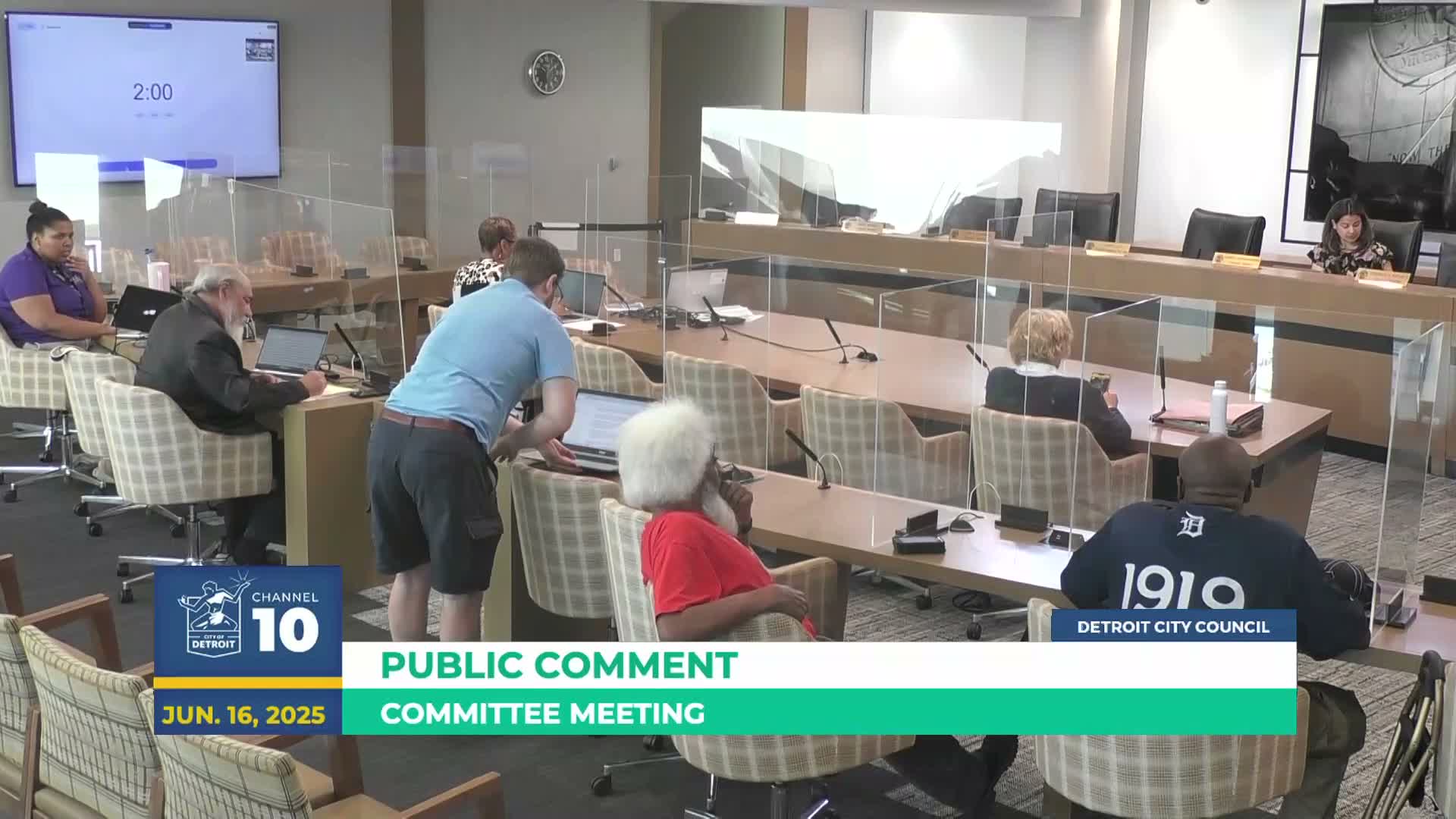
Dozens of riders and transit advocates pressed the Detroit Public Health and Safety Standing Committee on June 16 to investigate new security procedures at two downtown transit hubs.
"Theyare not allowing people to sit down," said Michael Cunningham during in-person public comment, describing the change after metal detectors were installed at Rosa Parks and Jason Hargrove transit centers (the facilities formerly called State Fair Transit Center). Joel Batterman, campaigns manager for Transportation Riders United, told the committee the screenings "do not make riders safer" and risk "criminalizing transit riders," particularly seniors and people with disabilities who rely on the indoor waiting areas when buses run infrequently.
Advocates urged the council to ask DDOT for documentation about the policy change, the contracts and training for private security, and any alternative-screening procedures for people with medical implants or survivors of sexual assault. Lucas Lisakian of Transportation Riders United reported a security guard threatened him, saying, "you'll get more than my name if you keep asking questions," and asked for a formal inquiry into guard conduct and oversight.
The chair acknowledged the volume and seriousness of the remarks and said staff would raise attendees' concerns with DDOT during upcoming quarterly briefings and with the department's director when available. The committee also noted several DDOT contracts on the day's agenda and said members could press contractors and the department for clarifying information in committee or at formal session.
Next steps: committee members said they would request DDOT documentation and consider inviting the DDOT director or procurement staff to the next meeting to address training, contract oversight and policies that determine who may use indoor waiting areas.