Get Full Government Meeting Transcripts, Videos, & Alerts Forever!
Get email alerts on the Transit Security topic
No spam. Unsubscribe anytime.
Transit riders urge city to reconsider metal detectors and refusal to allow seating at two Detroit transit centers
Summary
Riders and transit advocates told the Public Health & Safety Committee that private security and metal detectors at Rosa Parks and Jason Hargrove transit centers are deterring riders, denying access to seating and restrooms, and risk harming seniors and people with disabilities; advocates asked the council to investigate and seek alternatives.
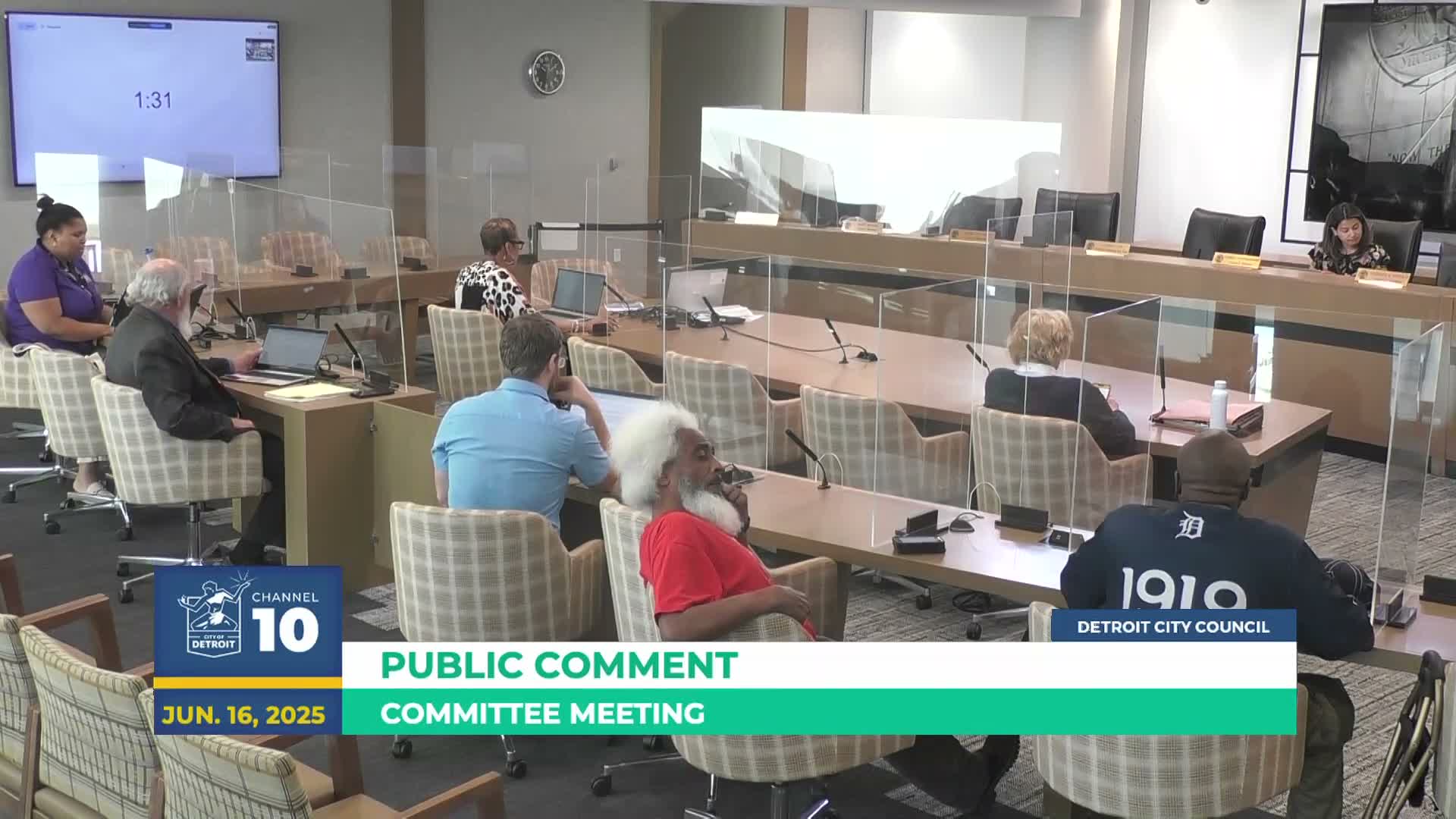
Michael Cunningham and several transit advocates told the Public Health & Safety Standing Committee on June 16 that recent security measures at DDOT facilities are excluding riders. Joel Batterman, campaigns manager for Transportation Riders United, said private guards are searching everyone who enters the indoor portions of Rosa Parks and Jason Hargrove transit centers and have told people they cannot wait inside. "Every person entering the indoor portion of each facility is being searched by private security," Batterman said, adding that the measures "may actually deter people from using transit."
Advocates said the policy disproportionately affects seniors and people with disabilities who sometimes have to wait an hour for buses and need access to restrooms and air-conditioned space. "Denying transit riders access to a warm or air conditioned space to wait for their buses... is outrageous," Batterman said. Lucas Lisakian of Transportation Riders United described being threatened by a security guard and characterized the screening as akin to a "stop-and-frisk" practice without reasonable suspicion. "You'll get more than my name if you keep asking questions," Lisakian quoted a guard as saying; he said he plans to contact city officials about the incident.
Other callers — including Bernard Majenski of Transit Justice and multiple riders — raised additional concerns about training for contracted security personnel, procedures for alternative screening for people with implants or trauma histories, and the lack of public notice or a hearing before the installations. Majenski warned of potential legal exposure if alternative procedures are not properly handled for people with pacemakers, cochlear implants or survivors of sexual violence.
Council members acknowledged the volume of public comment and said the committee will try to surface the issue with DDOT staff. The chair noted DDOT items appear later on the agenda and said staff could be invited to a future meeting or quarterly update to address the questions raised.
The public record at this meeting consists of repeated calls for an inquiry into security protocols at the two transit centers and for the city to ensure access for medically vulnerable riders. No formal policy change or vote on the DDOT screening procedures occurred during the committee session; members directed staff to raise the concerns in forthcoming DDOT briefings and, where applicable, in scheduled contract discussions.