Get Full Government Meeting Transcripts, Videos, & Alerts Forever!
Get email alerts on the Transit Security topic
No spam. Unsubscribe anytime.
Riders, advocates urge Detroit to review metal-detector policy at Rosa Parks and Jason Hargrove transit centers
Summary
Riders and transit advocates told the Public Health & Safety Committee that private security and newly installed metal detectors at two downtown transit centers are preventing people from waiting indoors and may deter seniors and people with disabilities from using transit.
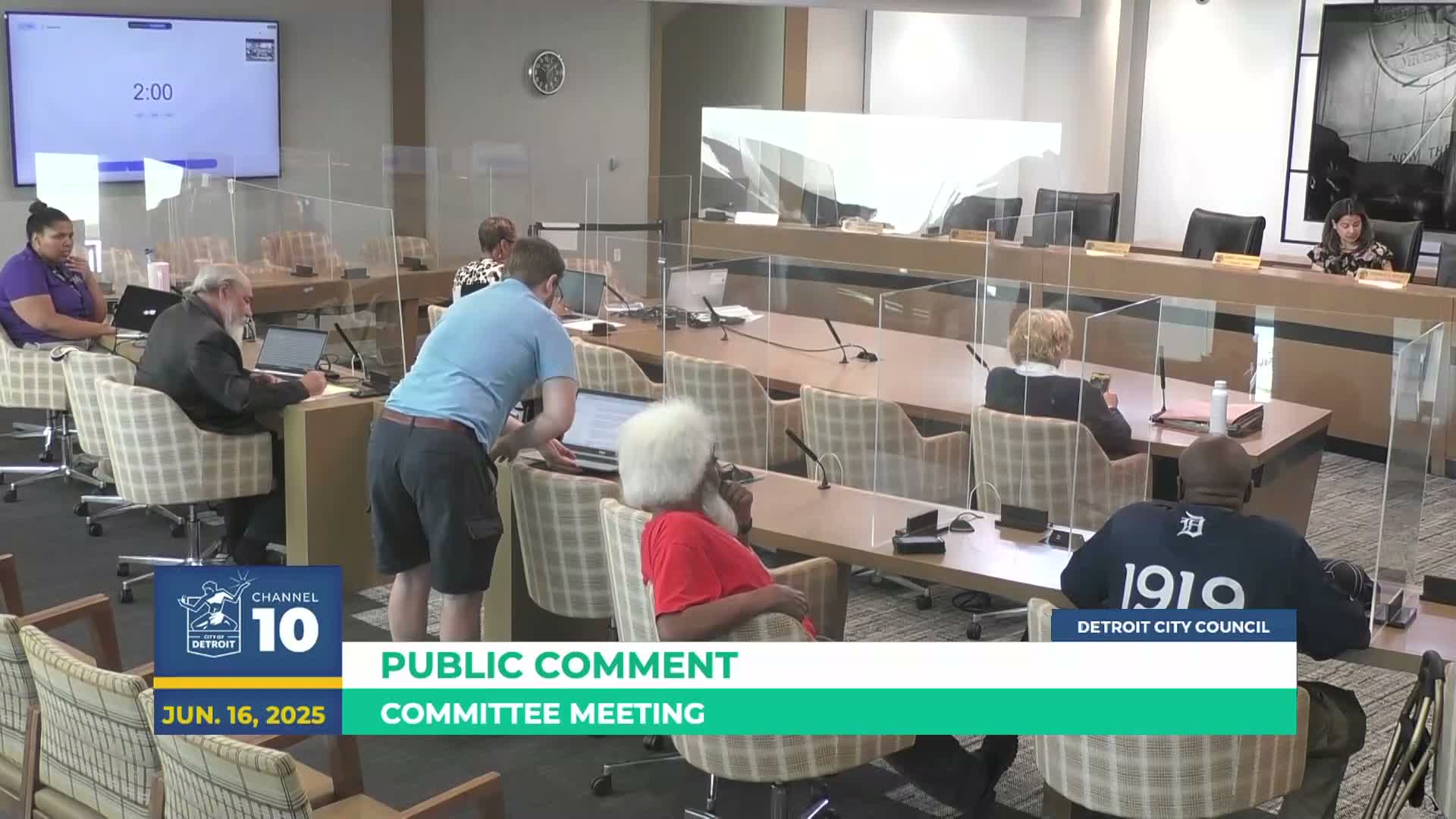
Public commenters and transit advocates urged Detroit city officials on June 16 to investigate recent security changes at the Rosa Parks and Jason Hargrove transit centers, saying private guards and metal detectors are keeping riders out of indoor waiting areas.
"They're not allowing people to sit down on the inside," said Michael Cunningham during public comment, describing encounters he said were new since the metal detectors were installed. Joel Batterman, campaigns manager for Transportation Riders United, told the committee private security now searches "every person entering the indoor portion of each facility," and said guards were telling riders they could not wait inside, even where indoor seating exists.
Advocates said the policy may disproportionately affect seniors and riders with disabilities who sometimes wait an hour for a bus. "Denying transit riders access to a warm or air‑conditioned space to wait for their buses ... is outrageous," Batterman said, urging the council to "inquire into this matter further."
Several callers described interactions they called unprofessional or threatening. Lucas Lisakian of Transportation Riders United said a security guard told him, "you'll get more than my name if you keep asking questions," which Lisakian read as a threat and said he would report to city officials.
Bernard Majenski, a transit organizer, warned the committee about alternative‑screening procedures for people with implants or trauma histories and said contracted security personnel may lack adequate training. "Are they trained?" Majenski asked. "Are these just people contracted by some fly‑by‑night security company?" He said the approach signals to riders that they are a "criminal element."
The committee chair acknowledged repeated concerns and said several DDOT contracts were on the day's agenda; members planned to raise the activists' questions with the Detroit Department of Transportation and asked staff to invite DDOT leadership to a future quarterly update. No formal DDOT representative made a substantive response during the meeting.
Next steps: committee members requested follow‑up with DDOT staff at a future session and noted that related DDOT contracts on the agenda would be discussed later in the meeting.