Get Full Government Meeting Transcripts, Videos, & Alerts Forever!
Get email alerts on the Transit Security topic
No spam. Unsubscribe anytime.
Riders, advocates tell Detroit committee metal detectors and private guards bar people from transit centers
Summary
Riders and transit advocates urged the Detroit Public Health & Safety committee to investigate recently installed metal detectors and private security at Rosa Parks and Jason Hargrove transit centers, saying the measures deter riders and leave seniors and people with disabilities exposed to extreme weather.
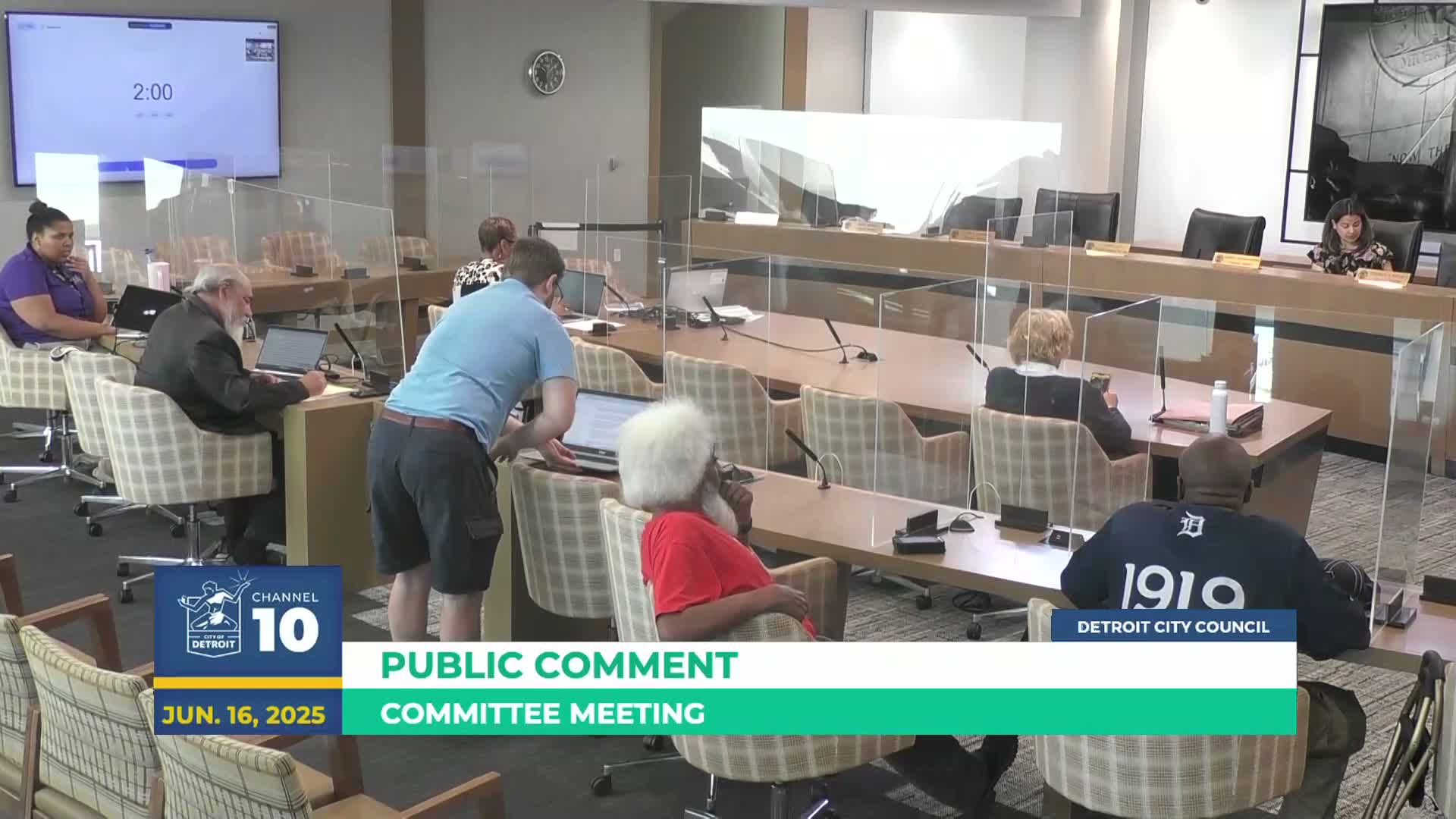
Public commenters pressed the Detroit City Council’s Public Health & Safety Standing Committee on Monday to probe new security measures at two major Detroit Department of Transportation (DDOT) facilities.
Michael Cunningham, a longtime transit advocate, told the committee he and other riders are being told they cannot sit inside the Rosa Parks and Jason Hargrove transit centers since metal detectors and private security were installed. “They’re not allowing people to sit down on the inside,” Cunningham said, and asked council staff to conduct undercover checks to see how riders are treated.
Joel Batterman, campaigns manager for Transportation Riders United, described the measures as ineffective for safety and likely to “criminalize transit riders.” Batterman said private security is searching everyone who enters and that denying riders access to air‑conditioned or heated waiting areas is “outrageous” for seniors and people with disabilities who often wait an hour for buses.
Other callers echoed those concerns. Bernard Majenski, a bus rider and organizer with a transit justice group, urged the committee to convene a public hearing before such measures take effect and raised specific worries about alternative screening for people with pacemakers, cochlear implants or histories of trauma. Lucas Lisakian of Transportation Riders United reported a security guard told him, “you’ll get more than my name if you keep asking questions,” which Lisakian interpreted as a threat and said he will report to city officials.
Committee chair acknowledged the volume of public comment and noted the committee had several DDOT contracts on the agenda that day, saying staff could raise riders’ concerns with DDOT and ask the department to appear at a future meeting to respond.
Why it matters: Riders, disability‑advocates and transit organizers say the change could suppress transit use, pose health risks to those who cannot wait outdoors and prompt legal challenges unless the city establishes clear policies and alternative‑screening procedures.
What committee members said and did: The chair said the committee would try to get DDOT officials to the committee or its quarterly update and that some DDOT contracts on the agenda that day could provide an opportunity to press the department for answers. No formal action or vote on DDOT policy was taken at the meeting.
Next steps: Committee staff offered to invite DDOT leadership to a future session and to raise specific contract questions during the day’s agenda. Advocates asked for a public hearing and for the city to disclose training and alternative‑screening protocols used by private security at transit centers.