Get Full Government Meeting Transcripts, Videos, & Alerts Forever!
Get email alerts on the Transit Security topic
No spam. Unsubscribe anytime.
Detroit riders, advocates criticize metal detectors and seating restrictions at Rosa Parks and Jason Hargrove transit centers
Summary
Riders and transit advocates told the council that newly installed metal detectors and private security at Rosa Parks and Jason Hargrove transit centers are denying people access to indoor seating and restrooms, a move they say harms seniors, people with disabilities and unhoused riders and was implemented without a public hearing.
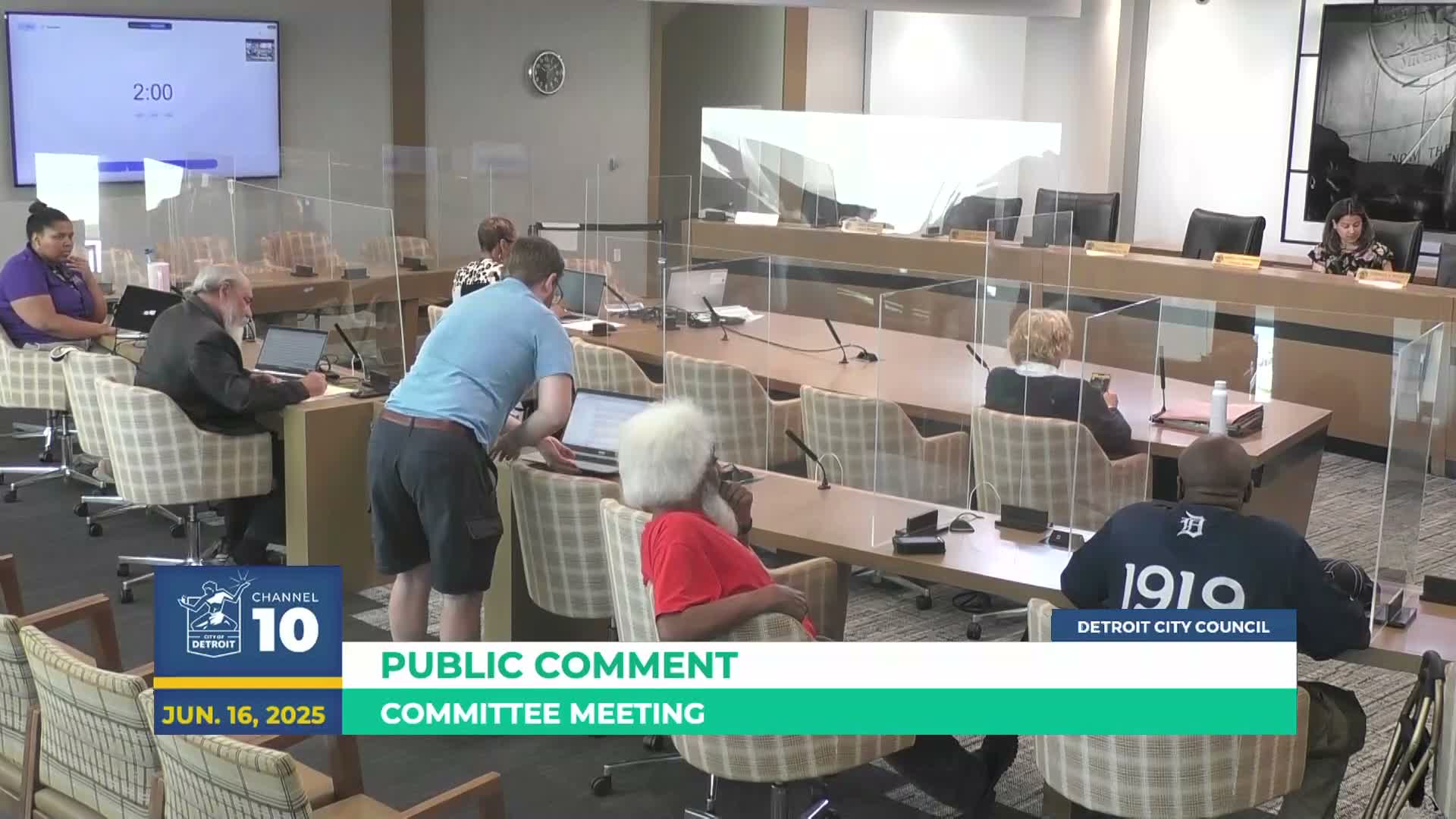
Public commenters urged Detroit City Council's Public Health and Safety committee on June 16 to investigate recently installed security measures at the Rosa Parks and Jason Hargrove transit centers, saying private security searches and rules barring riders from waiting inside are hurting seniors, people with disabilities and unhoused riders.
"They're not allowing people to sit down," said Michael Cunningham during public comment, urging staff to send an unbadged person into the centers to test how riders are treated. Joel Batterman, campaigns manager for Transportation Riders United, told the committee that private security is "searching every person entering the indoor portion" and that guards have told riders they cannot wait inside despite spaces designed for that purpose. "Denying transit riders access to a warm or air conditioned space to wait for their buses ... is outrageous," Batterman said.
Advocates argued the measures may not improve safety and could deter transit use. "These measures criminalize transit riders and reinforce the perception that transit is unsafe," Batterman said. Multiple callers raised civil‑liberties concerns and noted particular risks for people who need alternative screening because of implants, pacemakers or past trauma; organizer Bernard Majenski warned the city could face lawsuits if alternative screening procedures are not appropriate and staff are untrained.
Council staff acknowledged the complaints and the chair noted DDOT contracts on the committee agenda, saying the committee could ask the director about the security arrangements during contract discussions and at quarterly DDOT updates. Committee members did not take a formal vote on the transit centers during the morning session; public commenters asked for a formal hearing and for the city to share records and rationale for the new procedures.
What happens next: the chair said staff would raise the concerns with DDOT and the committee will have DDOT on a future agenda and quarterly updates; several contracts involving DDOT were on the day's docket for follow‑up.