Get Full Government Meeting Transcripts, Videos, & Alerts Forever!
Get email alerts on the Transit Access topic
No spam. Unsubscribe anytime.
Riders, advocates urge Detroit council to probe metal detectors and bans at transit centers
Summary
Riders and transit advocates told the Public Health & Safety Committee that private security screening and a rule barring people from sitting inside Rosa Parks and Jason Hargrove transit centers are deterring riders, risking heat/cold exposure for seniors and people with disabilities, and deserve a council inquiry.
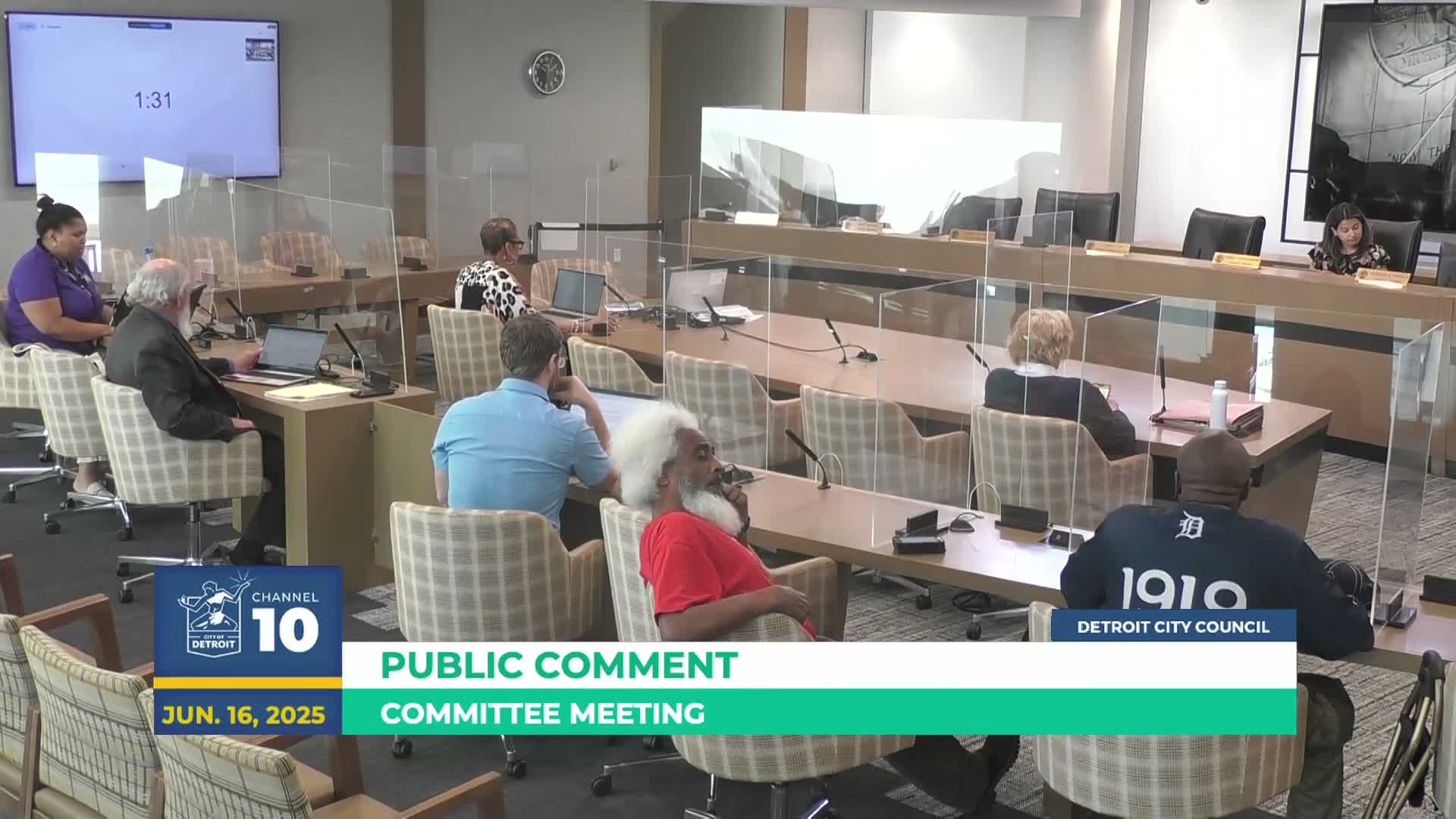
Riders and transit advocates pressed Detroit’s Public Health & Safety Standing Committee on June 16 to investigate recent security changes at two downtown transit hubs, saying metal detectors combined with private security have led staff to deny people the right to wait inside.
Michael Cunningham, an in-person commenter, said the practice started when metal detectors were installed and accused security personnel of barring riders from sitting inside. “They’re not allowing people to sit down on the inside … I was homeless for so long. If they’re not causing problems, they ought to be able to sit in there to get some respite time,” Cunningham said.
Joel Batterman, campaigns manager for Transportation Riders United, told the committee the measures “do not make riders safer” and warned they could “criminalize transit riders and reinforce the perception that transit is unsafe.” He urged councilmembers to inquire into why private security is screening every person entering indoor waiting areas and whether alternative safety measures are possible.
Multiple callers echoed those concerns. Bernard Majenski, a bus rider and organizer, criticized the lack of public notice and asked whether the city cleared the installations through the appropriate public process. He also raised worries about alternative screening for people with pacemakers, cochlear implants or histories of sexual assault and whether contracted guards have adequate training.
Lucas Lisakian of Transportation Riders United described a recent interaction with a guard he said rose to a threat: “You’ll get more than my name if you keep asking questions,” Lisakian recounted, and said he planned to bring the incident to Detroit Police Department leadership.
Committee members acknowledged the concerns and the chair said staff would try to raise the questions with DDOT during the meeting’s contract review later in the agenda and, if necessary, invite the department to a future session. The chair noted the committee had several DDOT contracts on the agenda and offered to ask the DDOT director to join a subsequent meeting for direct answers.
The committee did not take formal action on the screening practices during the session; public commenters asked for hearings, improved notice when centers are closed for maintenance, and assurance that screening procedures include translation and alternative screening options where needed. Several callers also cited impacts on seniors and riders with disabilities who may face hourly bus schedules and exposure to extreme temperatures while waiting outside.
Next steps: Committee staff said they would attempt to surface these transit concerns during the day’s DDOT contract discussions and consider inviting DDOT leadership to a future briefing.