Get Full Government Meeting Transcripts, Videos, & Alerts Forever!
Get email alerts on the Transit Center Security topic
No spam. Unsubscribe anytime.
Riders and advocates tell Detroit committee metal detectors and private security bar people from sitting inside transit centers
Summary
Transit riders and advocates told the Public Health & Safety Committee that private security and metal-detector screening at Rosa Parks and Jason Hargrove transit centers are preventing people from waiting indoors, risking seniors and people with disabilities and discouraging transit use; the committee said it will raise the concerns with DDOT during agenda items and quarterly updates.
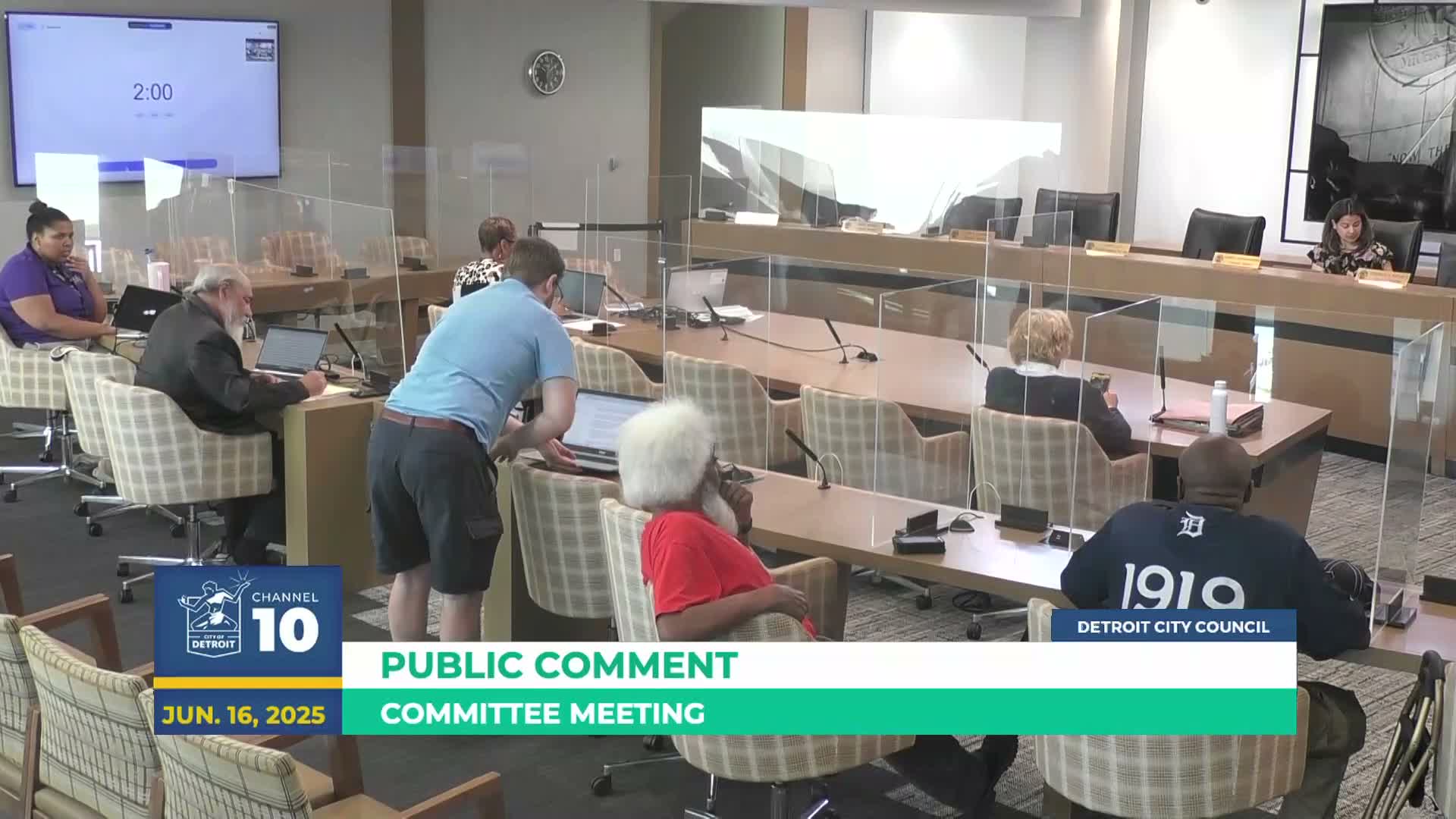
Public commenters at the Detroit City Council Public Health & Safety Standing Committee on June 16 urged the city to review recent security measures at two downtown transit hubs, saying private security searches and a ban on indoor waiting have made centers less accessible for riders.
"They're not allowing people to sit down on the inside," said Michael Cunningham during the committee's public-comment period, describing repeated incidents at the Rosa Parks and Jason Hargrove transit centers after metal detectors were installed. Joel Batterman, campaigns manager for Transportation Riders United, told the committee that private security screening is being used at both sites and that security personnel told riders they could not wait inside the facilities.
"Denying transit riders access to a warm or air conditioned space to wait for their buses, many of which arrive only once per hour, is outrageous," Batterman said, adding that the measures "criminalize transit riders and reinforce the perception that transit is unsafe." Other callers echoed concerns that the screening process can pose particular problems for riders with pacemakers, cochlear implants or survivors of sexual assault who may require alternative screening procedures.
Advocates asked why the city has installed metal detectors at transit centers when other public facilities do not use the same measures and urged the council to demand more oversight of DDOT's implementation. Bernard Majenski, a transit rider and organizer, said the installations took place without a public hearing and warned the city it risked lawsuits if alternative-screening practices were not in place for medical implants and survivors of assault.
The committee chair acknowledged the public comments and told the transit advocates that the committee had several DDOT contracts on the agenda and that those items — plus the quarterly DDOT update — were appropriate places to press the department for answers. The chair said staff would attempt to raise the callers' questions with DDOT officials during contract discussions and in the department's quarterly briefing.
No formal action on screening policy or DDOT operations occurred during the meeting; the committee did not vote on a policy change and instead moved forward with the published agenda items. Committee members did signal interest in having DDOT and contract-holders explain the decision-making and training behind security use at transit centers in a future session.
The committee record shows no administrative or operational response from DDOT at this meeting; the callers' claims were presented as allegations or firsthand observations and were not resolved on the record. The committee encouraged attendees to submit written details and documentation to staff for follow-up.
What happens next: the chair said the concerns would be raised during the day's DDOT contract discussions and in upcoming quarterly updates; the committee did not set a specific deadline for a DDOT report on screening practice or alternative-screening protocols.