Get Full Government Meeting Transcripts, Videos, & Alerts Forever!
Get email alerts on the Transit Security topic
No spam. Unsubscribe anytime.
Detroit riders and advocates press council over metal detectors and access at Rosa Parks and Hargrove transit centers
Summary
Riders and transit advocates told the Public Health & Safety committee that private security and newly installed metal detectors at Rosa Parks and Jason Hargrove transit centers have blocked riders from waiting inside, raised civil‑liberties and accessibility concerns, and prompted calls for a public inquiry.
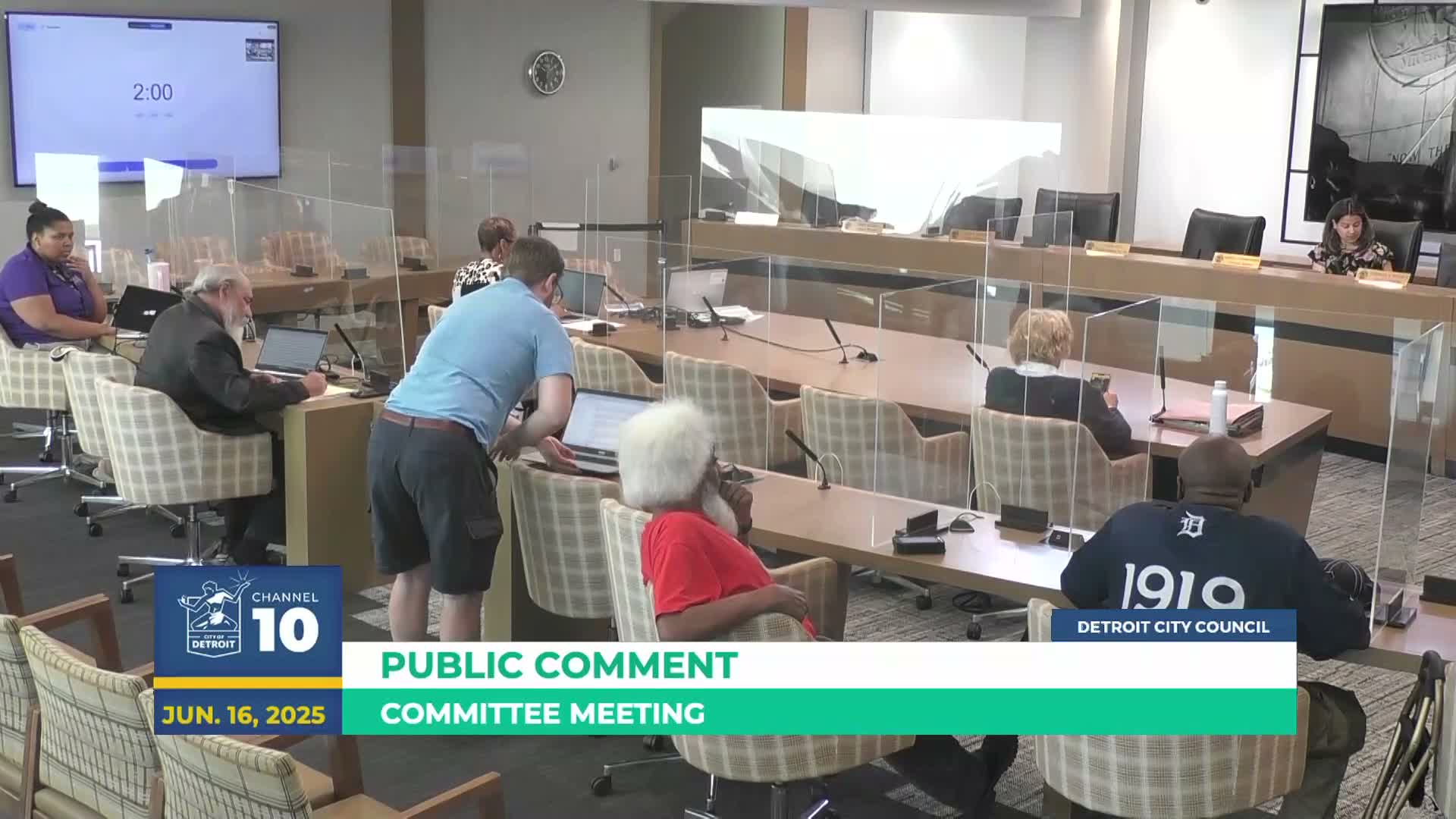
At a June 16, 2025 meeting of the Detroit City Council Public Health & Safety Standing Committee, transit riders and advocates urged the council to investigate recent security changes at the Rosa Parks and Jason Hargrove transit centers, saying metal detectors and private guards are effectively barring riders from waiting inside.
Michael Cunningham, an in‑person public commenter, said his contacts told him they are being refused permission to sit inside the indoor portions of the centers since metal detectors were installed. He asked the council or staff to conduct an unbadged audit to see how riders attempting to use seating are treated.
Joel Batterman, campaigns manager for Transportation Riders United, told the committee the measures “do not make riders safer” and said they “criminalize transit riders and reinforce the perception that transit is unsafe.” Batterman said guards have told riders they cannot wait for buses inside facilities designed for that purpose, creating barriers for seniors and people with disabilities whose buses may run infrequently.
Lucas Lisakian of Transportation Riders United and Bernard Majenski of Transit Justice Team echoed those concerns, describing what they characterized as informal, inconsistent screening and a lack of training for contracted security. Lisakian recounted a guard saying, “you'll get more than my name if you keep asking questions,” which he took as a threat and said he would report to city officials. Majenski raised particular worry about alternative screening for people with pacemakers, cochlear implants or trauma histories.
Several callers and in‑person speakers said the policy can push riders into the elements during extreme heat or cold. A city rider who identified herself as a senior described being told to reposition her phone and encountered a driver the commenter said had been “very disrespectful.”
Committee members said they had DDOT contracts later on the agenda and would attempt to raise the questions with agency staff during the meeting or at an upcoming quarterly DDOT update. The chair said staff could invite the DDOT director or a designated representative to a future session and that the committee would attempt to get operational details and vendor information so it could evaluate training, alternative screening procedures and signage for facility closures.
The committee did not take formal action on the matter at the June 16 session, but members agreed to pursue answers from DDOT and to put related contract questions on the record when DDOT staff were present.