Get Full Government Meeting Transcripts, Videos, & Alerts Forever!
Get email alerts on the Transit Security topic
No spam. Unsubscribe anytime.
Riders, advocates urge Detroit to reverse transit-center rules after metal detectors and bans on indoor seating
Summary
Riders and transit advocates told the City Council committee that metal detectors and private-security searches at Rosa Parks and Jason Hargrove transit centers are deterring riders, denying shelter to seniors and people with disabilities, and risk criminalizing regular users. The committee said it will raise the concerns with DDOT and follow up.
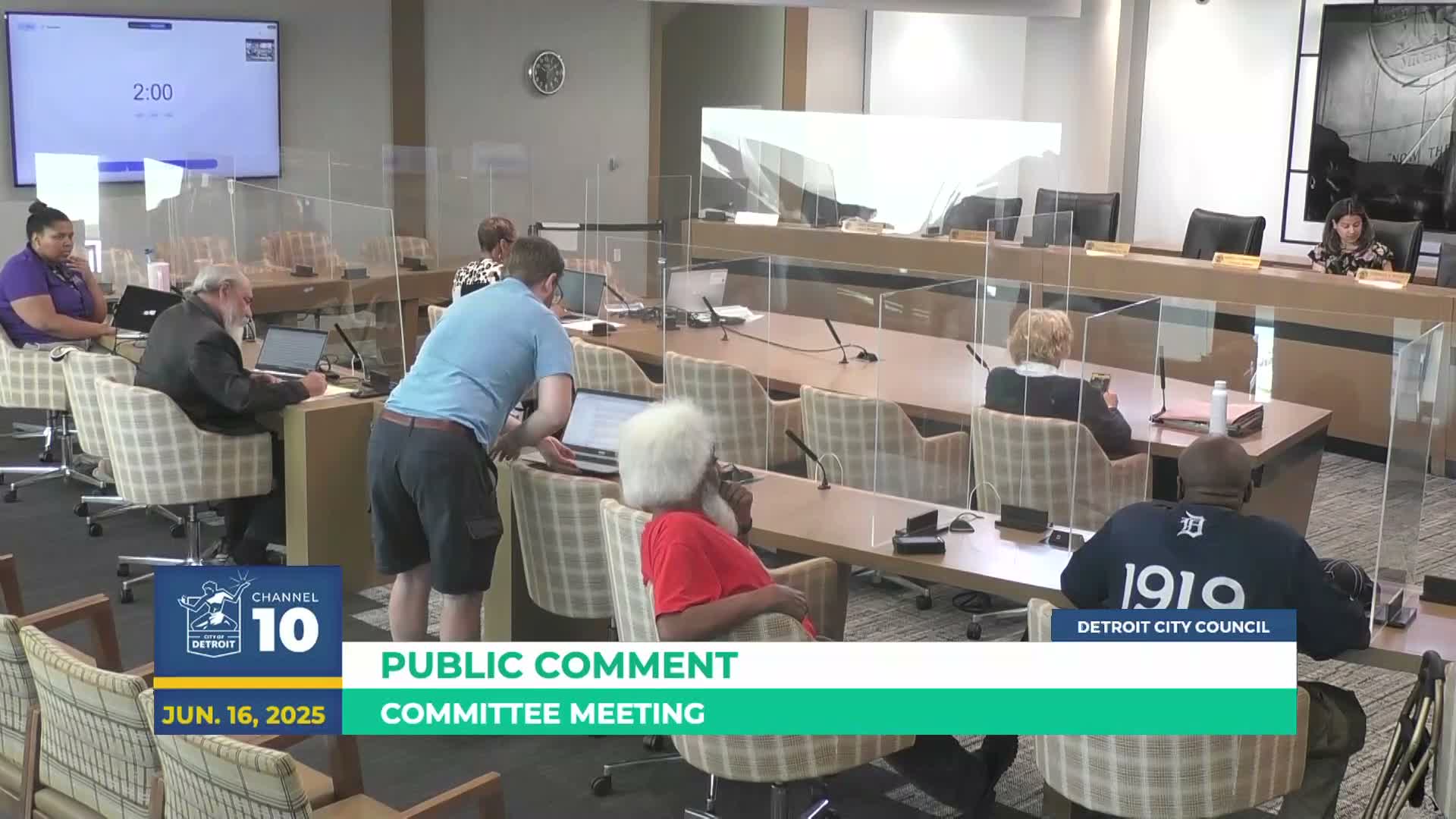
Public commenters and transit advocates addressed the Detroit City Council Public Health and Safety committee on June 16, saying new security procedures at two major transit hubs are worsening access and safety for regular riders.
"Metal detectors have been installed at each location," Joel Batterman, campaigns manager for Transportation Riders United, told the committee. "Every person entering the indoor portion of each facility is being searched by private security." Batterman said guards were telling riders they could not wait for buses inside the space designed for that purpose and warned the measures may deter people from using transit.
Other commenters described specific incidents and tone problems. Michael Cunningham urged the council to send an unbadged observer to the centers and "try to take a seat inside and see what happens," saying the prohibitions on sitting began after metal detectors were added. Rider Lucas Lisakian said a security guard told him, "you'll get more than my name if you keep asking questions," a statement Lisakian said he interpreted as a threat of violence.
Advocates presented three core claims: the measures do not demonstrably improve rider safety, they can bar vulnerable riders (including seniors and those with disabilities) from sheltered waiting areas, and the training and conduct of contracted security staff are inconsistent with public-safety goals. "Denying transit riders access to a warm or air conditioned space to wait for their buses... is outrageous," Batterman said, noting many buses run only hourly and riders may be exposed to extreme weather.
Committee members did not adopt a formal policy change during the meeting. The chair acknowledged the advocates' concerns and noted there were several DDOT contracts on the day's agenda; she said the committee could raise the question with DDOT staff and asked the department director or a representative to appear at a future session or the quarterly DDOT update.
What happens next: The committee said it will request DDOT to respond to specific allegations about seating restrictions, training and alternative screening procedures; members signaled they intend to include the issue in follow-up questions tied to DDOT contracts on the agenda or the department's next quarterly update. No formal motion or vote on DDOT policy occurred at the June 16 session.