Get Full Government Meeting Transcripts, Videos, & Alerts Forever!
Get email alerts on the Regulatory Reform topic
No spam. Unsubscribe anytime.
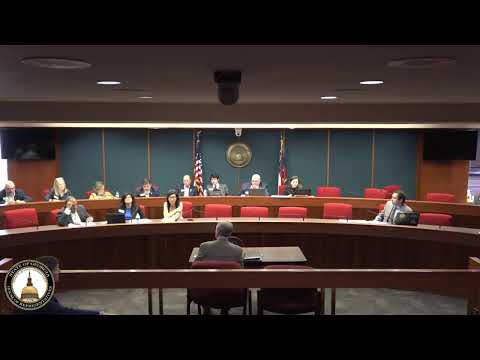
Committee advances red‑tape rollback substitute after debate over costs, DOR carve‑out and audit cadence
Summary
A substitute to a red‑tape rollback bill (LC550591S) moved forward after amendments that narrow a Department of Revenue carve‑out, require posting of small‑business impact analyses, and raise the legislative ratification threshold; lawmakers debated whether quadrennial agency audits and additional analysis requests would add bureaucracy or improve regulatory clarity.
The committee advanced a substitute to the so‑called red‑tape rollback bill (LC550591S) after roughly two hours of testimony and amendments. The presenter (Speaker 4), who introduced the substitute, described five main elements: raising the small‑business employee threshold used in rule analyses, creating a member‑requested small‑business impact analysis, establishing an economic‑impact analysis for rules estimated to cost more than a set threshold over five years, raising the committee objection bar for new rules, and mandating a four‑year internal review of existing agency rules.
Supporters said the measures aim to reduce compliance burdens on Georgia businesses and restore legislative oversight of costly agency rules. “This is the red tape rollback bill,” Presenter (Speaker 4) said, describing the substitute as a follow‑up to prior legislation and a vehicle for streamlining rule compliance for small businesses. The presenter also described the small‑business impact analysis as “akin to a fiscal note” and said the state auditor would produce those reports when requested by members.
Opponents and several committee members pushed back on likely implementation costs and administrative load. One lawmaker (Speaker 3) argued the proposal could impose substantial new work across “more than 150 agencies” and questioned how the state would calculate an overall fiscal effect. Department of Revenue representatives warned that many regulatory implementation costs tied to legislation could exceed the bill’s ratification threshold and asked for clarifying language so federally mandated rulemaking needed to implement federal requirements would not trigger the economic‑impact analysis. A Department of Revenue representative present identified the practical concern as a potential delay to rules needed to comply with federal law.
The committee adopted multiple amendments. Members voted to (a) revise language so that economic‑impact analyses are not required for rules mandated by federal law or required for participation in federally subsidized or assisted programs; (b) require that requested small‑business impact analyses be posted publicly in the same way fiscal notes are posted; and (c) raise the ratification threshold discussed in the draft from $1,000,000 over five years to $3,000,000 (the amendment kept the five‑year aggregation). An earlier motion to table the bill in order to secure an additional review with the state auditor failed. Attempts to strike the entire four‑year audit provision were rejected.
Committee members repeatedly sought an estimate of how many agencies and what staff time the mandate would require; participants in the hearing cited estimates that roughly 135 agencies could be affected and that Georgia currently employs tens of thousands of state workers, but those figures were presented as committee testimony rather than bill language. The presenter said the bill’s drafters had discussed the measures with the Office of Planning and Budget, the Department of Audits, and the Department of Revenue during drafting.
The committee moved the substitute forward as amended; the transcript records the committee adopting the amendments and reporting the bill favorably but does not record a complete roll‑call tally for the final do‑pass motion in the transcript. Next steps for the measure identified by members included possible technical refinements if particular categories of rules prove impractical to manage through the ratification process.
The hearing included sustained exchanges about tradeoffs — whether subjecting agencies to periodic self‑reviews would reduce burdens on citizens and businesses, or whether it would create additional work for underfunded agencies — and the committee left open the possibility of further changes before final floor consideration.