Get Full Government Meeting Transcripts, Videos, & Alerts Forever!
Get email alerts on the Transit Security topic
No spam. Unsubscribe anytime.
Riders, advocates press Detroit council over metal detectors and seating limits at transit centers
Summary
Transit riders and advocates told the council metal detectors and private security at Rosa Parks and Jason Hargrove transit centers have led guards to prohibit people from waiting inside, a change they say threatens seniors and people with disabilities and may deter transit use.
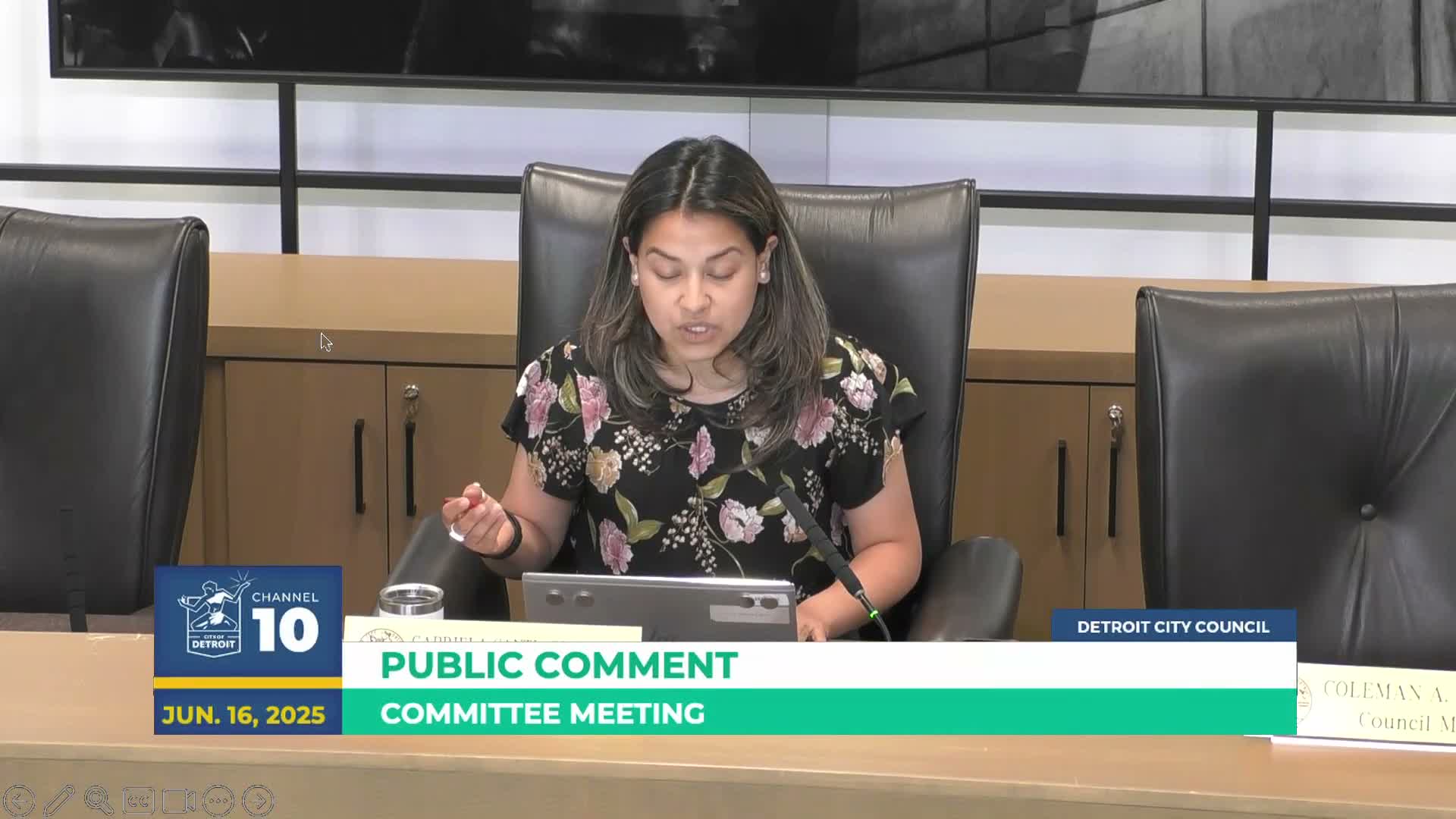
Transit riders and transit‑advocacy groups urged the Detroit City Council’s Public Health and Safety standing committee on June 16 to investigate new security practices at two major downtown bus hubs, saying private security searches and a rule preventing people from waiting inside the facilities are harming riders.
Joel Batterman, campaigns manager for Transportation Riders United, told the committee that metal detectors installed at the Rosa Parks and Jason Hargrove centers have prompted private security to search everyone entering the indoor portion and, in some cases, to tell riders they cannot wait inside. “We do not believe that these measures make riders safer,” Batterman said, and added that forcing people to wait outside is “cruel” for seniors and people with disabilities when buses run infrequently.
Several other callers and in‑room speakers repeated that concern. Michael Cunningham asked council members to send an unbadged observer to the transit centers to test whether riders are in fact being denied indoor seating. “They’re not allowing people to sit down,” Cunningham said, describing multiple reports from riders who say they were told to leave indoor seating areas after metal detectors were added.
Transit riders raised civil‑liberties concerns about private security conducting searches without individualized suspicion. Lucas Lisakian of Transportation Riders United said the screening resembles a stop‑and‑frisk practice and can create barriers to basic needs such as restrooms or shelter from extreme weather. He said one guard told him, “you’ll get more than my name if you keep asking questions,” which he interpreted as a threat.
The committee chair acknowledged the breadth of comments and said the body has DDOT contracts on its agenda for the day and would raise riders’ questions with the department and, if necessary, request the director or DDOT staff to appear for a fuller discussion at a future meeting.
No formal action was taken at the June 16 committee meeting to change policy; members instructed staff to include transit security concerns in follow‑up items and indicated they may ask DDOT for answers during the committee’s quarterly update.
Public commenters also linked the transit security issue to wider questions about the city’s risk‑management spending and contract transparency, requests the committee said it would attempt to address in subsequent sessions.