Get Full Government Meeting Transcripts, Videos, & Alerts Forever!
Get email alerts on the Arpa Allocation topic
No spam. Unsubscribe anytime.
West Palm Beach staff recommend ARPA focus on lost revenue replacement, premium pay and public-health relief
Summary
City administration told commissioners it will prioritize replacing lost revenue (including critical vehicle replacements), premium pay for in-person essential workers, and programs addressing public-health and economic harms rather than large water/sewer/broadband projects; dollar amounts will be set after a public hearing and lost‑revenue calculations.
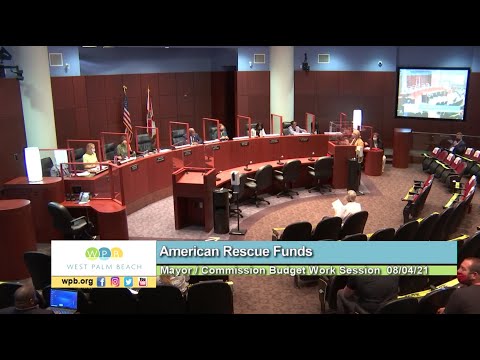
City administration outlined a three-part approach for using the city’s American Rescue Plan Act (ARPA) allocation, saying large water, sewer and broadband projects are not recommended for ARPA because of their high costs and potential alternative funding sources. Administrator Johnson said administration will propose focusing ARPA on replacing lost revenue, providing premium pay to eligible in-person workers and addressing public‑health and negative economic impacts.
City Attorney Miss Rothenberg summarized federal guidance and the interim final rules, noting metropolitan cities received federal allocations under the CDBG formula and that localities must obligate funds by Dec. 31, 2024 and spend them by 2026. She described four eligible categories under the interim rules: public-health/negative economic impacts; premium pay for eligible workers; replacement of lost revenue; and infrastructure (water, sewer, broadband). A numeric line in the transcript listing the city’s allocation is garbled and could not be confirmed from the record.
On premium pay, Rothenberg and staff said the guidance emphasizes targeting workers with regular in‑person contact or physical handling duties. The interim guidance places ceilings on premium pay — staff cited a maximum of $13 per hour and no more than $25,000 per person — and encourages prioritizing lower‑income workers; local leaders have discretion to identify which non‑remote employees qualify.
Administrator Johnson stressed staff are not making dollar recommendations at this meeting because a pending public hearing related to a union impasse could change the size of the funding ‘pie.’ She said administration will return with specific dollar allocations and a business case after finance completes lost‑revenue calculations and the public hearing occurs.
The commission’s next steps include receiving the finance department’s lost‑revenue figures for the 12/31/2020–12/31/2023 window, holding a public hearing on labor issues that may affect premium-pay decisions and then considering precise ARPA allocations in a follow‑up session.