Get Full Government Meeting Transcripts, Videos, & Alerts Forever!
Get email alerts on the Urban Renewal topic
No spam. Unsubscribe anytime.
Residents press council after Memorial Hospital outlines urban renewal footprint
Summary
Memorial Health System presented an urban renewal footprint to protect and expand services around Memorial Hospital; council members and residents, particularly from Ward 1, pressed for clearer resident notification, relocation safeguards, and written policy before any eminent‑domain or relocation actions.
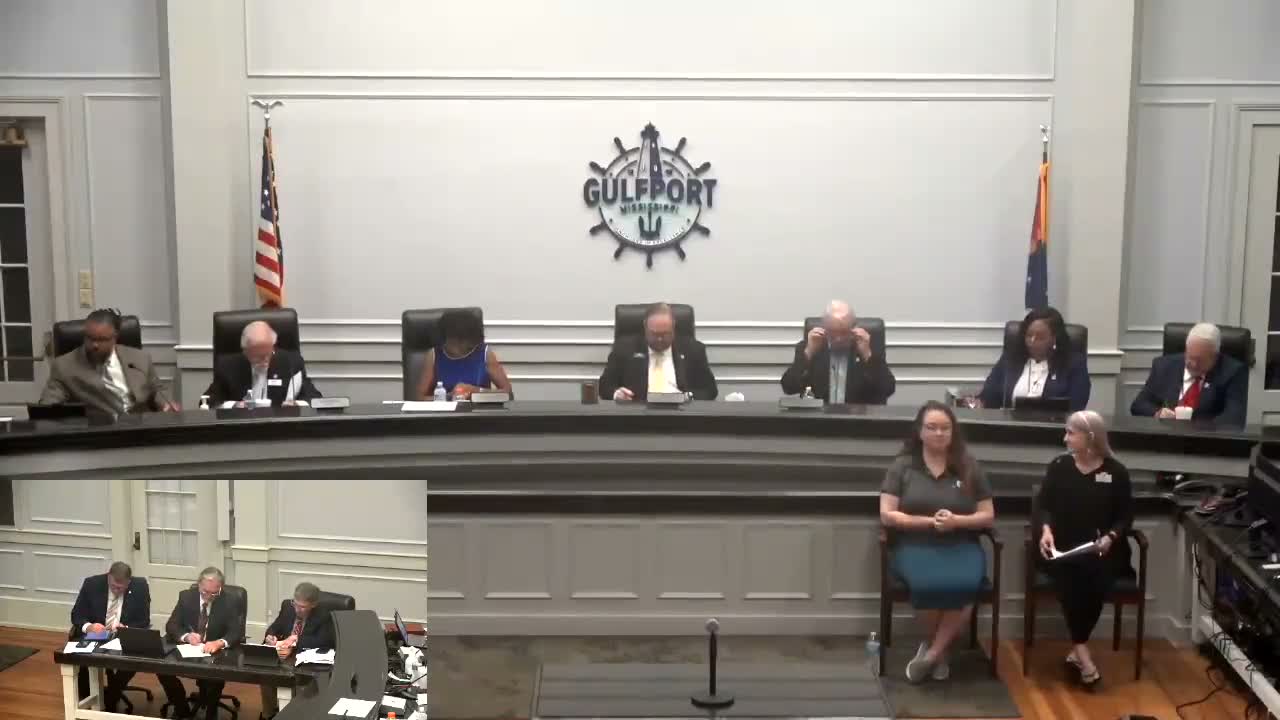
Memorial Health System representatives briefed the Gulfport City Council on a proposed urban renewal footprint intended to protect the hospital’s immediate service area and position the facility for future expansion. CEO Kent Niko said the proposal aims to secure grant funding, beautify the area and preserve the hospital’s reimbursement status by keeping services within about 250 yards of the main campus. “Memorial Health System is the largest asset of the city of Gulfport and Harrison County,” Niko told the council, adding that the system employs more than 5,000 people.
The plan drew immediate concern from Ward 1 council members and residents, who said many homeowners and small businesses were surprised to find their properties included on planning maps and worried about displacement. “My people can’t go into their own community center when it’s raining because we have this program that’s in there that’s not benefiting my community,” Councilmember Mitch Buckner said, referencing an earlier lease of a recreation center. Buckner and others asked whether affected homeowners had been notified and urged more time for community outreach.
City counsel Jeff Bruni and staff said the hospital itself has no power of eminent domain. Bruni explained how the Gulfport Redevelopment Commission (GRC) would study redevelopment proposals and that any relocations of owner‑occupied homes would require approval by the city council under the Uniform Relocation Act (URA): “If something comes up to where we say we need this owner‑occupied home, then it comes back to the council for the relocation,” Bruni said. He emphasized the council’s role in any relocation decisions and the federal URA protections, including compensation and assistance for displaced homeowners.
Council members pressed both the hospital and staff for a written policy on how residents would be notified and protected. Several council members said they had not seen the full maps prior to the meeting and asked that printed materials be distributed to residents in the footprint before any further council action. Niko and hospital staff reiterated that no immediate construction or displacement was planned and said they would provide additional materials and follow up with ward representatives.
The matter prompted a motion from a council member to rescind the previously added urban renewal item so the council could gather more information; that motion was later withdrawn after the city and hospital agreed to continue outreach and provide documents to residents. The council did not take formal action to alter the urban renewal designation at the meeting.
Next steps: staff said the GRC would continue studies and that any relocation of owner‑occupied residences would return to the council for a separate vote with URA protections. Councilmembers requested mailed or otherwise direct notifications for residents inside the proposed footprint and additional briefings before further votes.