Get Full Government Meeting Transcripts, Videos, & Alerts Forever!
Get email alerts on the Criminal Justice topic
No spam. Unsubscribe anytime.
Kennesaw council debates trimming misdemeanor cannabis penalties but keeps state limits in view
Summary
Councilmember Anthony proposed changing local wording to reduce penalties for simple marijuana possession to a $500 maximum fine or community service; city attorneys said state law still allows higher maximums and the city currently rarely prosecutes these cases because lab testing is not available.
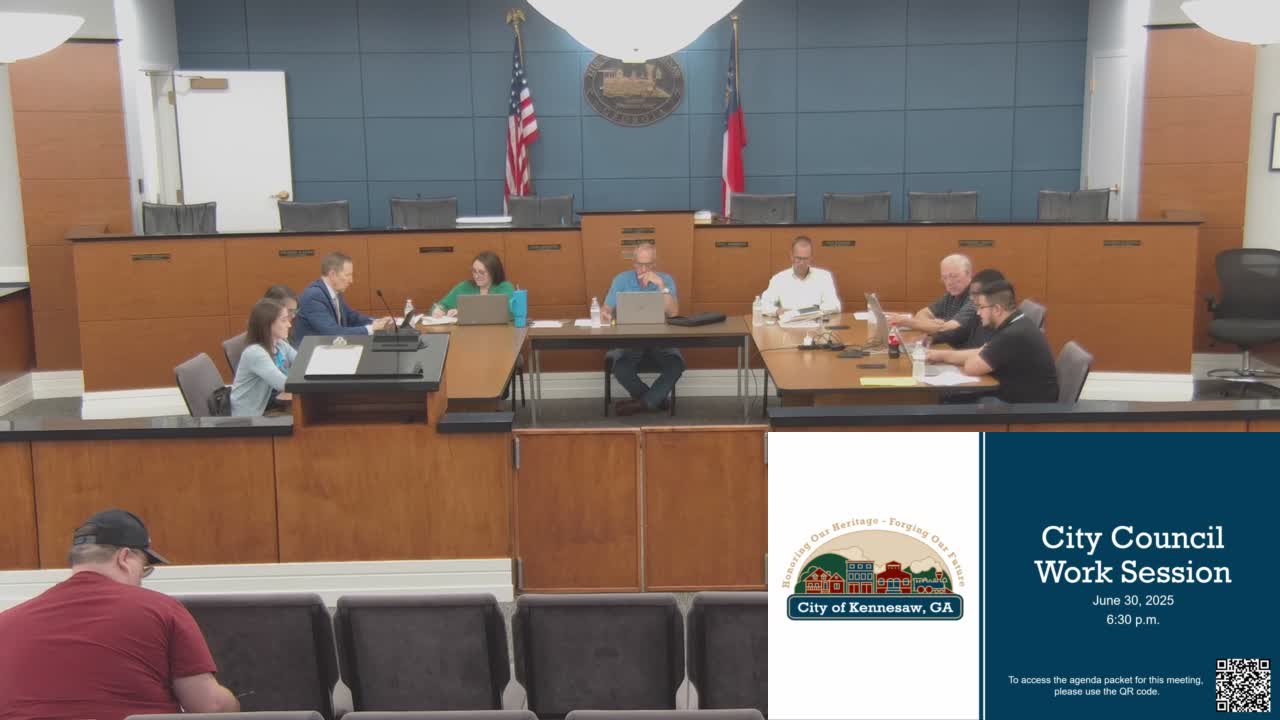
Councilmember Anthony proposed at the June 30 Kennesaw work session that the city revise its ordinance for simple misdemeanor cannabis possession to replace the current language allowing "up to 12 months in prison and a fine not exceeding $1,000" with a penalty of "a fine not exceeding $500 or community service or both." The proposal prompted a lengthy council discussion about local practice, state law and diversion programs.
The change would alter local ordinance wording but would not remove state law maximums, council legal staff said. "You cannot change state law," the City Attorney said, adding that state law still establishes misdemeanor maximums. The Assistant Solicitor told the council the city has not been prosecuting misdemeanor marijuana possession "at all" since about 2019–2020 because the Georgia Bureau of Investigation laboratory would not process those samples, leaving prosecutors without lab confirmation to pursue charges.
Councilmembers described competing priorities. One member said the ordinance is a tool for officers to address disruptive behavior in public spaces and emphasized keeping options available for public‑safety responses. Another councilmember framed the proposal as addressing racialized enforcement: "It has been a weaponized tool that has destroyed communities," the councilmember said.
City legal staff explained the existing diversion framework: a six‑month program with conditions such as community service, an alcohol and drug evaluation and monitoring; staff cited a diversion fee example of about $432.38 plus potential monthly probation supervision fees. "If they successfully complete all of those requirements in a 6 month period of time, we dismiss the case," the Assistant Solicitor said, and the participant can petition to have the arrest record sealed.
Police staff confirmed that when officers encounter amounts under an ounce they seize the substance and take it for destruction rather than pursue prosecution in practice. The Assistant Solicitor and City Attorney said that while local ordinance language could state the council's policy preference (for example, noting no jail time for simple possession), it would not change the fact that state law provides the statutory maximum that a judge could, in theory, impose.
After discussion council directed staff to place the ordinance wording change on a future agenda so the council can hold the required public hearing(s) and vote. The meeting then moved to a closed executive session for legal matters under state law.
The next procedural step is for staff to draft the ordinance language and schedule the public‑hearing notices required by the city; councilmembers indicated they will vote on whether to proceed once the item is publicly noticed.