Get Full Government Meeting Transcripts, Videos, & Alerts Forever!
Get email alerts on the Esa Policy topic
No spam. Unsubscribe anytime.
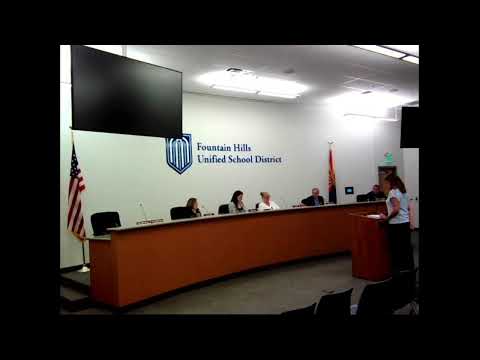
Parents and residents press Fountain Hills board on ESA students’ athletic eligibility
Summary
Two extended public commenters asked the board to either follow AIA rules and exclude ESA-funded home-educated students from district athletics, or to allow them to participate; the discussion exposed uncertainty about state guidance and potential financial trade-offs for the district.
Wendy Barnard, a Fountain Hills parent, told the governing board the district should adhere to Arizona Interscholastic Association (AIA) bylaws and not allow ESA-funded home-educated students to participate in district athletics. “According to ADE, homeschooled students whose families collect ESA funding change their status to a private school student,” Barnard said, adding, “The AIA does not make exceptions and neither should this board.”
Renee Johnson, a parent and resident, replied that other districts in the region allow ESA students to participate and argued that excluding those students could cost the district participation and revenue. Johnson said she had contacted state and county offices for clarification and asked the board to consider the local effects if ESA families cannot participate in district programs: “If a kid can’t join robotics club, they could take STEM classes at Fountain Hills Community Center,” she said, urging the board to weigh both student opportunity and district finances.
Why it matters: The exchange raised two distinct, practical concerns for the board: (1) legal compliance with the AIA and state guidance about student classification, and (2) operational and financial consequences for small or rural districts where lost participants can undermine team viability and program revenue. Both commentators asked the board to obtain explicit legal or regulatory clarification before adopting policy.
What the board said: Board members noted the matter is scheduled for future action and asked staff to seek clarifying guidance from the AIA and other agencies before making a policy change. Dr. Jay and board members emphasized the need to protect currently enrolled students’ opportunities while also understanding legal limits.
Next steps: The board confirmed the item will be placed on a future agenda for discussion and potential action after staff reports back with guidance from relevant authorities.