Get Full Government Meeting Transcripts, Videos, & Alerts Forever!
Get email alerts on the Education Equity Goals topic
No spam. Unsubscribe anytime.
Tempe Union trustees debate equity 'guardrails' as they refine districtwide student-outcome goals
Summary
Trustees discussed whether to keep districtwide 5% proficiency targets or adopt higher, subgroup-specific goals and 'guardrails' to ensure gains for five historically marginalized student groups; the board asked staff to draft two goal versions for final consideration on Aug. 16.
Trustees for the Tempe Union High School District spent much of a study session debating how to frame districtwide student-outcome goals so they both raise overall proficiency and protect gains for students who have lagged historically.
Superintendent Doctor Mendiville told the board the executive team had reformatted retreat goals into a single document and proposed reporting percentage gains across all students while adding disaggregated subgroup targets. He described a suggested change to Goal 1 that would require disaggregated subgroup scoring, for example, “proficient by 5% on the ACT math exam during this school year.”
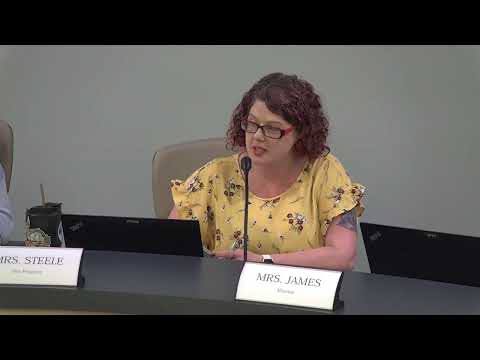
Member James urged that the board incorporate explicit guardrails to prevent the district from “riding on” gains produced by higher-performing groups while leaving marginalized groups behind, saying the guardrails should be prominent in goal language so the district “laser focus[es]” resources on targeted subgroups. Vice President Steele and other trustees pressed for clarity on which subgroups the board meant; President Montero confirmed the five groups under discussion: Black or African American; American Indian or Alaska Native; Hispanic or Latino; students with disabilities; and limited English proficient students.
Trustees debated whether a uniform 5% target across all student groups would undercut the board’s equity intent and whether a uniform 10% target was achievable for larger subgroups. Several members said a single percentage may miss differences in subgroup size and historical performance; others pointed to campus-by-campus variation and recommended drafting a range or subgroup-specific percentages based on historical data.
Board members and staff agreed to have the executive team draft two versions of the goals — one more compact districtwide set and one with subgroup-specific targets and guardrails — and return on Aug. 16 with concrete wording and metrics. The board also discussed aligning site-level school goals to the district targets and ensuring principals and teachers receive turn-key guidance and monitoring tools once the board adopts final language.
The board framed the revisions as an effort both to set an achievable, measurable district baseline and to make certain that gains are equitable across the five named student groups. Trustees directed staff to produce the two drafts and supporting data that show what subgroup-specific percentage increases would mean in head-count terms for individual campuses.