Get Full Government Meeting Transcripts, Videos, & Alerts Forever!
Get email alerts on the Albany Westover Cid topic
No spam. Unsubscribe anytime.
Developers and property owners propose Albany Westover CID; commission hears benefits and process
Summary
Colony Bank representative Heath Fountain and consultants presented a proposal to form the Albany Westover Community Improvement District (CID), saying 82 property owners have consented and that the CID would levy an additional assessment to finance infrastructure and improvements; staff said city commission approval and a property-owner caucus are next steps.
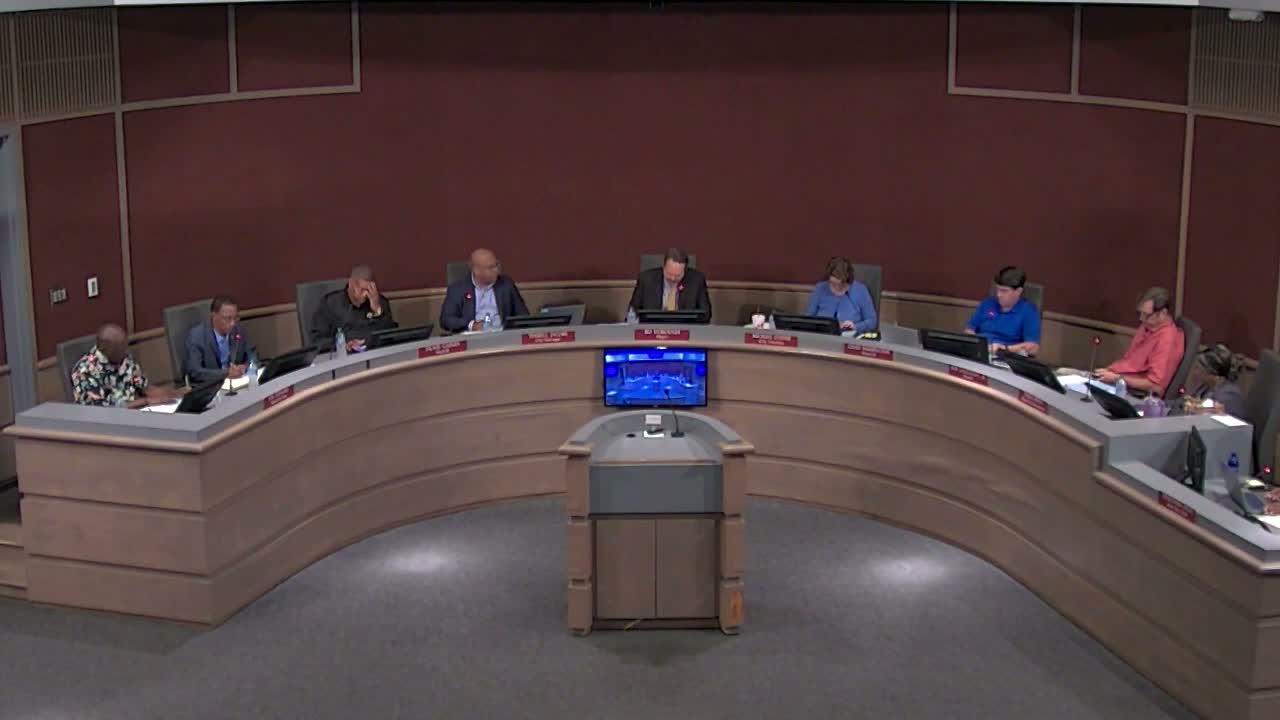
Speakers from the organizing group presented a proposal July 1 to form the Albany Westover Community Improvement District (CID), a self-assessed commercial property district intended to fund local infrastructure, safety and aesthetic improvements.
Heath Fountain, identified in the record as CEO of Colony Bank, said the group raised $75,000 to study the CID and hired consultants (including Michael Letad and legal counsel Jim Moore) to examine viability. Fountain said the enabling legislation (House Bill 160) was passed in early 2023, effective May 1, 2023, allowing CIDs to form in Albany. He told the commission that 82 property owners in the proposed Westover area had consented and that the county accounting/tax director had reviewed the consents and approved that step.
Fountain explained the CID model: commercial property owners in a defined, contiguous area agree to an additional self-assessment (in addition to regular property taxes) that funds improvements inside the district and can be used to leverage state and federal programs, including possible targeted allocations from GDOT and other agencies. He emphasized that funds collected by the CID must be spent within the district boundaries and that the organizing group will hold a property-owner caucus to elect three board members; the city commission will appoint one member as prescribed by law. The CID’s five-member board will determine the millage/assessment rate, typically three to five mills, Fountain said.
Commissioners asked clarifying questions about boundaries, whether nonconsenting businesses could benefit if facing the district, and the process to add other properties later. Consultants and staff reiterated that projects funded by the CID must be spent inside the district but improvements could tangentially benefit neighboring properties. Commissioners also discussed the potential to replicate the CID model across other wards and the urgency of adopting a resolution in time to get assessments on tax bills this year; Fountain said the organizing group seeks commission approval later this month to meet that timing.
No formal vote was taken on the CID at the July 1 work session; staff said a resolution and the formal documentation required by state legislation will be prepared for commission consideration. Fountain and the consultants offered to assist with informational meetings for other areas of the city interested in pursuing CIDs.