Get Full Government Meeting Transcripts, Videos, & Alerts Forever!
Get email alerts on the Language Access topic
No spam. Unsubscribe anytime.
SFPD updates language-access work as advocates press for faster improvements
Summary
Commander David Lazar reported fewer LEP incident reports year-over-year and outlined training, dispatch and signage changes; advocates and survivors described wrongful arrests and called for more bilingual officers and improved language assessment.
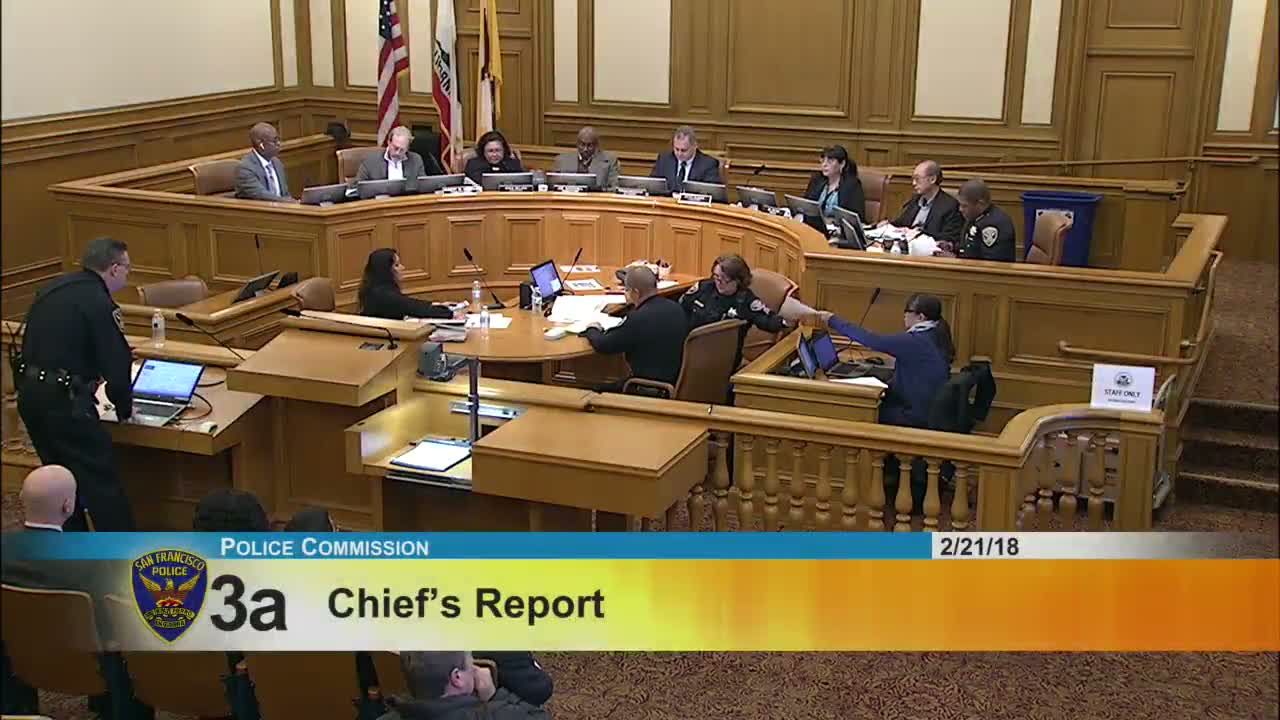
Commander David Lazar presented the department’s annual limited-English-proficiency (LEP) report and described steps to improve language access for victims and callers. Lazar said SFPD recorded 3,308 incident reports involving LEP persons in the January 2017–January 2018 period, compared with 4,222 incident reports in fiscal year 2016–17.
Lazar summarized department general order 5.2 procedures: request a certified bilingual officer to respond, follow with a qualified civilian interpreter or the language line, and use on‑scene assistance in exigent situations only until the certified bilingual officer is present. He said the department identified six sustained language-access complaints forwarded to the Department of Police Accountability in the prior year and has eight pending cases.
Planned fixes include refresher training for more than 300 certified bilingual officers, a March 7 class for 25 officers, a dispatch change to call certified bilingual units directly, and multilingual instructions (five languages) in the records division and online. Lazar also described a pilot to post multi-language marquis signage at Mission Station so LEP residents can access information while waiting to file reports.
During the public-comment period, survivor advocates recounted cases where language barriers led to wrongful arrests or inaccurate reports. Diana Tejada, an advocate with San Francisco Women Against [redacted], described a 2015 case in which an LEP survivor she represented was arrested after officers relied on the English‑speaking partner's statements; Tejada said medical evidence later showed the client was the victim. Anna DeCarolis of Mujeres Unidas y Activas and Beverly Upton of the Domestic Violence Consortium urged more consistent language assessment, professional interpretation (including ASL), and training for officers interacting with victims.