
Council signals support for consultant pay plan, approves temporary building‑maintenance hire
Get AI-powered insights, summaries, and transcripts
Subscribe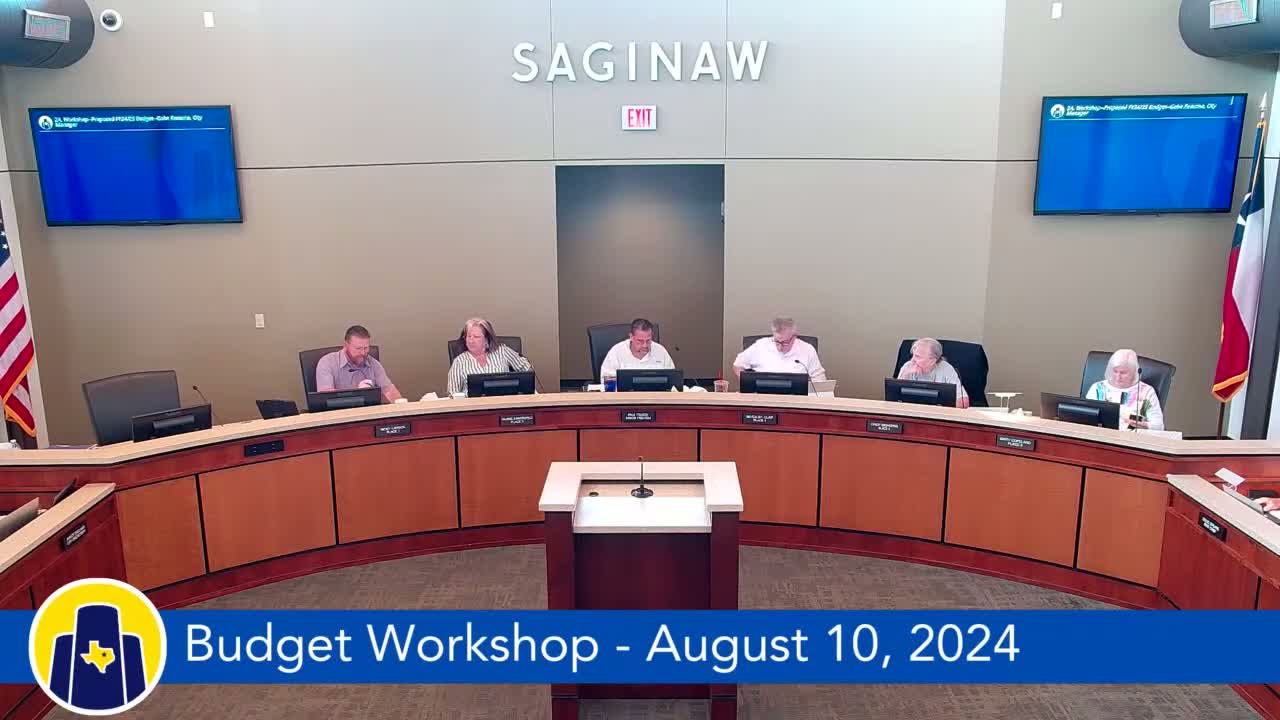
Summary
After extended debate, council members moved to implement a third‑party compensation plan to reduce pay compression and to fund a two‑year temporary building‑maintenance manager post (with one‑time vehicle/equipment costs) while monitoring revenues and mid‑year budget capacity.
Council members on Saturday agreed in principle to implement a consultant‑recommended compensation adjustment designed to bring long‑tenured staff closer to market pay, and to fund a temporary building‑maintenance manager for up to two years while the city evaluates midyear revenues and applicant interest.
The council used a budget workshop to weigh three options presented from a Baker Tilly compensation study: adopt the full recommended salary adjustments, cap individual increases at 20% in a phased approach, or postpone changes. Councilmember (Speaker 9) said the study showed long‑service employees had been receiving what he called a “Saginaw discount” and that the recommended plan would correct compression that leads trained employees to leave for higher‑paying agencies.
‘‘The profile is very clear,’’ Councilmember (Speaker 9) said, ‘‘our long‑term employees have been giving the city a discount; this gets them closer to market and helps us retain experienced staff.’’ Staff and the finance director cautioned the changes must be balanced against tight near‑term budget constraints and anticipated new revenues.
City finance staff (Speaker 6) told the council the administration had modeled an option that caps raises at 20% for the most‑impacted employees while making targeted exceptions so those below minimum pay ranges could be moved to midpoints. That approach would spread the cost and produce a near‑term “cost avoidance” estimated by staff at roughly $138,900 compared with implementing the consultant’s full schedule immediately; staff cautioned it would require follow‑up adjustments next year to finish closing market gaps.
In addition, council members prioritized a single new position to address recurring facilities problems: a building‑maintenance manager. Under the compromise the council discussed, the role would be temporarily funded with one‑time resources for two years to allow the city to recruit and evaluate the position before making it permanent. The proposed package includes a roughly $62,000 starting salary and an estimated $80,000 van/stocking and equipment one‑time cost; staff estimated total one‑time funding around $174,200.
Chief Craver (Speaker 20) and other department leaders said a building‑maintenance coordinator would reduce recurring reactive repair costs and free department heads to focus on core duties. Resident speaker Pete (Speaker 19) urged the council to ‘‘hire somebody to do the maintenance for the buildings’’ and said failing to invest in maintenance costs taxpayers more over time.
Staff said the temporary hire approach keeps the budget structurally balanced for the coming year while giving time to evaluate midyear sales‑tax receipts and new property valuation growth before committing the position as ongoing. The council asked staff to advertise the temporary position immediately if the budget is adopted and to report back quickly on applicant responses and any midyear funding opportunities.
The workshop did not include a formal roll‑call vote on the compensation implementation or the temporary hiring approach; staff framed the direction as a consensus to pursue Baker Tilly’s recommendations with the temporary building‑maintenance compromise and to return to council with a final ordinance or budget amendment if required.
The council plans to adopt the fiscal year 2024–25 budget at a subsequent meeting where staff will present final numbers and any recommended midyear adjustments.