Get Full Government Meeting Transcripts, Videos, & Alerts Forever!
How to spot and manage emerald ash borer: identification, treatment and resources
Summary
MDA technical coordinator Jonathan Ostes outlined how to identify emerald ash borer (S‑shaped galleries, larval tail spines, woodpecker damage), options for treatment or removal, expected costs, and reporting and grant resources for communities and homeowners.
The Minnesota Department of Agriculture provided practical guidance on identifying emerald ash borer and on management options for homeowners and communities.
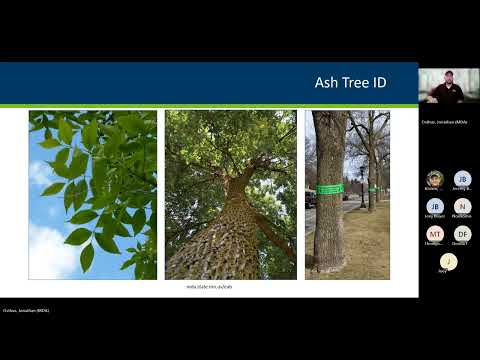
Jonathan Ostes explained the most reliable field signs: serpentine S-shaped feeding galleries under the bark, larval bodies with two tail spines (uragomphi), and woodpecker 'blonding' with shallow, dime-sized holes. "If you find that S-shaped feeding gallery in an ash tree, it is emerald ash borer," Ostes said. He cautioned that D-shaped exit holes and adult sightings can be harder to use for identification because they are small or can be confused with other insects.
Ostes reviewed the insect’s life cycle and detection window: adults typically emerge in mid‑May to June in southern Minnesota (timing varies by growing degree days) and larvae can overwinter in the tree,…
Already have an account? Log in
Subscribe to keep reading
Unlock the rest of this article — and every article on Citizen Portal.
- Unlimited articles
- AI-powered breakdowns of topics, speakers, decisions, and budgets
- Instant alerts when your location has a new meeting
- Follow topics and more locations
- 1,000 AI Insights / month, plus AI Chat