Get Full Government Meeting Transcripts, Videos, & Alerts Forever!
Get email alerts on the Pier27 Management topic
No spam. Unsubscribe anytime.
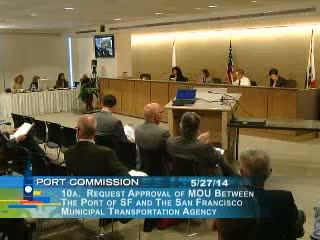
Commission approves Pier 27 management agreement with Metro despite neighborhood concerns about events and parking
Summary
The Port Commission approved a management and license agreement with Pacific Cruise Ship Terminals LLC (Metro) to operate the James R. Herman Cruise Terminal at Pier 27; commissioners and public commenters debated visitor parking, BCDC permitting and event-related neighborhood impacts before adopting Resolution 14-38.
The Port of San Francisco commission voted May 28 to approve a management and license agreement with Pacific Cruise Ship Terminals LLC (referred to as Metro in staff presentations) to operate the James R. Herman Cruise Terminal at Pier 27, port staff said. Staff framed the agreement as a way to prioritize cruise calls while allowing use of the terminal for events and visitor parking on non-cruise days, subject to required permits.
John Dahl of Planning & Development told commissioners the port selected Metro to manage Pier 27 and Pier 35 operations and outlined booking priorities. “It—s a cruise terminal first, and when it does not serve as in this crew as a cruise function, then we intend to utilize the terminal space for other uses because it brings people to the waterfront and generates revenue to the port to cover its costs,” Dahl said.
Public commenters voiced both support and concern. Sean Farley (ILW) praised Metro staff and Supercargo teams expected to run the terminal, calling their work “fantastic.” Frederick Allardice, representing Recreation Open Space for the Waterfront, urged the commission to protect nearby neighborhoods from noise and event mismanagement and noted a prior lawsuit that prevented Live Nation from running concerts at Pier 27, arguing the neighborhood had been harmed during past events. “We filed a lawsuit, and we won that lawsuit stopping Live Nation from never having another event on Pier 27 unless the port put out an RFP,” Allardice said, and he asked the commission to ensure enforceable hours, noise limits and oversight before events are broadly permitted.
Commissioners pressed staff on the question of visitor parking in the ground transportation area (GTA). Diane Oshima, Planning & Development Division, told the commission the visitor-parking issue is not a public trust consistency question but that the existing BCDC permit did not list visitor parking among permitted uses and that BCDC—s concern centers on how vehicle crossovers could affect public access along the Embarcadero Promenade. Oshima said the port has prepared transportation-management strategies and staffing scenarios to mitigate pedestrian conflicts if visitor parking is allowed.
Despite the concerns, commissioners voiced support for the agreement as necessary to make Pier 27 operational by late September; a voice vote carried the motion and the commission adopted Resolution 14-38 to authorize the agreement. The staff report and the record note that staff retains authority to negotiate revisions pending the outcome of discussions with the Bay Conservation and Development Commission (BCDC) about a permanent amendment for visitor parking.
Why it matters: The agreement assigns operations to a private manager and establishes how the terminal will be used when cruise ships are not berthed. Neighbors and community groups signaled they will monitor event approvals and enforcement closely; the unresolved BCDC permit for part-time visitor parking remains a material variable for the project—s financial outlook.
Next steps: Staff will continue discussions with BCDC about a permit amendment for visitor parking and return to the commission as needed. Community groups indicated they will remain engaged and may seek additional conditions in subsequent planning and permitting steps.