Get Full Government Meeting Transcripts, Videos, & Alerts Forever!
Get email alerts on the Capital Plan topic
No spam. Unsubscribe anytime.
Port Commission approves 10-year capital plan amid warnings that expenses may outpace revenues
Summary
The Port Commission approved a 10-year capital plan outlining $1.59 billion of state-of-good-repair need and $1.14 billion of identified funding sources, with development projects expected to supply roughly 43% of funding; staff warned that operating expenses are projected to grow faster than revenues without new revenue or management intervention.
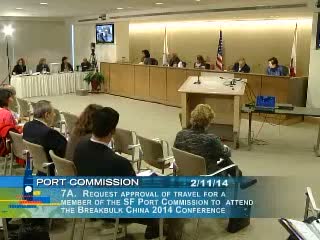
The Port Commission on Feb. 11 received a two-part financial briefing and voted to approve the port's 10-year capital plan, a policy document that maps projected capital needs and potential funding through 2024.
Elaine Forbes, deputy director of finance and administration, opened the session with audited results and accrual-based projections, noting the port's stronger position since 2008: "we've guided $195,600,000 of investment," and the port closed last year with "$123,600,000" in cash and investments. Forbes also warned that the five-year projections show operating expenses growing faster than operating revenues and said the situation requires "careful management intervention." Staff highlighted cruise and real-estate growth as key revenue drivers; Marilyn Yeh, a maritime financial analyst, confirmed 75 cruise calls and 260,000 passengers booked so far for 2014.
Anne Carey, who presented the 10-year capital plan, said staff identified approximately $1.59 billion in state-of-good-repair needs and separately listed $463 million in conditional seismic work. The plan forecasts $1.14 billion of potential funds over the decade; development projects are expected to provide roughly 43% of identified funding and $243 million toward the backlog. Carey emphasized that the capital plan is a guiding document rather than an appropriation, and she listed partnerships, grants and bonds as primary external funding sources.
Commissioners pressed staff for more granular sensitivity analyses and an operating cash-flow statement to test assumptions about vacancy rates, lease vintages and contributors to projected real-estate revenue. Staff acknowledged uncertainty in longer-range contributed capital estimates and agreed to provide more detailed variables behind the projections. Commissioner comments emphasized the need to pursue grants and third-party funding aggressively if the port is to address the backlog.
The commission voted to approve the 10-year capital plan after discussion; commissioners also directed staff to return with more detailed scenario analyses and a report on options for addressing unfunded backlog items. The vote was recorded as a voice vote with commissioners responding "Aye."