Get Full Government Meeting Transcripts, Videos, & Alerts Forever!
Get email alerts on the Water Supply Program topic
No spam. Unsubscribe anytime.
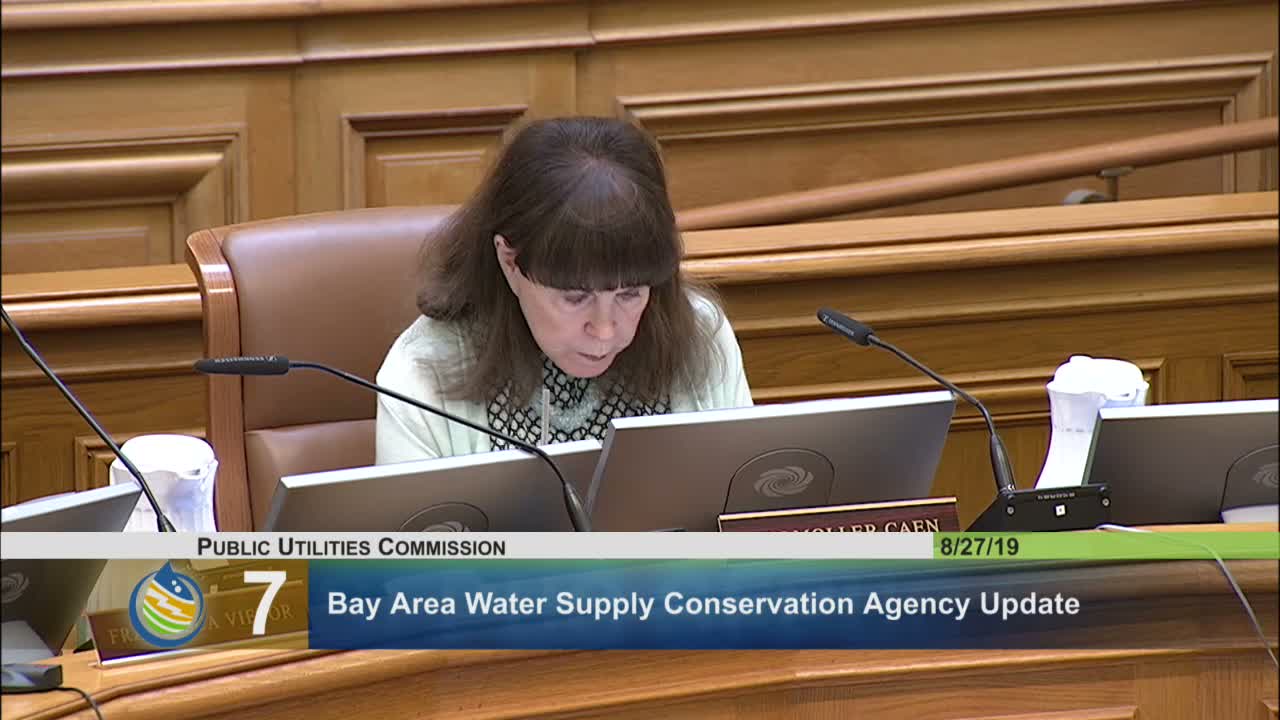
SFPUC starts program to identify new water supplies after regional warning
Summary
A Bay Area water-users group warned San Francisco could lose tens of millions of gallons per day under a state plan; SFPUC staff said a new internal program, short-term hires and a report to the commission will lay out options including recycled water and transfers.
The San Francisco Public Utilities Commission on Wednesday heard a regional warning that state actions to protect the Bay-Delta could cut the city nd neighboring counties—y tens of millions of gallons a day and pledged to accelerate a new water-supply program.
A representative of the Bay Area regional water users gency (transcript: BOSCA) told the commission the state—ay-Delta plan could force mandatory 50% reductions in multiple-year droughts and said SFPUC—stimates the adopted plan could reduce supply by about 90,000,000 gallons per day. SFPUC staff later corrected that estimate to 93,000,000 gallons per day.
Steve Ritchie, SFPUC assistant general manager for water, told commissioners staff have formed a small internal task force, will post notices to recruit two three-year project-level positions and seek an additional manager, and expect to bring an initial program report to the commission in September or October. Ritchie said the capital-improvement program includes roughly $19,000,000 for additional water-supply projects this fiscal year (about $13.5 million regional, $5.5 million local) and that staff already maintain a list of roughly 14 candidate projects.
"We are beginning serious work on that now," Ritchie said, adding some projects could advance faster than others and that the commission will have to approve any plan and any environmental review.
Staff described potential types of projects under consideration, including indirect potable reuse agreements with sanitation districts, partnerships with irrigation districts to share Tuolumne River supplies, and evaluations of scenarios related to existing infrastructure such as Calaveras Dam. Ritchie said some alternatives would require lengthy planning and environmental processes; he estimated a large dam-related project could take about 10 years in planning.
Commissioners pressed for an early high-level program overview focused on goals and resource needs. Several asked for report that is less project- and staff-specific and more about overall program parameters and contingency plans if the state implements the Bay-Delta plan.
BOSCA urged the commission to appoint a high-level staff executive to lead the program, produce monthly progress reports, and ensure the program has sufficient budget and support staff by the end of the year.
Next steps: SFPUC staff said they will advertise the project positions within weeks, develop site concepts and project-level information, meet next week with BOSCA to review progress, and return to the commission with a program structure and timeline this fall.