Get Full Government Meeting Transcripts, Videos, & Alerts Forever!
Get email alerts on the Crisis Intervention topic
No spam. Unsubscribe anytime.
SFPD says crisis-intervention teams expanded as officers respond to tens of thousands of mental-health calls
Summary
Lieutenant Mario Molina told the Police Commission on Sept. 13 that SFPD has trained hundreds of officers in Crisis Intervention Team (CIT) tactics and is partnering with the Department of Public Health to respond jointly to growing mental-health calls; department data show 32,673 such calls in two quarters.
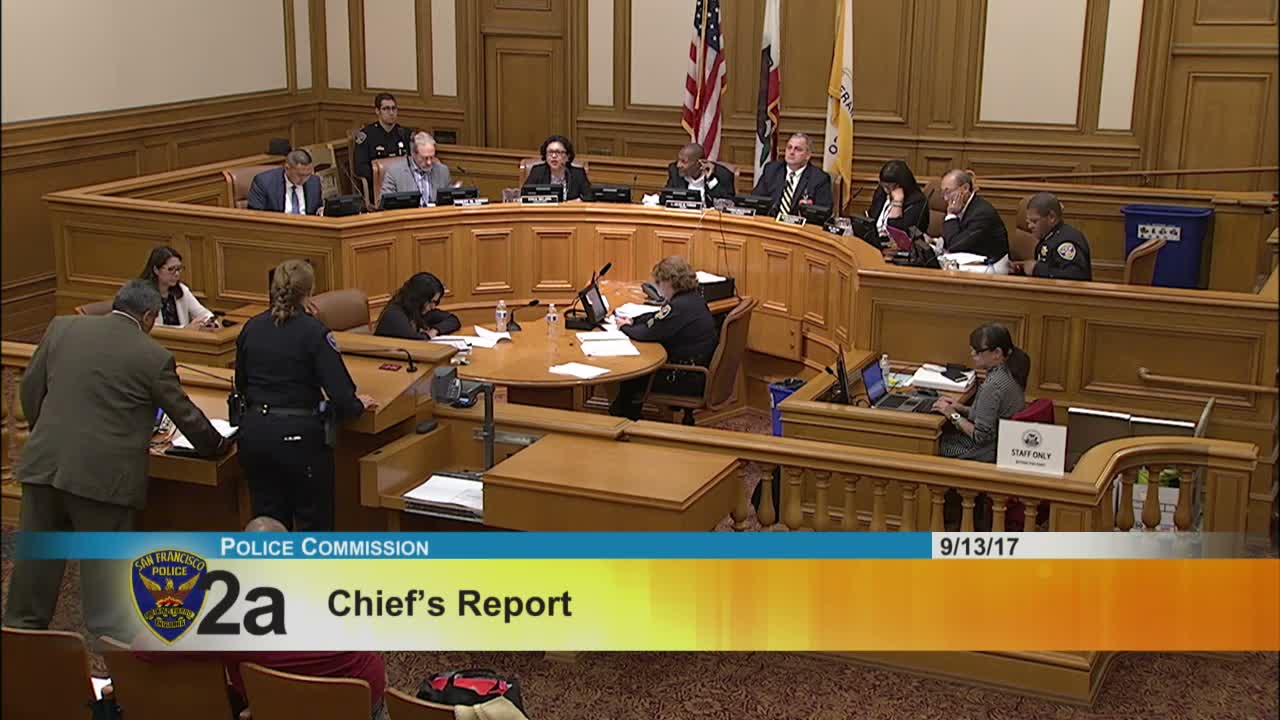
San Francisco Sept. 13, 2017 The San Francisco Police Department told the Police Commission Wednesday that it has expanded crisis-intervention training and deepened its partnership with the Department of Public Health to manage a surge in calls involving people in mental-health crisis.
Lieutenant Mario Molina, who oversees the department's Crisis Intervention Program, said the department has trained 776 officers in the 40-hour CIT curriculum (the Memphis model) and about 850 officers in a newer 10-hour tactical phase that teaches team responses and tactics for safely managing people in crisis. Molina said the department's foot-beat outreach with DPH clinicians occurs twice weekly on Market Street and adjacent corridors.
The department reported heavy call volumes: officers responded to 32,673 calls over the last two quarters that involved mental-health concerns, including calls for welfare checks, suicide attempts and mental-health detentions. Molina said the department conducted 2,955 mental-health detentions and handled multiple incidents involving weapons or barricades during the reporting period.
"We have a great channel of communication where I'm able to pick up the phone and contact the Director of Comprehensive Crisis and ask for assistance when it's needed," Molina said, describing joint responses in which DPH clinicians provided information that helped negotiators secure a safe resolution to a barricaded subject.
Angelica Myra (recorded in the meeting as a Department of Public Health representative) said DPH currently has five staff dedicated to the partnership'three psychologists and two master's-level clinicians'and that the teams provide case management and linkages to psychiatric emergency services and Zuckerberg San Francisco General Hospital as necessary. She said four of those five positions were hired and that training and system familiarization are ongoing.
Commissioners pressed for additional data and clarity: some asked for the literal CIT curriculum and invited commissioners to observe training; others urged better public reporting of outcomes such as whether DPH joined the initial response and whether force or weapons were used. Molina and the chief's office said a dashboard is in development to pull data from police reports and other sources to improve reporting.
The department also noted staffing and budget context: an academy class scheduled to graduate Nov. 17 would move the department closer to its full-time-equivalent target; the chief's report said the city allocated an additional $2.5 million to the general-fund overtime budget this fiscal year and about $300,000 for pay increases to help manage overtime demands.
Next steps: Commissioners requested copies of the CIT curriculum and additional data on the shared DPH'SFPD responses, and DPH said it plans a Law Enforcement Assisted Diversion pilot as a pre-booking diversion option.
The presentation began with Molina's introduction to the commission and concluded with questions; the commission did not take formal action on the report Wednesday.