Get Full Government Meeting Transcripts, Videos, & Alerts Forever!
Get email alerts on the Use Of Force topic
No spam. Unsubscribe anytime.
Community speakers urge commission not to recommend tasers; working group and DOJ input cited
Summary
At the July 19 Police Commission community meeting, multiple public commenters urged the commission to reject renewed consideration of electronic control weapons (tasers), citing past referendums, alleged taser-related deaths and concerns about impacts on people experiencing homelessness; commissioners said further expert review and two community meetings are planned before any vote.
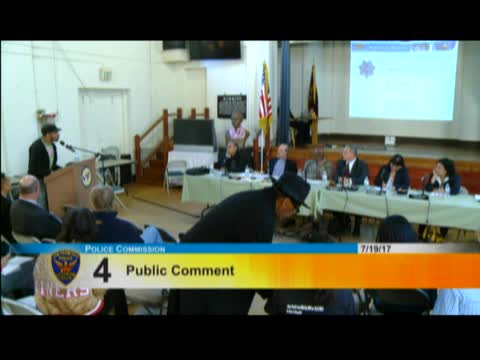
Dozens of members of the public used the commission’s public comment period on July 19 to urge the San Francisco Police Commission not to recommend introducing electronic control weapons (commonly called Tasers) to the San Francisco Police Department.
Jeremy, a public commenter, said the devices have caused civilian deaths and cited a numerical tally: “The current body count is estimated at 10 12 dead since 1983, 400 of those since 02/2009,” he said. Daryl Rogers told the commission he believed San Francisco residents had twice rejected Tasers in past referendums and asked why the issue was being reconsidered. “So at this point ... tasers are not that something else,” Rogers said.
Kelly Cutler, a human-rights organizer with the Coalition on Homelessness, said the city’s aging and sicker homeless population makes Tasers particularly worrying and that outreach and crisis services should be prioritized instead of introducing a new force option. “It’s really scary, the thought of tasers being used on folks,” Cutler said. Other speakers, including members of the Democratic Socialists of America and neighborhood groups, echoed objections and urged expanded crisis-intervention resources.
Several commenters and at least one commissioner referenced the Department of Justice’s recommendations urging the commission to reconsider certain policies and noted that a small working group has been meeting to examine use-of-force options. Commissioners and staff emphasized that no final decision has been made and invited broader public participation: the commission announced two community meetings to gather input on the issue, scheduled for Sept. 12 and Sept. 19. The commission did not vote on Tasers at the July 19 meeting.
The comments reflected contested facts and different views: speakers cited studies and past deaths as reasons to oppose Tasers, while commissioners said the department and the DOJ want broader expert review and public dialogue. The meeting record shows active public opposition and a commission process that will include additional community meetings before any policy recommendation or vote.