Get Full Government Meeting Transcripts, Videos, & Alerts Forever!
Get email alerts on the Public Power Options topic
No spam. Unsubscribe anytime.
SFPUC report narrows on buying PG&E assets as ‘public power’ option amid bankruptcy timetable
Summary
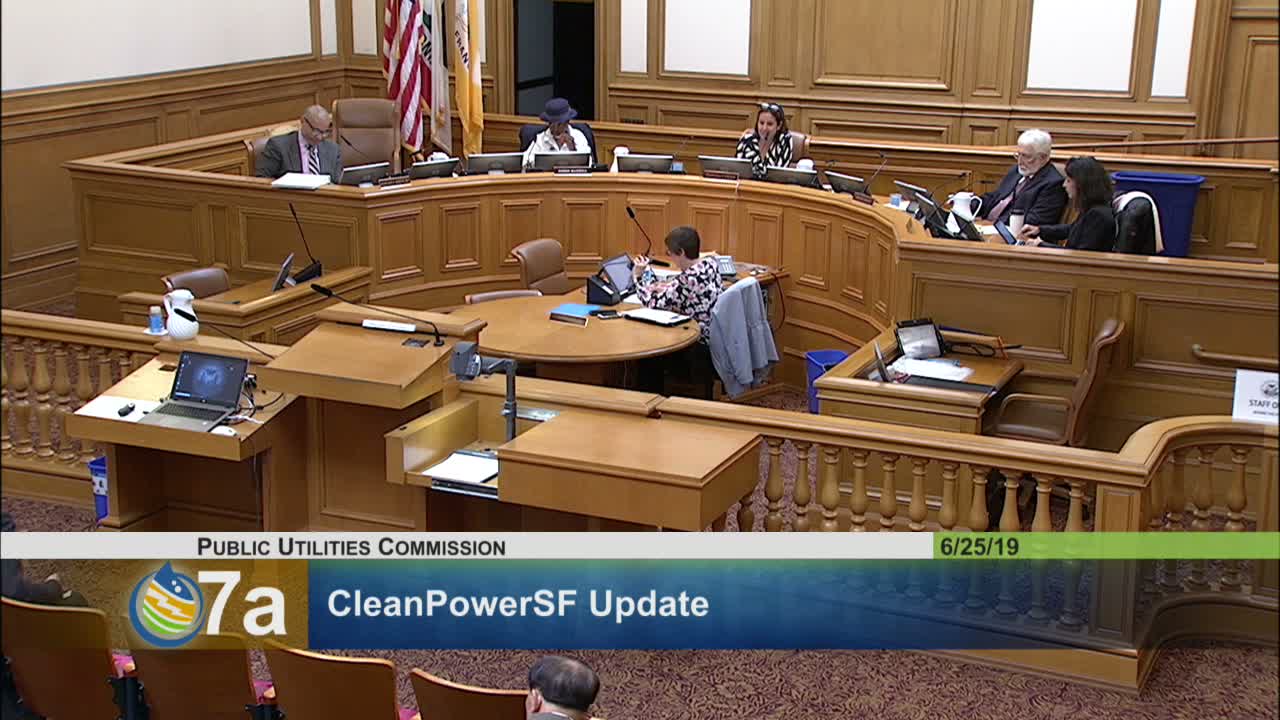
SFPUC staff presented a preliminary public‑power options report that weighs three paths—limited independence, targeted investment and full acquisition of PG&E distribution serving San Francisco—recommending accelerated study of acquiring PG&E assets ahead of PG&E’s bankruptcy plan deadline.
SFPUC staff presented a preliminary report that lays out three options for expanding the city’s control over electric distribution: continue limited independence and keep pressing PG&E for better service, pursue targeted investments in city‑owned distribution in selected clusters, or acquire PG&E’s local distribution serving San Francisco and operate it as a fully independent public power utility.
Barbara Hale, assistant general manager for power, told commissioners the May report is preliminary but points staff toward focusing study work on acquisition of PG&E assets serving San Francisco. The presentation estimated a range of scale from about 3,500 to 400,000 accounts and peak demand from roughly 150 megawatts to 1,000 megawatts under the different options. Distribution revenues were shown between $100 million and $700 million a year, and capital costs ranged from modest annual investments to a one‑time cost of a few billion dollars for full acquisition.
Staff said the three options differ mainly in who controls distribution and makes long‑term infrastructure and rate decisions. Under limited independence, the city would continue to rely on PG&E for delivery and press regulators for better treatment. Targeted investment would have the city construct and own distribution for select clusters while continuing to rely on PG&E elsewhere. Full independence would require purchasing distribution assets from PG&E and operating the system directly.
Commissioners pressed staff on financial assumptions, workforce integration and the transparency of PG&E’s asset condition. Commissioners asked how cross‑subsidies might affect a separated system and stressed the need for rigorous due diligence. Hale said an acquisition would be conditioned on additional due diligence and an assessment of asset value and condition and that staff is studying financing options, revenue impacts on remaining customers, workforce integration and equity implications.
The timetable for the study is accelerated by outside factors, staff said. PG&E’s exclusive right to file a plan of reorganization in its bankruptcy was cited as a milestone that could compress the window for the city to make an offer or otherwise engage in the reorganization process. Staff told commissioners it aims to complete enough analysis to be able to engage with PG&E and other stakeholders ahead of that date.
Public commenters urged the commission to consider a municipal utility model and asked technical questions about the report’s capacity accounting. Commissioners directed staff to continue the study, to test financing scenarios and asset valuations, to evaluate workforce and benefits integration, and to return with more granular analyses and timelines that can inform a decision before the bankruptcy process advances.
The commission did not take a decision to acquire assets at this meeting; staff will continue study work and report back to commissioners as analyses are completed.