Get Full Government Meeting Transcripts, Videos, & Alerts Forever!
Get email alerts on the Water Supply Assessments topic
No spam. Unsubscribe anytime.
SFPUC delays four water-supply assessments, seeks broader drought analysis amid Bay-Delta uncertainty
Summary
The commission voted to continue four water-supply assessments to May 28 after weeks of testimony and a lengthy discussion about the state Bay-Delta plan, modeling assumptions and how to portray multi-year drought risk. Commissioners asked staff to expand the drought horizon and remove project-specific rationing credits before returning the reports.
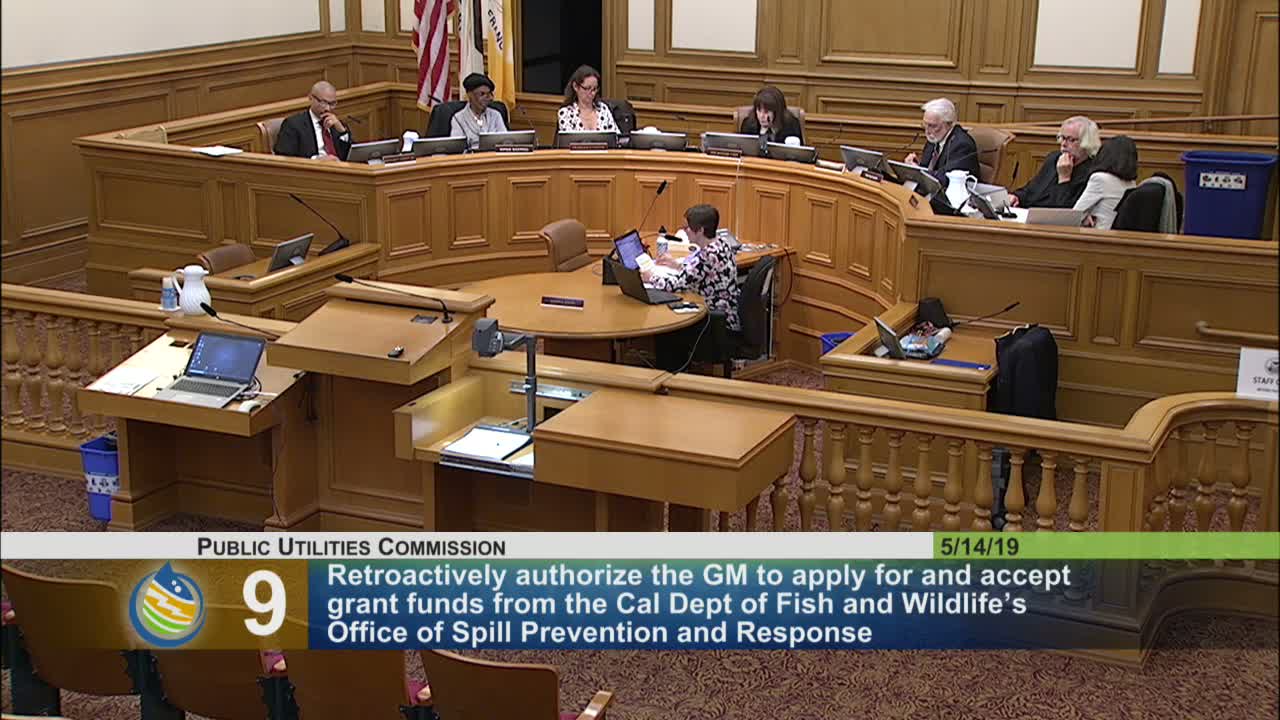
The San Francisco Public Utilities Commission on May 14 moved to delay action on four water-supply assessments for proposed development projects, asking staff to revise the documents to show a longer planning-drought horizon and to rework project-specific rationing language.
The assessments — required input for CEQA review of the projects — analyze three possible regulatory scenarios: the Bay-Delta water quality control plan is implemented, a March 1 voluntary agreement for the Tuolumne River is implemented, or neither policy is implemented. Staff told the commission the reports show adequate supply under some scenarios but that the Bay-Delta plan, if implemented as drafted, could require rationing above the commission’s target. Peter Dreckmire of the Tuolumne River Trust warned approving the assessments now would be premature: “I think it would be a mistake to approve the water supply assessments at this point,” he said during public comment.
Commissioners debated two principal edits before returning the items to the agenda. Commissioner Moran pressed staff to present the commission’s full planning drought — an 8.5-year design drought used internally — alongside the three-year statutory scenario so planners and the public can see worst-case exposure over the commission’s multi-year planning window. Moran said the reports should not obscure the system’s vulnerability: “the boat has some leaks,” he said, arguing that the presentation must make clear where shortfalls would appear and how severe they could become.
Staff and the city attorney said the state statute requires a 20-year projection but mandates a three-year multi-dry-year analysis; staff agreed the requested expansions are technically straightforward and can be added. Commissioners also objected to a planning-department-requested methodology that credited individual projects for presumptive nonpotable measures that would reduce their hypothetical rationing; the commission asked staff to remove that project-credit calculation and instead describe potential mitigation options without reducing the systemwide rationing numbers.
After extended public comment and internal debate, Commissioner Paulson moved to continue items 10–13 to the commission’s May 28 meeting with the changes proposed by Commissioner Moran; the motion was seconded and carried by voice vote.
What happens next: staff will return the revised water-supply assessments at the May 28 meeting with an expanded drought table showing the 3-year statutory scenario plus an 8.5-year planning scenario (if the third-year impacts grow across the longer horizon), and with the reworked text about project-level mitigation. Planning commissioners will use the finalized WSAs as part of CEQA documents for the projects under review.