Get Full Government Meeting Transcripts, Videos, & Alerts Forever!
Get email alerts on the Community Benefits topic
No spam. Unsubscribe anytime.
SFPUC highlights Social Impact Partnership Program; firms and interns detail results
Summary
Deputy AGM Yolanda Manzoni presented an update on the SFPUC’s Social Impact Partnership Program, describing a voluntary corporate-social-responsibility element in solicitations for contracts $5 million and up and documenting outcomes including scholarships, internships and community services across nearly 70 contracts.
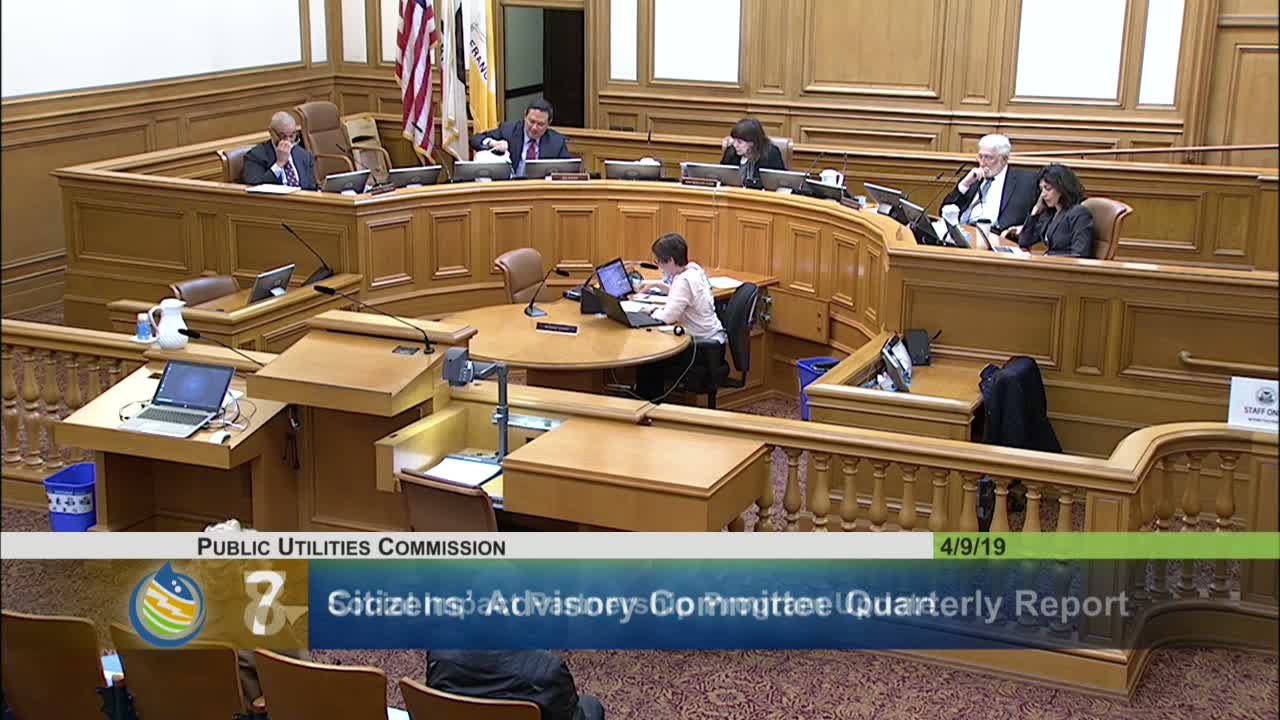
Yolanda Manzoni, Deputy Assistant General Manager for External Affairs, told the San Francisco Public Utilities Commission on April 9 that the Social Impact Partnership Program embeds voluntary community outcomes into large contract solicitations and ties them to measurable deliverables.
"We developed the social impact partnership program to do just that," Manzoni said, describing how firms can earn up to 5 percent of RFP points for proposals that commit to outcome-based work in areas such as education, environmental justice, workforce development and small-business support. Manzoni said those firm commitments become binding contract terms if the bid succeeds and that the program is structured to deliver those benefits at no cost to the SFPUC.
Commission staff described verification systems that include twice-yearly firm reporting and documentation — payroll records or copies of checks — uploaded into a Salesforce database to confirm commitments were fulfilled. Juliet Ellis, Assistant General Manager for External Affairs, said the agency tracks PUC-led community-benefits work closely and monitors corporate commitments for completion, while noting limits on long-term, longitudinal oversight where outcomes rely on outside firms.
Private partners and program participants gave examples of the program’s community impact. Companies and joint ventures said they had donated time, in-kind supports and financial resources that produced scholarships, paid internships, teacher professional development, home repairs, youth STEM mentorship and cultural events. Jevon Phillips, a City Works alumnus, said the internship shaped his career trajectory: "This program was extremely beneficial... it sparked the interest in terms of what I want to do today career wise," he said. Several speakers credited the program with helping program alumni enter college and launch local careers.
Commissioners and community representatives asked about outcome metrics — college graduation, career jobs and long-term career tracking — and staff acknowledged challenges around longitudinal monitoring and privacy constraints for young participants. Manzoni and Ellis said the PUC continues to refine reporting and has been approached by philanthropic partners interested in supporting long-term study of results.
The presentation underscored what presenters described as a partnership model: the PUC provides procurement structure and oversight while private firms contribute funds, volunteer hours and programmatic support that community organizations deliver. Staff estimated the program’s commitments appear in nearly 70 contracts since the program’s 2011 inception and said the longest contract span referenced runs through 2032.