Get Full Government Meeting Transcripts, Videos, & Alerts Forever!
Get email alerts on the Police Use Of Force topic
No spam. Unsubscribe anytime.
San Francisco Police Commission hears experts on tasers; SFPD stresses training, oversight and DOJ‑guided review
Summary
At a June 21 Police Commission hearing, SFPD and five outside experts sparred over the risks, effectiveness, training needs and liability of conducted energy devices (CEDs/tasers). No policy vote was taken; the department and commission will continue a DOJ‑guided working‑group process and community outreach.
The San Francisco Police Commission on June 21 heard expert testimony for and against adopting conducted energy devices, often called tasers, as an intermediate force option for the San Francisco Police Department.
Chief of Police William Scott opened the expert panel by framing CEDs as a potential “less‑lethal” option that, he said, could reduce injuries if paired with strong policy, training, supervision and public oversight. Scott cited independent research he said showed a national reduction in citizen injuries associated with CED use and urged that any implementation include public input, data collection and pairing device output with body‑worn cameras.
The commission heard five outside presentations that reached different conclusions. Michael Leonisio, a retired Oakland police officer and consultant, emphasized practical obstacles: he said modern rollouts require heavy investment, estimating $8,000–$10,000 per officer for initial equipment and training, and warned of both mechanical failures and reduced efficacy in newer models. Matt Masters, a Kansas City officer, recounted a personal family case in which his then‑17‑year‑old son suffered cardiac arrest after a prolonged application; Masters described legal and medical fallout and urged caution. Cardiologist Dr. Lee (Dr. Sang) summarized medical literature showing that CED pulses can—rarely but seriously—trigger cardiac arrhythmias, and referred to a population‑level study that recorded a short‑term spike in in‑custody sudden deaths after agencies introduced tasers; he urged AED access, CPR training and limits on chest vectors and repeated discharges. Attorney John Burton described product‑liability verdicts against the manufacturer and faulted manufacturers’ warnings and releases as shifting liability toward agencies and officers. Michael Brave, an Axon (formerly TASER International) employee, disputed some interpretations of the data, cited more recent testing and independent studies that he said show reduced injuries, and highlighted device accountability features such as device logs and integrated recordings.
Commissioners repeatedly asked about training, whether CEDs would undermine de‑escalation or CIT (crisis intervention) practices, fiscal and liability exposures, and what the department would do to reduce disproportionate impacts on people of color and those with mental illness. Commander Pete Walsh, the department’s executive sponsor for the DOJ recommendations, said the item is on the DOJ reform timeline (recommendations 16.1/16.2) and described a phased, deliberative working‑group process that will examine policy, training curricula, data collection, fiscal impacts and community input. He and other department officials stressed that there was no procurement or policy vote that night and that the working group and planned community sessions will consider whether and how to move forward.
Public comment spanned opposition and support. Several speakers, advocacy groups and victims’ family members urged the commission to halt deployment, citing cases of death and long‑term injury; others—community groups, merchants and some police‑community advisory boards—supported exploring controlled, limited deployment with strong oversight.
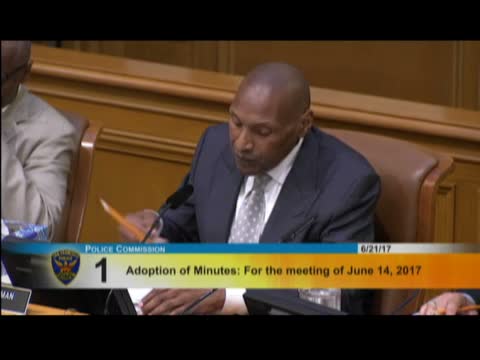
Procedurally, the commission adopted prior meeting minutes earlier in the evening and later voted to move into a closed session for a different agenda item; no formal action to adopt CEDs or buy equipment was taken.
What happens next: commissioners and the department said the working group will continue meeting (next scheduled working‑group meeting referenced for July 17), produce draft policy language, hold community forums, develop fiscal estimates and consult outside experts and the city attorney on liability questions before any commission vote.
Sources: oral testimony and public comment at the June 21, 2017 San Francisco Police Commission meeting, including presentations by Chief Scott, Michael Leonisio, Matt Masters, Dr. Sang, John Burton, Michael Brave and Commander Pete Walsh.