Get Full Government Meeting Transcripts, Videos, & Alerts Forever!
Get email alerts on the Governance Procedure topic
No spam. Unsubscribe anytime.
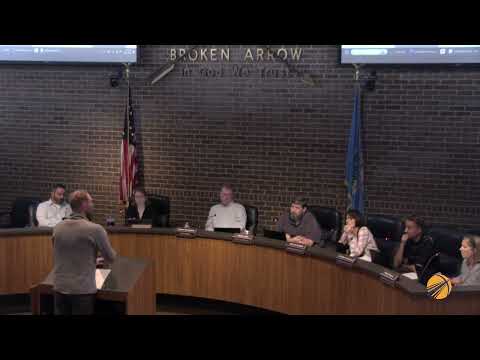
Commission clarifies abstention rules; member praises fire department kitten rescue
Summary
Commissioners discussed that abstentions are recorded and function as negative votes for motions; staff advised stating reasons for abstentions. Separately, a member thanked the Broken Arrow Fire Department for rescuing a kitten from a storm sewer.
During general remarks and inquiries, commissioners spent extended time clarifying how abstentions are recorded and counted during votes and shared a brief community anecdote.
A commissioner used the remarks period to praise the Broken Arrow Fire Department after the department rescued a kitten from a storm sewer. "They utilized their confined space measures and got down into the sewer," the commissioner said, thanking the department and noting the rescue was posted on the department's Facebook page.
The commission then turned to an internal policy question: when a member records an abstention, how does that affect the outcome of a vote? A staff member explained plainly: "It's as simple as you stated. It's just counted as a no vote." The staff member added that abstentions should be recorded in the minutes and, where appropriate, commissioners should state a reason — for example, a financial conflict of interest — so the public record is clear.
Commissioners discussed practical effects when quorums are small. Staff said the abstention rule matters most when only three or four members attend; in close votes, an abstention can prevent a motion from passing, leaving the item on the floor unless it is tabled or withdrawn.
The exchange closed with the chair thanking the speaker for raising the issue and a motion to adjourn.