Get Full Government Meeting Transcripts, Videos, & Alerts Forever!
Get email alerts on the Affordable Senior Housing topic
No spam. Unsubscribe anytime.
Planning commission backs 73-unit, 100% affordable senior housing at 405 S. Del Mar, sends recommendation to council
Summary
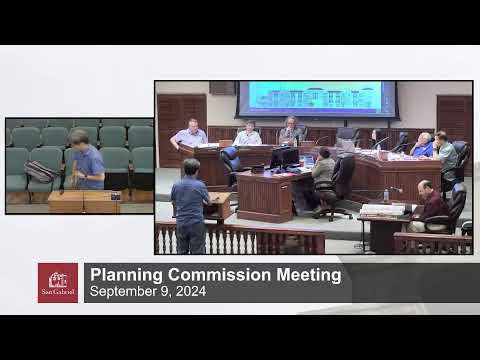
The San Gabriel Planning Commission voted 5-0 Sept. 8 to recommend City Council approval of a Related Companies proposal for a two-building, 73-unit affordable rental for seniors at 405 S. Del Mar, after extended public comment about parking, train noise and soil contamination and staff and developer assurances that DTSC is reviewing mitigation plans.
The San Gabriel Planning Commission unanimously voted Sept. 8 to recommend the City Council approve a two-building project at 405 South Del Mar Avenue that would deliver 73 rental units restricted to seniors and operated as 100% affordable housing.
Staff described the proposal as a roughly 70,000-square-foot site redevelopment that would provide 73 apartments (72 income-restricted senior units plus one on-site manager unit), open space and on-site parking. Planning staff told the commission the project requests a general plan amendment, zone change, density bonus and a 12-foot street vacation; the action by the commission is a recommendation to the City Council, not final approval.
Related Companies representative Jennifer Ingram said the development would include 11 studio units, 52 one-bedroom units and 10 two-bedroom units, that 50 of the income-restricted units would be set aside for seniors with special needs, and that the project is intended to remain income-restricted for at least 55 years. “We voluntarily reached out to DTSC to start putting together a work plan so that we can have a plan of action,” Ingram said, adding that the Department of Toxic Substances Control has “preliminarily approved our work plan” for further site testing and mitigation.
The project team and staff said the proposal is tailored to state housing incentives (noting AB 1449 procedures) and that the development was reviewed for CEQA compliance under an applicable statutory exemption. Staff described a reduced parking ratio consistent with senior housing assumptions; staff stated the site would offer roughly 62 on-grade parking spaces while the developer’s presentation later referenced about 60–62 spaces. The project team said design and construction will incorporate noise and vibration mitigation measures — including STC-rated, double-pane windows — and that additional site mitigation (for contaminants identified in earlier Phase I/II work) will be included in construction plans if required by DTSC.
Neighbors and emailed commenters raised a range of concerns including potential soil contamination from past lumber-yard uses and underground fuel tanks, possible health risks from train-related vibration and noise (the site abuts a trenched railroad), the adequacy of on-site parking and traffic and the effects of a 12-foot street vacation on local circulation. Resident Estella Garcia said she lives one block away and was worried about “traffic, the limited parking” and construction noise; Manuel Orozco, a longtime resident, told the commission he opposed the project citing train vibration and water-resource concerns.
In response, the developer outlined typical parking patterns for senior housing and said tax-credit financing and Related’s long-term ownership model will fund operations; the team said they will provide a maintenance plan and on-site services and that lenders and subsidy agreements require long-term affordability and management. On contamination, staff and the developer pointed to the ongoing DTSC review and said the project’s draft work plan envisions additional testing and potential construction-phase mitigation such as vapor barriers and ventilation where needed.
Commissioners said they were mindful of neighborhood concerns but emphasized the city’s need for affordable housing and the project’s built-in mitigation and long-term ownership. Some described support as reluctant but conditional on thorough mitigation and later design-review steps. After asking the applicant and staff to further study train vibration mitigation and to provide additional technical detail to the council, the commission moved, seconded and voted 5-0 to recommend approval to the City Council.
The recommendation advances the entitlements to the City Council for final consideration; staff and the developer said further design review, DTSC sign-off on any required mitigation, and a precise plan of design will follow before building permits are issued.