Get Full Government Meeting Transcripts, Videos, & Alerts Forever!
Get email alerts on the Parks And Recreation topic
No spam. Unsubscribe anytime.
Committee reviews options to enclose Roosevelt Swim Center 50-meter pool; costs range from $261,000 to $16 million
Summary
Rapid City’s Legal & Finance Committee heard a TSP feasibility study and public comment on Oct. 18 about enclosing the Roosevelt Swim Center’s 50-meter outdoor pool. Consultants presented five options with estimated initial costs from about $261,000 to over $16 million; no recommendation was made and the committee acknowledged the report.
Rapid City’s Legal & Finance Committee on Oct. 18 reviewed a feasibility study on enclosing the 50‑meter outdoor pool at Roosevelt Swim Center and heard public appeals from local swim-team representatives to pursue options that would expand programming and attract events.
TSP consultant Mark Peveritt presented five options the firm analyzed under a Vision Fund grant: an amenities-only upgrade (estimated about $261,000); an air-supported (inflatable) dome (study estimate roughly $2,360,000); a pre‑engineered fabric/aluminum structure (about $3,550,000); a retractable aluminum/polycarbonate structure (about $6,692,000); and a traditional, fully enclosed building (about $16,000,000). Peveritt said the study compared like-for-like square footage and included life‑cycle cost analysis, energy and maintenance considerations, warranties, and impacts of local soils.
The study did not make a single recommendation. Peveritt told the committee the team ‘‘made a conscious decision not to make a recommendation’’ and left selection to city officials.
Two representatives from the Rushmore Swim Team urged the committee to weigh economic and community benefits alongside operating costs. Aaron, a Rushmore Swim Team board member, told the committee that TSP’s study ‘‘concluded that with 3 of the options with the dome … it would be around an additional 330,000 per year cost to the city considering projected expenses minus additional projected revenue.’’ He also pointed to potential revenue offsets such as sponsorship or naming-rights deals and added events: ‘‘We were not allowed to host [the state swim meet] because our facility was inadequate … Rapid City lost not just prestige, but the economic impact of some 500 people coming here for 4 day events.’’ Lane Johnson, Rushmore’s president, said the swim team already runs near‑capacity during weekday prime hours and described demand for additional programming, water polo and other aquatic uses.
Committee members asked technical and operational questions. One member pressed how fabric systems would perform under local wind and snow loads; the consultant said the design includes robust foundation and anchoring systems, and noted tradeoffs such as the air‑supported option’s repeated takedown/putback costs and proprietary HVAC/warranty dependencies. On the retractable option, Peveritt said the roof uses double‑insulated polycarbonate glazing designed to resist hail but that prolonged UV exposure will eventually require replacement.
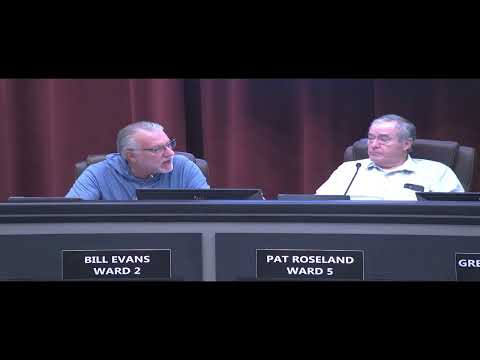
Finance and lifecycle considerations were discussed: public comment and the consultant both emphasized that annual operating costs and potential administrative or maintenance contracts would affect the net fiscal impact. The committee moved to ‘‘acknowledge’’ receipt of the feasibility study; a motion by Roseland, seconded by Evans, carried with an ‘‘Aye’’ vote. No funding decision or formal recommendation to implement any option was made that night.
Next steps indicated in the meeting: the committee acknowledged the study and invited further engagement between swim‑team stakeholders and city planners to explore funding approaches, sponsorships, and operational models. Any future decision to proceed with a particular option would require separate council action and likely additional budget, design, and procurement steps.