Get Full Government Meeting Transcripts, Videos, & Alerts Forever!
Get email alerts on the Central Talmadge Plan topic
No spam. Unsubscribe anytime.
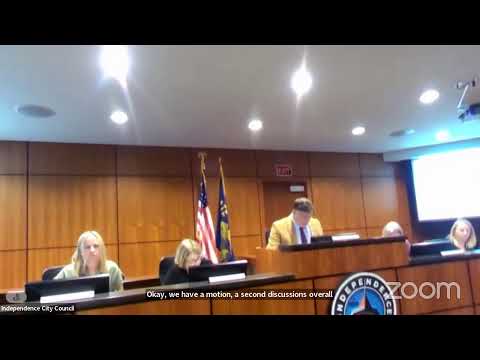
Independence council adopts Central Talmadge plan after heated debate over costs and annexation
Summary
The Independence City Council voted to adopt resolution 24-1616, endorsing the Central Talmadge plan as a long-range vision of transportation, housing and downtown improvements. Opponents said funding and annexation details were vague; two councilors opposed the measure.
The Independence City Council on a voice vote adopted resolution 24-1616 to approve the Central Talmadge plan, an aspirational blueprint for mobility, infill housing and downtown revitalization.
The plan, presented by city planner Fred, lays out five project categories including midblock pedestrian crossings on Monmouth Street, a connector trail to the high school, an "E Street" corridor to open underused commercial parcels, sites for mixed-use housing and improved pedestrian access into Central Plaza. "This is not in front of you as a public hearing tonight," Fred told the council, adding the resolution asks only for the council—s preliminary endorsement before any zoning or map changes are brought forward in later public hearings.
Supporters said the resolution provides a needed vision that can attract grants and private partners. "If you don't declare a vision, you're not going to get anything," the mayor said, urging the council to give potential funders a coherent plan. Councilors in favor emphasized prior downtown improvements that began as plans and later secured funding.
Opponents raised concerns about financing and the possibility of involuntary annexation or zoning actions in the future. "There's too much ambiguity in this plan," Councilor Roden said, arguing the city lacks the time or resources to take on large projects now. Councilor Joe said the council should consider tabling the resolution until finances were stronger and cautioned against actions that might bypass voter input.
Council members debated whether the plan commits the city to specific projects or spending; Fred and supporters repeatedly said adoption is a policy-level endorsement, not a funding pledge. The council first voted down a motion to deny the plan and then passed the adoption motion. Councilors Roden and Joe recorded opposition; the motion otherwise carried.
Next steps: city staff will proceed toward the detailed comprehensive-plan and zoning-code steps the resolution contemplates, and individual land-use or funding decisions would return to the council in public hearings.