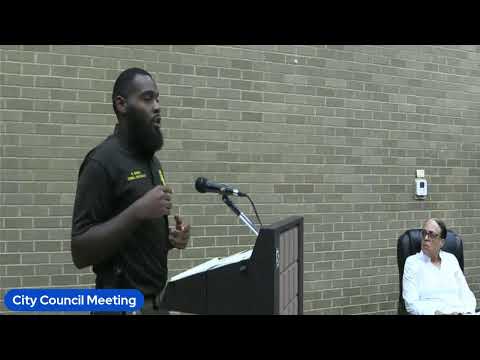
Helena council approves Delta Plumbing payment and adopts several code ordinances
Summary
Council voted to pay a $6,500 Delta Plumbing invoice and moved multiple ordinances (trash/refuse, driveway/ditch, gutters/weeds) to third reading and adoption; roll calls were taken and motions passed on the record.
The Helena City Council approved a $6,500 payment request from the water department for Delta Plumbing and adopted several city code ordinances after motions to suspend rules and place items on third and final reading.
Staff introduced a Delta Plumbing pay request for repairs at Delta Property, describing the invoice as $6,500—above the city's $5,000 administrative spending threshold—so the council voted to approve payment rather than deferring to the next meeting.
Councilmembers then reviewed a set of updated ordinances (numbered in the packet as ordinances 18–21), including a prohibition on trash/refuse, a requirement for driveway/ditch construction to preserve flow, and an ordinance requiring owners or occupants to keep street gutters clear. Council discussion focused on enforcement mechanisms (police citations versus code enforcement) and whether the occupant or owner should be cited for violations.
Motions were made to suspend rules and place the ordinances on third and final reading; subsequent motions to adopt were called and carried on the record via roll call. The clerk recorded 'yes' votes from the council during the roll calls and the mayor declared the motions passed.
What happens next: ordinances placed on third reading were adopted at the same meeting as recorded by the clerk; staff will implement enforcement processes through code enforcement and, where appropriate, police citations.
AI generated
The text on this page is AI generated. Summaries, highlights, analysis, and video transcripts are all produced from the original source material.
AI can make mistakes, so if you spot one, and we will fix it for everyone.
Note: the source content is unaltered by us. Any content source we link to, be it a video, an audio recording, or a document, is presented exactly as its publisher released it. That publisher is usually a government body, sometimes an individual official or another organisation.