Get Full Government Meeting Transcripts, Videos, & Alerts Forever!
Get email alerts on the Infrastructure topic
No spam. Unsubscribe anytime.
SFPUC flags multi-project SSIP/CIP cost and schedule variances; heads to deeper review
Summary
SFPUC staff reported several Sewer System Improvement Program (SSIP) projects are over budget or behind schedule, including a $14.7 million variance on the Wawona/Fifteenth Avenue stormwater project and an $8.5 million variance on an OSP digester gas upgrade; commissioners sought rescoping, more frequent updates and commitments to community participation.
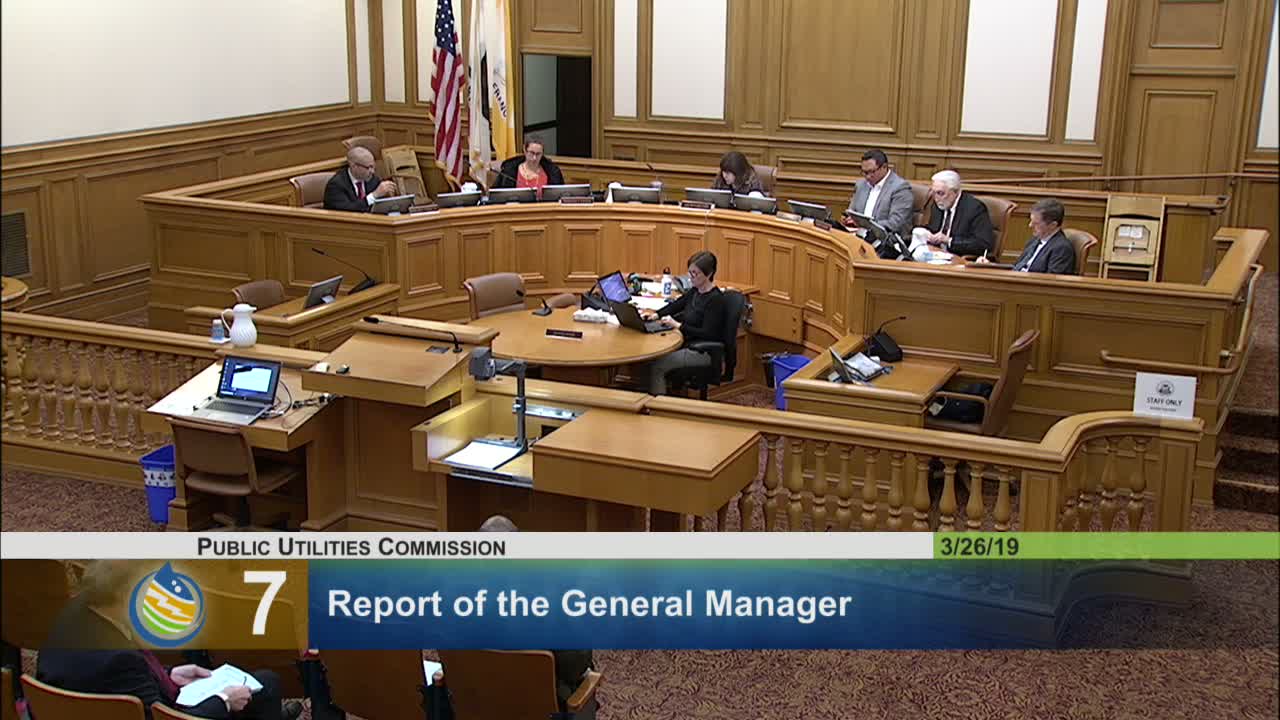
SFPUC staff told commissioners that multiple capital projects in the Sewer System Improvement Program (SSIP) and broader Hetch Hetchy capital program are forecasting cost and schedule variances that warrant immediate attention and possible rescoping.
Acting Director Howard Fung said Phase 1 of SSIP comprises 70 projects with a current estimated total of $2,979,000,000 and that the program is about 28.4% complete with $718,000,000 expended through the reporting quarter. He reported four SSIP projects forecasting cost increases greater than 10% and multiple projects with schedule slips of six months or more. Fung identified specific variances: a $14,700,000 budget variance and one-year delay on the Wawona Street and Fifteenth Avenue stormwater detention project; an $8,500,000 variance on the OSP digester gas utilization upgrade; a $3,700,000 variance on the Mariposa dry-weather pump station and force-main work; and a $6,700,000 variance on the Kansas and Marin Street sewer improvement project.
Fung described constructability challenges, groundwater and dewatering issues, utility conflicts, and higher-than-expected bids as drivers of the increases and schedule slips. For some projects, early field investigations uncovered conditions requiring design changes before bidding. Staff said the biosolids/digester facility at the Southeast Plant now anticipates a one-year delay in construction start and completion.
Commissioners pressed staff on options to contain costs, the role of triple-bottom-line evaluation when rescoping projects, how to integrate green infrastructure where feasible, and whether rebidding or changing construction methodology could reduce overruns. Staff said they would look into rescoping options, evaluate alternative construction approaches and provide more frequent, focused updates on high-risk projects. One commissioner urged monthly, concise updates and offered to organize site visits to improve oversight.
Public commenters raised concerns about procurement, consultant performance and the importance of community benefits—urging the commission to review early inspection reports and to ensure impacted communities participate in construction and hiring.
Staff and the commission agreed to pursue a deeper dive on the highest-risk projects and to quantify local hiring and local-business participation in future updates.
No formal budget action was taken at this meeting; the discussion resulted in direction to provide more frequent oversight reporting and to evaluate rescoping and rebidding options where feasible.