
Commissioners debate food‑bank ordering, distribution and delivery rules after complaints
Get AI-powered insights, summaries, and transcripts
Subscribe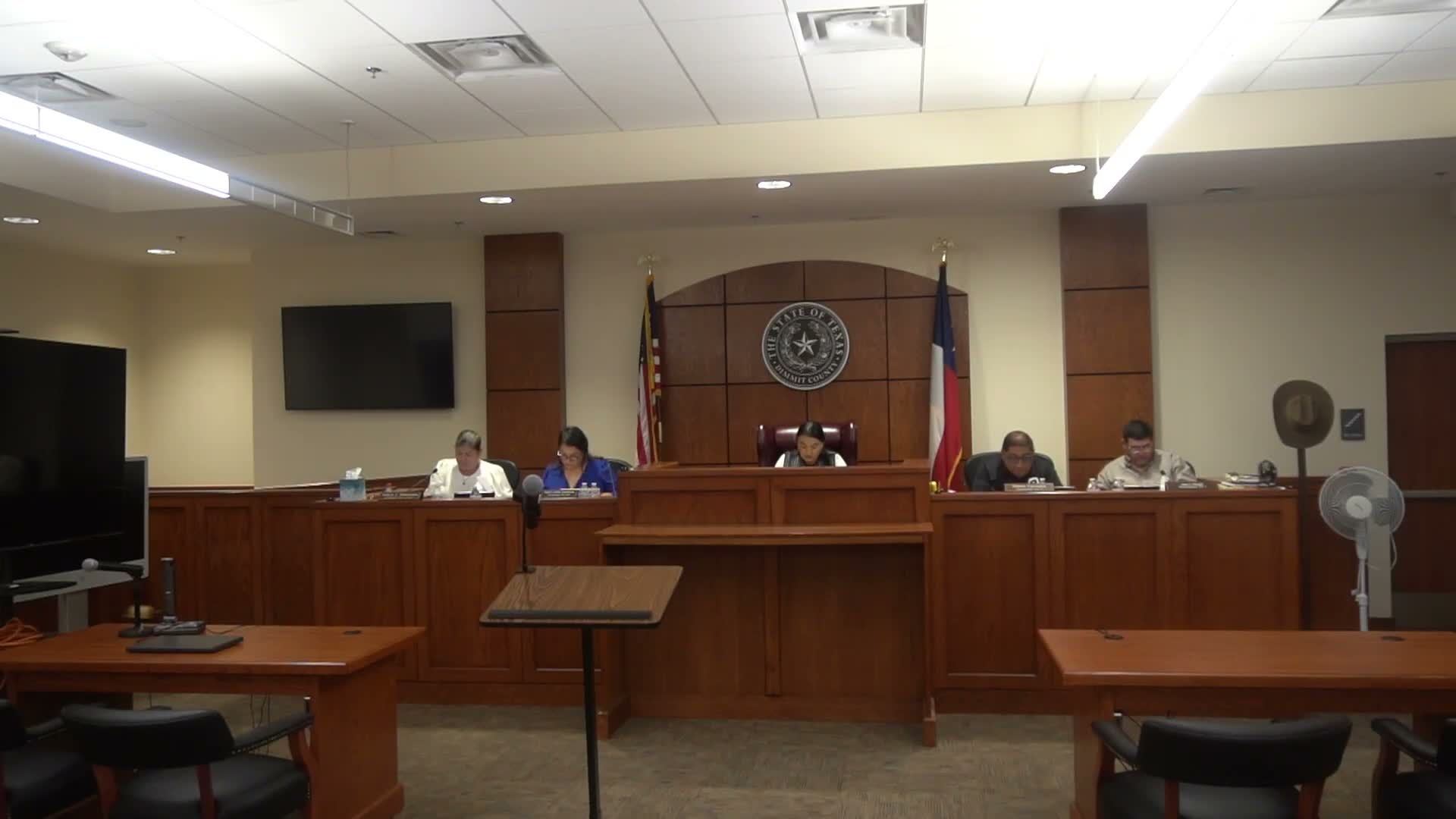
Summary
A heated Nov. 10 exchange over the South Texas Food Bank program culminated with the court restricting commissioners’ unregulated deliveries and allowing limited participation in ordering; the county commodity clerk remains the primary ordering authority.
Dimmit County commissioners spent a prolonged portion of the Nov. 10 meeting debating procedures for ordering and distributing commodities from the South Texas Food Bank after multiple complaints about inconsistent distribution and alleged misuse.
Commissioner(s) raised concerns that past practice allowed commissioners to order and deliver commodities directly to constituents, which some said led to uneven distribution and confusion over lists and phone numbers. The county commodity clerk (Maribel) told the court she is the staff member hired to manage ordering and audit records after prior record gaps; she said she communicates with commissioners and asks for guidance when supplies are insufficient.
One commissioner said she had 214 registered clients and described instances where constituents did not receive gift cards due to missing phone numbers; others said they want to preserve the ability to help homebound or elderly residents. The court discussed prior practice (some commissioners previously ordered deliveries), the need for transparency, and the risk that not following food‑bank rules could jeopardize the county’s relationship with the regional food bank.
After extended questioning, the court approved a limited change: allow one commissioner to participate in the ordering and process discussions with the commodity clerk while directing that commissioners stop making unregulated deliveries on behalf of the county unless those actions strictly follow the South Texas Food Bank rules. The motion scope also emphasized that any future changes should preserve eligibility rules and auditability. The court did not formalize a written policy at the Nov. 10 session; staff were directed to follow up and clarify written procedures with the food‑bank partner.