Get Full Government Meeting Transcripts, Videos, & Alerts Forever!
Get email alerts on the Crisis Intervention Team topic
No spam. Unsubscribe anytime.
SFPD and Department of Public Health outline co-responder Crisis Intervention Team MOU
Summary
The San Francisco Police Commission heard a joint SFPD—DPH presentation on an MOU to create a Crisis Intervention Team that pairs police negotiators with behavioral health clinicians for prevention, on-scene support and follow-up; commissioners asked for training modules and a return report in a few months.
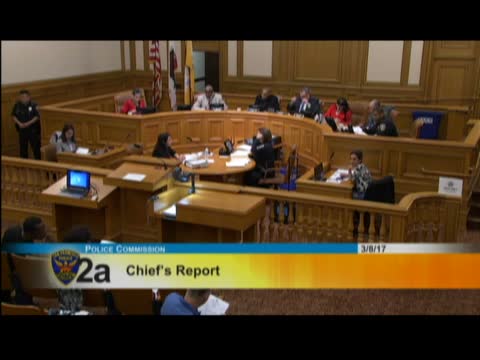
The San Francisco Police Commission on March 8 heard a joint presentation from the San Francisco Police Department and the Department of Public Health describing a memorandum of understanding to form a Crisis Intervention Team (CIT) that pairs SFPD negotiators and a psychiatric liaison unit with DPH clinicians.
"Some initial goals we have initially set for this program is obviously DPH providing support in the field where there is a behavioral health component with the goal of a peaceful resolution," Lieutenant Molina said, describing a three-part model of prevention outreach, crisis response and an investigative component to support patrols and investigative units.
Dr. Angelica Almeda of DPH summarized the clinical staffing plan: "This team will sit under, comprehensive crisis under the direction of Stephanie Felder and will include 3 clinical psychologists and 2 behavioral health clinicians that will be available 24 hours a day, 7 days a week." She said clinicians will share information with operational commanders and help link people to ongoing care.
Commissioners and staff emphasized limits set by confidentiality and the need for waivers in some cases. Lieutenant Molina described a city practice of identifying high-frequency users for prevention outreach: the unit has compiled a top-100 list of people with repeated 5150 contacts and, where consent and waivers allow, will coordinate with assigned clinicians to develop individualized response plans.
On the question of whether clinicians would be the primary negotiators at barricade or hostage incidents, SFPD staff said trained host negotiator officers generally lead on-scene negotiations while clinicians provide operational support when safe and feasible. "In a crisis situation where there's a barricaded suspect ... the police department will be the first ones responding, and the police department will start the negotiation with that person. It will not be the clinician doing a face to face," Lieutenant Molina said, adding clinicians already accompany police on many responses when appropriate.
Commissioners pressed for clarity about training and tactics designed to avoid escalating situations due to uniform presence or lights and sirens. Commission President Turman asked the departments to come back in a few months with completed training modules and early metrics on the program's rollout; SFPD said it will report back and that the teams are tracking their contacts for commission review.
Public speakers at the meeting largely welcomed the DPH partnership but raised concerns about staffing and deployment. David Carlos Salisbury, from San Franciscans for Police Accountability, said he supported the collaboration while noting the Sean Moore case as a cautionary example when CIT might not have been deployed.
The commission did not take a formal vote on the MOU at the meeting; commissioners directed staff to return with training details and a status update in a subsequent meeting.