Get Full Government Meeting Transcripts, Videos, & Alerts Forever!
Get email alerts on the Early Intervention System topic
No spam. Unsubscribe anytime.
Commission presses SFPD to strengthen early-intervention system; experts, data fixes proposed
Summary
Commissioners and DPA urged a prompt overhaul of the SFPD's Early Intervention System (EIS), recommending clarified success metrics, addition of missing indicators (including certain resisting/assault charges), upgraded data systems and outside expert review to ensure alerts produce timely interventions.
The Police Commission devoted substantial time on Feb. 1 to a review of the San Francisco Police Department's Early Intervention System (EIS), the department's non‑punitive program designed to flag officers at risk of misconduct and trigger supportive interventions.
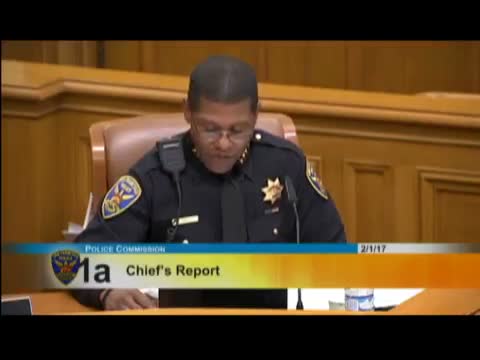
Captain Peter Walsh, commanding officer of the Risk Management Division, described EIS's structure (10 indicators and 14 associated factors under DGO 3.19), explained current technological limits that prevent automated capture of some associated factors (for example, linking 148/243 charges to specific officers in the crime data warehouse), and said supervisors are required to review alerts and meet with officers when patterns appear.
John Alden of the Department of Police Accountability's oversight staff told the commission the program needs clearer success metrics, periodic external evaluation and better public reporting. "We think we need to have a definition and a measurement of what EIS success is," Alden said, and recommended engaging an expert (the University of Chicago is already in preliminary talks with the department) to assess indicators, thresholds, and reporting.
Commissioner DeJesus, who originated extensive technical questions about EIS, pressed for faster improvements in data capture and for clearer reporting back to the commission. She cited a disparity between the number of alerts and the small number of recorded interventions (for example, hundreds of alerts but only a handful of formal interventions in recent years) and asked why some associated factors remain untracked.
Captain Walsh acknowledged gaps tied to legacy systems (the older CABLE case system) and said the department will work with IT, the mayor's office and potential academic partners to upgrade data collection and analysis. He described short-term steps including a departmental "cheat sheet" for supervisors, continuing professional training modules, and plans to evaluate whether indicators or thresholds need reweighting.
Both department speakers and DPA recommended more robust supervisor training, consideration of lower intervention thresholds used by other jurisdictions, and routine public reporting on EIS outcomes so the commission can judge effectiveness. The commission asked staff to produce a joint follow-up with concrete timelines and work with the department to return with recommendations within a few months.