Get Full Government Meeting Transcripts, Videos, & Alerts Forever!
Get email alerts on the Community Safety topic
No spam. Unsubscribe anytime.
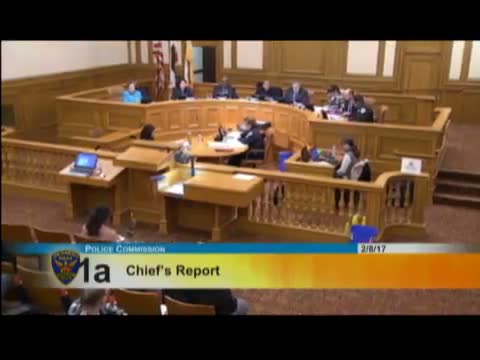
Commission hears Seattle 'Safe Place' model; SFPD considers broader rollout of Safe Zone concept
Summary
SFPD staff presented Seattle's 'Safe Place' program and compared it to the department's 2013 'Safe Zone' offering; commissioners and public urged expanding business participation and assigning dedicated implementation staff.
San Francisco Police Department investigators described a Seattle-based "Safe Place" program that partners with local businesses to offer shelter and immediate contact with police for victims of hate- and bias-motivated incidents.
Greg McEachern, commander in the SFPD investigations division, introduced Sergeant Pete Shields, who attended the Seattle presentation and summarized its elements: business decals to identify participating locations, training for staff to call police and keep victims safe, and printed resource guides for communities. Shields said San Francisco already operates a similar "Safe Zone" program at police stations (launched in 2013) and that the Seattle model expands participation into the private sector.
Commissioners and staff discussed how a local program could be broader than an LGBT-only focus, include businesses and schools, and be developed in partnership with community stakeholders. Commissioner Malera emphasized that implementation requires a dedicated staff lead: "one person that is assigned to this task... available full time to implement this project," she said.
Public commenters generally supported the idea while some cautioned about overbroad definitions for "bias incidents." John Jones urged care in defining reportable incidents to avoid chilling free expression, while other speakers asked the Commission to ensure the program is inclusive of victims of all backgrounds and especially children and communities of color.
Chief Scott and command staff committed to exploring the model and reporting back to the Commission on possible adaptations for San Francisco.
Next steps discussed included clarifying program scope, stakeholder outreach (businesses, LGBT groups, schools), and identifying a staff lead for implementation.