Get Full Government Meeting Transcripts, Videos, & Alerts Forever!
Get email alerts on the Transportation Safety topic
No spam. Unsubscribe anytime.
Independence council and regional leaders press for action on deadly Highway 22 and 51; council adopts resolution
Summary
Regional officials, ODOT and state lawmakers urged faster action on a long‑studied, crash‑prone interchange at Highways 22 and 51; ODOT outlined short‑term fixes and cost estimates while the council unanimously adopted Resolution 24‑1618 calling for advocacy and coordination to speed safety improvements.
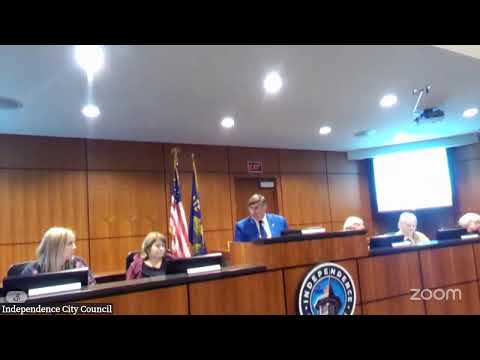
Independence — City council members on Tuesday gathered regional and state transportation partners to put renewed public pressure on safety fixes at the intersection of Highway 22 and Highway 51, a corridor long flagged for high crash rates and recent fatalities. After testimony from county, regional and state officials, the council adopted Resolution 24‑1618 urging timely, coordinated action.
The meeting opened with Polk County Commissioner Lyle Warhorse and Anna Henson, ODOT area manager, presenting the project history, near‑term options and a schedule for environmental review. "Right now, it's really close to becoming available to be sent for the EA," Lyle Warhorse said, referring to the Environmental Assessment that will establish the project's permanent footprint. Anna Henson said the EA will take about a year and that, even with immediate funding, it would likely be two to three years before construction could begin on a large‑scale flyover.
Why it matters: Residents, local elected officials and first responders described repeated serious crashes at the interchange and urged the council to press state and federal partners for funding. "We're here tonight just asking for people to stop dying at an intersection," Representative Anna Sharp told the council, stressing the human toll of delays in implementing safety improvements.
What ODOT presented: Anna Henson said a preferred interchange alternative has been selected and summarized options from a recent value‑engineering study. Short‑term safety measures include installing a median with J‑turns to reduce conflict points (estimated at $12–14 million) and improving signage and lighting. A flyover — a two‑lane bridge to remove turning conflicts — was estimated at about $40 million. Henson also said the overall interchange concept currently carries an estimated price tag in the neighborhood of $270 million and that the agency will seek grant and other funding sources to cover portions of those costs.
Local data and enforcement: Commissioner Warhorse and other speakers cited crash data presented to the group: one speaker reported roughly 154 accidents and 10 fatalities from 2018–2022 and a separate count of about 184 accidents and 4 fatalities in 2019–2023; speakers stressed impaired driving and high travel speeds as contributing factors. Polk County Sheriff Garvin described the county's crash response and said local law enforcement has issued hundreds of citations in the broader corridor; he told council the staffing issue with state troopers is not a funding problem, saying, "It is not funding," in response to a question about OSP presence.
Regional support and next steps: Mayors and regional planning boards — including Keizer Mayor Kathy Clark, Dallas Mayor Ken Woods and representatives from the Mid‑Willamette regional planning bodies — voiced sustained support and pledged to continue advocating with state funding authorities. Several witnesses urged a mix of short‑term mitigations and continued pursuit of larger capital work. Council members asked ODOT about stoplight or roundabout alternatives; Henson said she would follow up with technical details and the agency's FAQs on those options.
Council action: Councilors moved to adopt Resolution 24‑1618, described by the mayor as a formal statement to call attention to the corridor and to press state decision‑makers for timely, cost‑effective solutions. The motion was seconded and approved by voice vote; the council did not appropriate funds as part of the action.
What comes next: ODOT will proceed with the Environmental Assessment process (about one year) and continue coordination with county and city staff on interim safety work and funding options. Officials said construction for major elements would depend on securing funding and right‑of‑way; ODOT estimated two to three years to break ground on a flyover if funding were available immediately. The resolution directs continued advocacy and interagency coordination rather than committing local capital or altering land use.
The council recessed for a brief break after the vote and then returned to routine agenda items, including approval of minutes and a public comment period. The meeting adjourned after the remainder of the agenda.