Get Full Government Meeting Transcripts, Videos, & Alerts Forever!
Get email alerts on the Budget topic
No spam. Unsubscribe anytime.
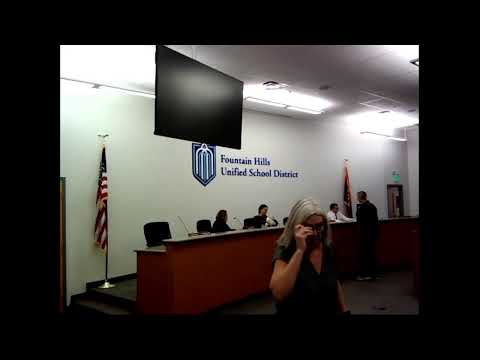
Fountain Hills board approves FY24 financial report as administrators warn of rising staffing and facility costs
Summary
The board approved the FY23-24 annual financial report and heard warnings that salaries and benefits are consuming a high share of the district—s budget, while grant expirations and facility maintenance pressures will require staffing and revenue changes.
Tyler, presenting the district—s FY23-24 annual financial report, told the board the AFR covers July 1, 2023 through June 30, 2024, and that the report must be submitted to the state by Oct. 15. "This is expenditures that have taken place," he said, adding that salary and benefit spending in Maintenance & Operations was approximately $7.4 million against a $9.6 million M&O budget after transfers.
The AFR presentation framed several drivers of change: expired or shifted grant dollars (notably ESSER), classification changes that reallocated positions into administrative categories, and increased plant repairs. Tyler warned the board that high salary proportions reduce flexibility: "79% of your M&O budget was in salaries and benefits," he said in his initial analysis, noting the figure fell to roughly 68% after internal transfers but remained a significant concern.
Why it matters: Board members and staff said the combination of flat or slowly growing enrollment (about 1,100 students, Superintendent Jay estimated) and rising staffing and maintenance obligations will require policy and budget decisions sooner rather than later. Tyler recommended reviewing staffing standards, addressing facility maintenance costs, and pursuing alternative revenue sources such as reviewing preschool tuition, athletic fees and issuing an RFP to sell district-owned property.
Board discussion and follow-up: Members asked for comparative benchmarks: Tyler said the district—s administrative share was slightly above similar districts (about 16% vs. a 14% peer average). He also described a one-time carryforward of about $321,000 that relied on Impact Aid transfers to balance M&O for FY24 and cautioned that such transfers are a short-term fix. The board asked staff to provide follow-up data on rental revenues (including a portion that came from the 4 Peaks facility) and to refine staffing scenarios for the FY26 budget cycle.
The board approved the AFR for submission to the state on a 3-0-1 vote, with one abstention. The approval accepts the report—s accounting of FY24 expenditures and authorizes district staff to file the package with the Arizona Auditor General.
Ending note: Tyler offered one-on-one briefings for any board members who want further detail; staff flagged facility maintenance and staffing as priority topics for the next budget cycle.